Nectarine Jalapeño Kombucha

Who doesn’t like a little spice in life? I know I do.

I was bottling up some kombucha for a second ferment tonight planning to add some strawberries. But alas, the strawberries had gotten pushed to the back of thr fridge and when I finally found them they were moldy. 🫤

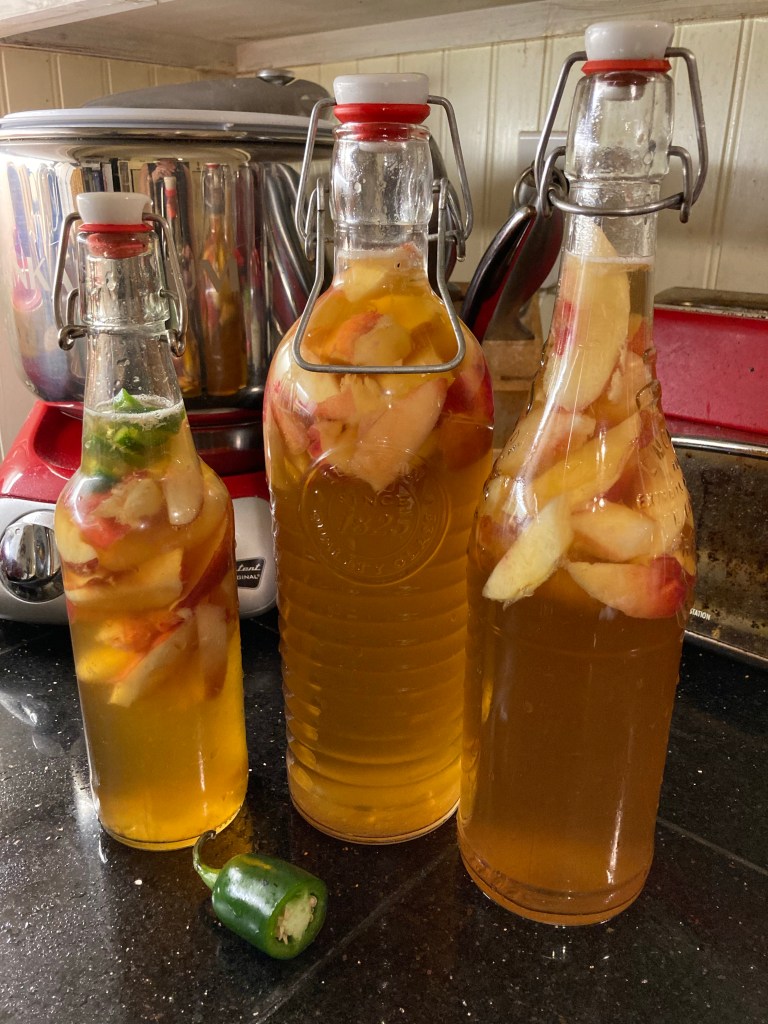
But there’s always some fruit around here that is on the edge needing to be used up, so nectarines to the rescue. I sliced up some white nectaries that were over ripe which makes them perfect for this use as there will be lots of good sugars to feed the bacteria, and while I was slicing them I noticed half of a Jalepeno on the counter from dinner.

🤔 My wheels started turning and I got to wondering how that would go with the nectarines. I think it might be pretty good. I’ve never made a spicy kombucha before, so I decided to add a couple slices to one bottle and see how it turns out. At the very least, this will ensure that I’ll get a bottle to myself before the kids drink up the other two. 😂

Playing with flavors can be fun, and I’ll be sure to edit this post and let you all know how it turns out. To see my other favorite kombucha flavors visit this post on Flavored Kombucha.

And if you like spice, stay tuned for a post later in the week on my new favorite spicy fermented relish. 😁

Happy brewing!

Free Traditional Skills Summit!

Many of you know that I’m a big fan of Carolyn Thomas and her Homemaking masterclasses over at Homesteading Family. I love her classes on breadmaking, fermenting, herbal medicine, homemade dairy, and I’ve just recently gotten into her canning class. And then there’s also her Home Management and Home Milled Flour classes which are also great! Well, she is participating in a collaboration that I thought you might be interested in.

The School of Traditional Skills brings together experts in homemaking, homesteading, gardening, and real food topics. September 12-15 you have the chance to attend an amazing and FREE Summit featuring the following speakers:

Joel Salatin on Reclaiming Pasture

Justin Rhodes on Raising Pastured Chickens

Melissa K Norris on Garden Season Extension

Paul Gautschi on his Back to Eden Garden method

Carolyn Thomas on Pressure Canning (Yay!!!)

Sally Fallon on Traditional Bone Broths (Who doesn’t have Nourishing Traditions on their shelf yet?)

Lisa Bass on Vegetable Fermentation

Anne of All Trades on Milk Goats

Brandon Sheard on Traditional Salt Curing of Pork

Brian Lowell on Raised Bed Gardens

Maureen Diaz on Sour Dough Bread (I love my sourdough you know!)

Harvey Ussery on Homestead Egg Laying Chickens

If any of these topics peaks your interest check it out! Live sessions will be available for replay so you won’t have to worry about missing out on your favorite topic.

Note: This post contains affiliate links from School of Traditional Skills, Homesteading Family, and Amazon.

Ferments on the Road

Meet my favorite ferments.

From left to right….

My wheat sourdough starter (half all purpose and half whole wheat), my delicious fermented cranberry lemon honey, my gluten-free sourdough starter, and my homemade wild sour cream.

My family and I hit the road this summer for a 3,000 mile road trip to visit family, and these little guys came along for the ride.

I packed them carefully in my electric cooler and at each place we stay I’ve been able to bake bread for my family, cranberry lemon scones for the aunts, uncles, and cousins, GF bread for my SIL, and most importantly, I can keep my clabber culture going so that I can make cheese once we get home. It needs to be fed weekly and would have certainly died while we were away if I had left it at home.

Ferments can behave differently during the summer. Changes in temperature, humidity, barometric pressure, elevation, all affect how your cultures perform and you need to know them well enough to adjust your technique accordingly. At the lake where we are at a higher elevation than at home in New York, my sourdough and yeast breads rise faster, and my clabber takes longer to culture because of the cooler temperatures. Each ferment has a personality. You have to get to know it and adjust how you use it accordingly. For example, I have to watch the rise on my breads much more closely and reduce the amount of yeast that I use. I have to allow more time for my clabber to set up for fresh homemade sour cream.

I plan to start some new cheeses when I get home. And you’ll probably see some new fermented vegetables on my counter once I get back to my garden.

What’s bubbling in your kitchen this summer?

Need some ideas for what to ferment first? Or do ferments intimidate you and you don’t know where to start? Homesteading Family has some great courses to get your creative juices flowing and things bubbling in your kitchen. Check out their courses on The Art of Homemade Bread which includes sourdough, Fearless Fermenting, and Practical Homemade Dairy (affiliate links).

Wild Milk, Clabber, and Cheese

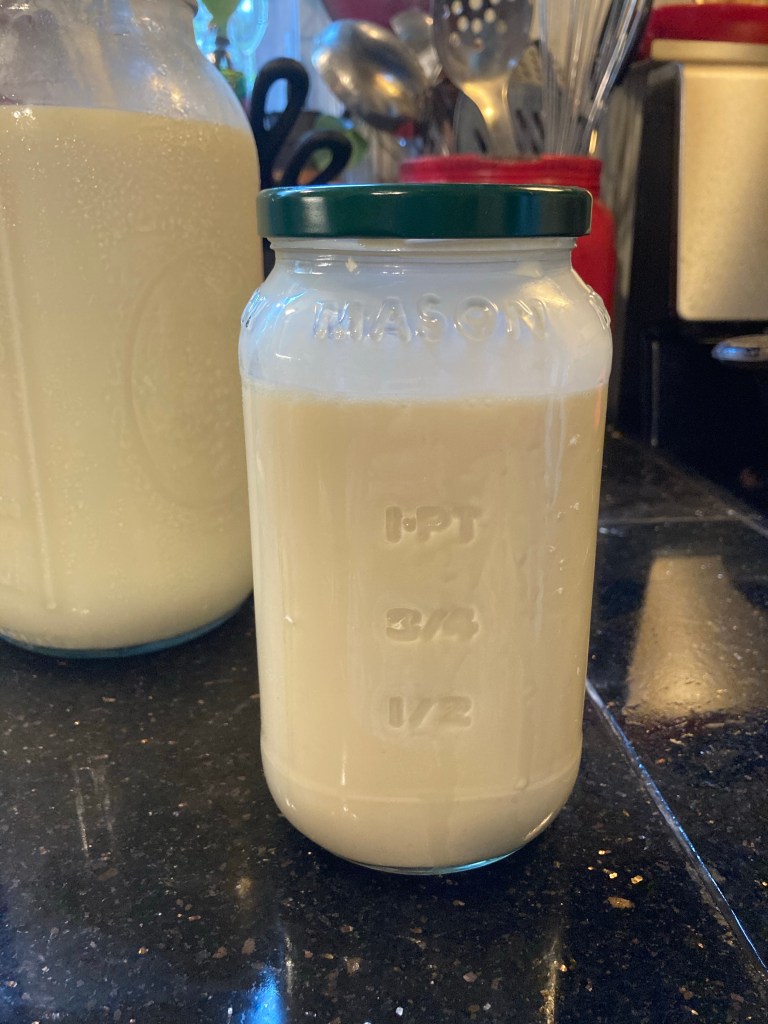
I have a wild clabber culture that I have kept going this last year with one batch of raw milk that my in-laws were able to bring me. I make a little batch of wild sour cream with it every week. If we don’t eat the sour cream, I use it up in baking to keep the culture going. I even travelled with my culture while we were away this summer to try and keep it alive since it needs to be cultured weekly.

My summer goal is to use this wild culture to make hard cheese for my son. If I had a regular source for raw milk, this would be easy. But I don’t. So my aim is to use store bought milk and my wild culture to achieve a cheese that my son can eat since store bought cultured dairy products and cheese brother him. Yet he does well on raw milk and my wild clabber culture.

We’ve done without cheese for so long, I’m really hoping that I can develop a successful recipe using my wild culture and store milk so that we can add back in some of our favorite family recipes. Let’s face it, pizza and enchiladas just aren’t the same without cheese.

So stay tuned as I post my progress. And I’m the meantime, if you’d like to delve into the world of homemade dairy, check out Homesteading Family’s Homemade Dairy Masterclass (affiliate link). It’s how I’ve learned and you definitely don’t have to have a milk animal to make all the recipes in the class. Everything I’ve made so far – butter, dairy creamer, sour cream, wild buttermilk, feta, ricotta, hard cheese, have been made all using store bought milk. And there are so many recipes that I haven’t tried yet. It’s definitely chock full of content.

And if you see this post before July 27, 2022, be sure to register for a free Practical Homemade Dairy Webinar (affiliate link) if you want to get your feet wet and see if the Masterclass is right for you.

I’m excited to make some cheese! Who wants to join me?

Coffee Cake Sourdough Batter Bread

This is soft and moist and cinnamony.

Coffee Cake Batter Bread:

2 cups sourdough starter

1.5 cups of water

1.5 tsp salt

1/2 cup brown sugar

1/2 cup honey

1/3 cup oil

1 tsp vanilla

Mix the above.

Gradually add…

2-4 cups of all purpose or whole wheat flour

1.5 tsp baking soda

1.5 tsp baking powder

2 tsp cinnamon

Mix the above adding flour gradually until the texture of the dough is like a thick cream cheese frosting.

Prepare Topping/Filling:

Combine…

1/2 cup flour

6 tbsp cold butter

1/3 cup brown sugar

1.5 tsp cinnamon

Use a pastry cutter or your fingers to combine the butter, flour, sugar, and cinnamon until the mixture is crumbly or the butter is pea size.

Loosely mix 1/3 of the amount of your filling into your batter. Reserve the rest.

Prepare your pans:

Grease your pan(s) and fill halfway with batter. Sprinkle 1/3 more of the prepared topping/filling on top of the batter. Fill with more batter until the pan(s) are 2/3 full. Sprinkle the remaining 1/3 of the topping on the top and use your fingers to poke some down into the batter like you would if denting focaccia bread.

Rise:

Cover with a lid or a damp tea towel. Let the bread rise for 1-4 hours until 1/2 inch from the top of the pan.

Bake:

Bake covered if you have a lidded pan or baking dish for 20 minutes at 400 degrees, and 20-30 minutes more uncovered at 350 until the internal temp measures 190 degrees.

Cool and enjoy.

Makes 1 large 5×13” Pullman style loaf, or two 9×5” loaf pan loaves.

The Art of Homemade Bread will teach you all you need to know if you want to learn more about making healthy bread at home.

Note: This post contains affiliate links.

Flavored Kombucha

Who makes kombucha? 🙋🏻‍♀️

Did you know that you can set your kombucha up for a second ferment to add flavor and fizz?

I just poured up a new batch tonight into these flip top bottles and added blood oranges. I let it sit for 2-3 more days until the orange is infused and it becomes this beautiful pink color. It will also become fuzzy and carbonate which can be quite refreshing.

If you decide to try a second ferment, use glass bottles with flip top lids or plastic bottles. Don’t use a glass container with tight fitting lids as it will continue to ferment and build up pressure and jars have been know to break from the pressure build up. It’s a good idea to burp your container once or twice a day.

What flavor will you try? Some of my favorites are….

Blackberry Lime – add fresh or frozen berries and lime slices or zest.

Blueberry Lemon – add fresh or frozen blueberries and lemon slices or zest.

Raspberry – add fresh or frozen raspberries.

Strawberry Basil – add fresh or frozen strawberries and fresh basil.

Mango – add fresh or frozen mango. (Watch out! The sugars in this one cause it to ferment fast.)

Orange – add fresh orange slices with the rind. I like blood oranges, as you can see.

Cranberry Ginger – add fresh or dried cranberries and grated ginger root.

Or come up with your own combo. Use what you have or whatever yummy flavors strike your fancy.

Happy brewing!

Cinnamon Raisin Sourdough Batter Bread

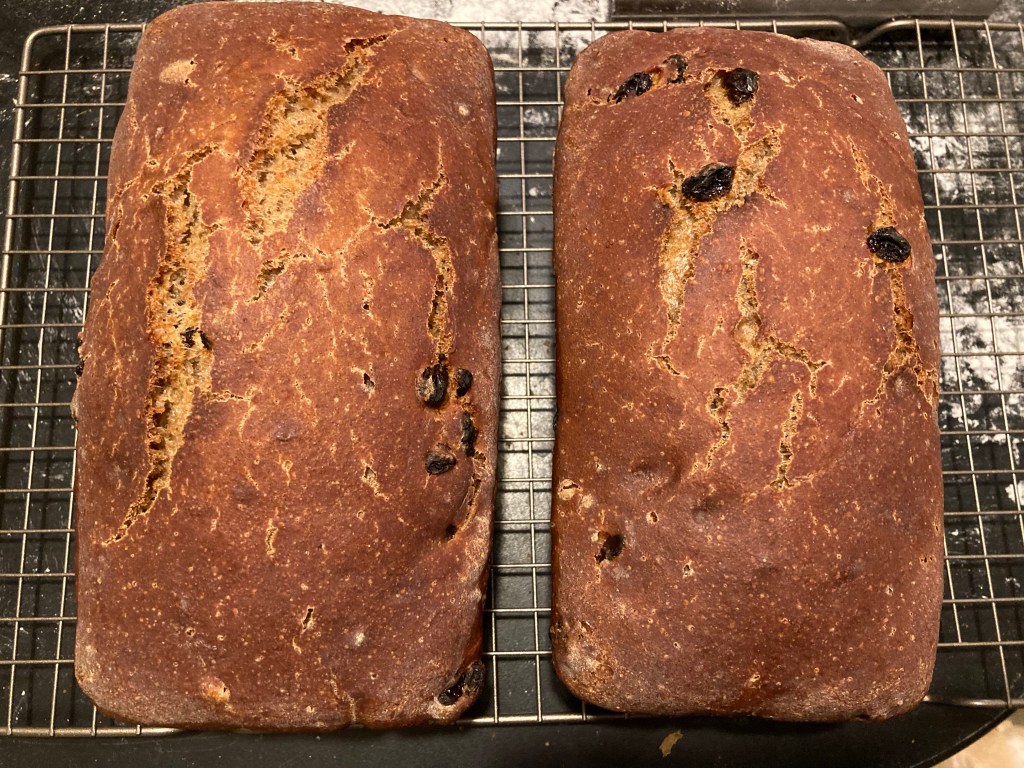
Makes a great cinnamon raisin toast with breakfast.

Cinnamon Raisin Batter Bread:

3 cups sourdough starter

1/2 cup sugar

1/2 cup honey

2 cups milk or water

Mix together, then add….

1 tsp salt

1 tbsp ground cinnamon

2 tsp baking soda

All purpose or whole wheat flour until the texture of the batter is like a thick butter cream icing or soft cream cheese texture.

1 cup raisins

Pour into greased loaf pans. Let it rise in a warm place for 1-2 hours or until the batter is about 1 inch from the top of the pan.

Bake 400 degrees for 45-50 minutes, until a tester comes out clean or the internal temp reaches 190 degrees.

Makes 3 loaves.

Want to dive deep into bread? Carolyn at Homesteading Family has a comprehensive bread course. Check out The Art of Homemade Bread to learn more.

Note: This post contains affiliate links.

Chocolate Cherry Sourdough Batter Bread

Unfortunately, we ate this bread up and I neglected to get a picture of it baked. It was good though! 😊

Chocolate Cherry Batter Bread:

3 cups sourdough starter (fed or unfed)

1 1/2 tsp salt

1/3 cup heavy cream

1 cup water

1/2 cup honey 

1 cup sugar

2 tsp vanilla extract

Mix all of the above together and then add…

1 – 32 oz can of cherry pie filling

Add…

2 cups all purpose flour

1/2 cup cocoa powder

1 1/2 tsp baking soda

1-3 cups whole wheat or whole grain spelt flour. Add 1/2 cup at a time until the batter is about the texture of softened cream cheese.

Pour into greased loaf pans.

Cover and let it rise for about an hour or until it almost reaches the top of the pan.

Bake at 400 degrees for 50-60 minutes. Internal temp should register 190 degrees.

Freeze or eat within 3 days. The addition of the fruit will cause it to spoil more quickly.

The Art of Homemade Bread will teach you all you need to know if you want to learn more about making healthy bread at home.

Note: This post contains affiliate links.

Banana Blueberry Sourdough Batter Bread

Forgive the misshapen loaf. One spot stuck and a bit a surgery had to be performed in order to remove it from the pan. Thankfully that doesn’t affect the taste. 😊

Banana Blueberry Batter Bread:

3 cups sourdough starter (fed or unfed)

1 1/2 tsp salt

1 tsp vanilla

1/4 cup oil

1/3 cup heavy cream 

1 cup water

1/2 cup honey 

1/2 cup sugar

3 very ripe, mashed bananas.

Mix all of the above together and then add…

2 cups all purpose flour

1 1/2 tsp baking soda

1 tbsp cinnamon

2 cups fresh or frozen blueberries

1-3 cups whole wheat or whole grain spelt flour. Add 1/2 cup at a time until the batter is about the texture of softened cream cheese.

Pour into greased loaf pans.

Cover and let it rise for about an hour or until it almost reaches the top of the pan.

Bake at 400 degrees for 50-60 minutes. Internal temp should register 190 degrees.

Remove from pans immediately and place on cooling rack to cool. Makes 2 loaves.

Enjoy!

And if you want to learn more, The Art of Homemade Bread will teach you all you need to know about making healthy bread at home.

Note: This post contains affiliate links.

Vanilla Peach Sourdough Batter Bread

3 cups sourdough starter (fed or unfed)

1 1/2 tsp salt

1/4 cup oil

1 cup water

1/2 cup honey 

1/2 cup sugar

2 tsp vanilla extract

Mix all of the above together and then add…

2 – 16 oz can of peaches in light syrup. Drain the syrup in the bowl, then pour out the peaches and slice into 1/2 inch pieces and mix in.

Add…

2 cups all purpose flour

1 1/2 tsp baking soda

1 tsp cinnamon

1-3 cups whole wheat or whole grain spelt flour. Add 1/2 cup at a time until the batter is about the texture of softened cream cheese.

Pour into greased loaf pans.

Cover and let it rise for about an hour or until it almost reaches the top of the pan.

Bake at 400 degrees for 50-60 minutes. Internal temp should register 190 degrees.

And if you want to learn more, The Art of Homemade Bread will teach you all you need to know about making healthy bread at home.

Note: This post contains affiliate links.

Sourdough Gingerbread Batter Bread

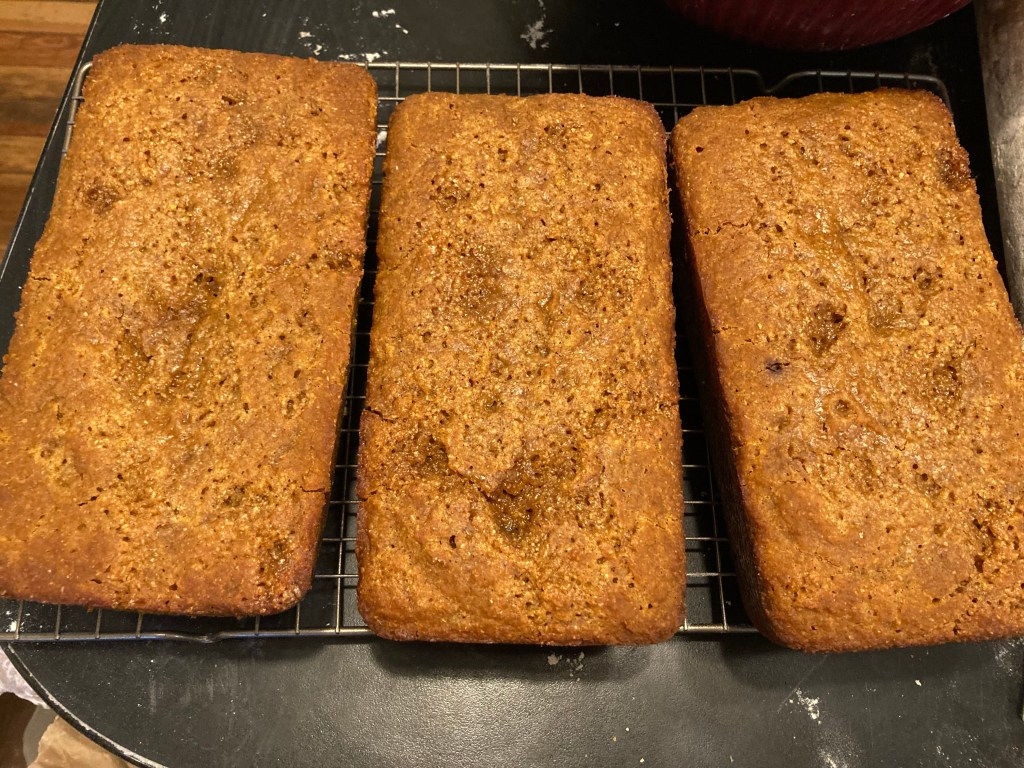
This makes great French toast or it is even yummy just plain with butter and honey.

Gingerbread Batter Bread:

3 cups sourdough starter (fed or unfed)

1 1/2 tsp salt

1/2 cup oil

1 1/2 cups water

1/2 cup honey

1/3 cup blackstrap molasses

1/2 cup sugar

Mix all of the above together and then add…

2 cups all purpose flour

1 1/2 tsp baking soda

1 tbsp cinnamon

2 tbsp ground ginger

1-3 cups whole wheat or whole grain spelt flour. Add 1/2 cup at a time until the batter is about the texture of softened cream cheese.

Pour into greased loaf pans.

Cover and let it rise for about an hour or until it almost reaches the top of the pan.

Bake at 400 degrees for 50-60 minutes. Internal temp should register 190 degrees.

Remove from pans immediately and place on cooling rack to cool. Makes 3 loaves.

Enjoy!

And if you want to learn more, The Art of Homemade Bread will teach you all you need to know about making healthy bread at home.

Note: This post contains affiliate links.

Sourdough Pumpkin Spice Batter Bread

This is another yummy way to use up extra sourdough starter. For other flavors search for “batter bread” in the search box here on the blog. It should be at the top of the sidebar on the right if you are reading on a computer, or if you are mobile it should be all the way at all the bottom under the comments.

Pumpkin Spice Batter Bread:

2 cups sourdough starter

1/3 cup oil

3/4 cups honey

3 eggs

1/2 cup milk or water

1 tsp salt

1/2 tsp nutmeg

1 tsp vanilla

1 – 16 oz can of pumpkin (or 2 cups of pumpkin purée)

Mix the above ingredients until well combined.

Add…

1 1/2 tsp baking soda

All purpose or whole wheat flour 1/2 cup at a time until the mixture resembles a very thick pancake batter that is about the texture of softened cream cheese or buttercream icing.

Pour into 2 greased loaf pans or a large greased casserole. Let it rise in a warm place for 1-2 hours.

Bake 400 degrees for 45-50 minutes, until a tester comes out clean or the internal temp reaches 190 degrees.

And if you want to learn more, the Art of Homemade Bread will teach you all you need to know about making healthy bread at home.

Note: This post contains affiliate links.