Want to make bread like this? Check out Homesteading Family’s free bread webinar! Just in time for Thanksgiving too. Carolyn gives away lots of great info. She taught me to make bread and can teach you too! Her classes are the best! And I hear that there may even be talk of the new Gluten-Free book which you can get early access to if you are a member of Homestead Kitchen.
This is the perfect fall recipe. Suggested substitutions are listed in parentheses but you can substitute any flour if a similar type (whole grain for whole grain, starch for starch, legume for legume, nut for nut) with good results. My recommendations are just suggestions. Use the flours that your starter is made from and that you tolerate best.
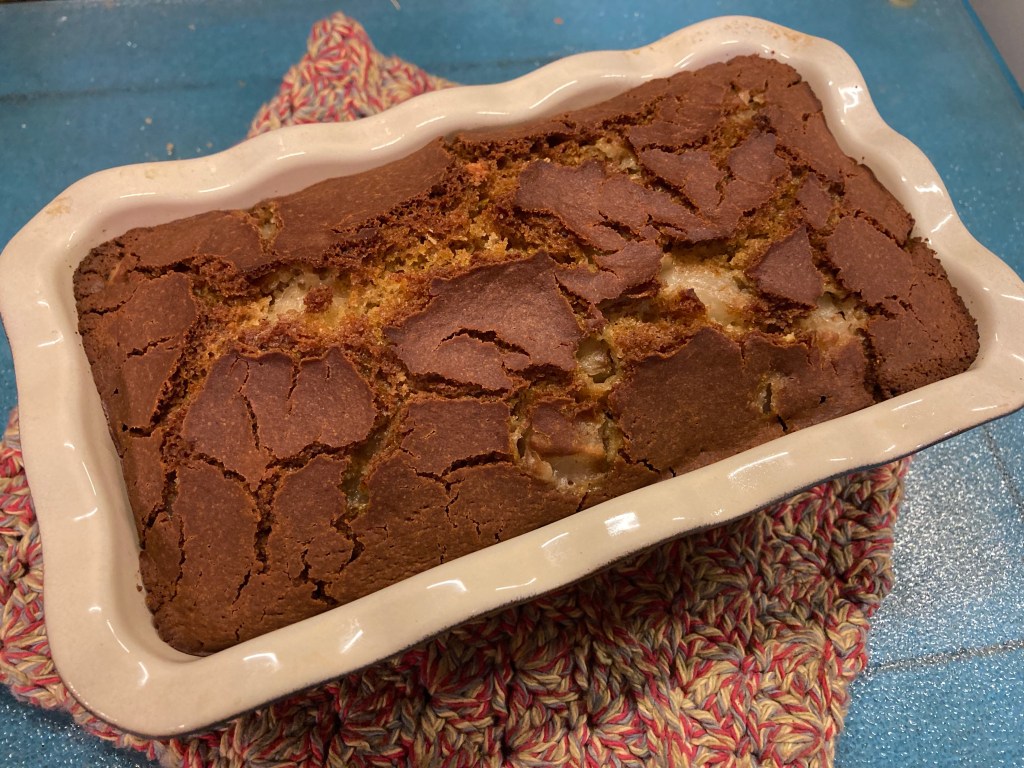
Gluten-Free Apple Cinnamon Sourdough Batter Bread Recipe:
Mix the following in a bowl:
– 2 cups gluten-free sourdough starter
– 1.5 cups peeled and chopped apples
– 1 tsp of salt
– 1/2 cup oil
– 1.5 tsp of vanilla
– 2/3 cups of honey
– 1 1/4 cups of water
Then add…
– 2 tbsp psyllium husk
– 1/2 cup chickpea flour (or sorghum)
– 1/2 cup almond flour (or other nut flour)
– 1/2 cup brown rice flour (or oat)
– 1/2 cup sweet rice flour (or tapioca)
– 1/2 cup potato starch (or cassava)
– 1.5 tsp cinnamon
– 2 tsp baking soda
Mix until well combined and let the batter rest for 15 minutes. The texture should be like a thickened pancake batter.
Pour into a greased loaf pan or casserole dish. Bake in a 400 degree oven covered for 40 minutes. A toothpick should not necessarily be clean but should not be wet when tested.
Cool completely before slicing.
Enjoy!
For a complete guide to heathy, gluten-free sourdough, consider joining Homesteading Family’s Homestead Kitchen Membership to get exclusive access to the new book that I have co-written with Carolyn Thomas – The Art of Gluten-Free Homemade Bread. It’s available as an exclusive, early release to Gold level Homestead Kitchen Members. Stay tuned for the print copy of the book which is due out this winter.
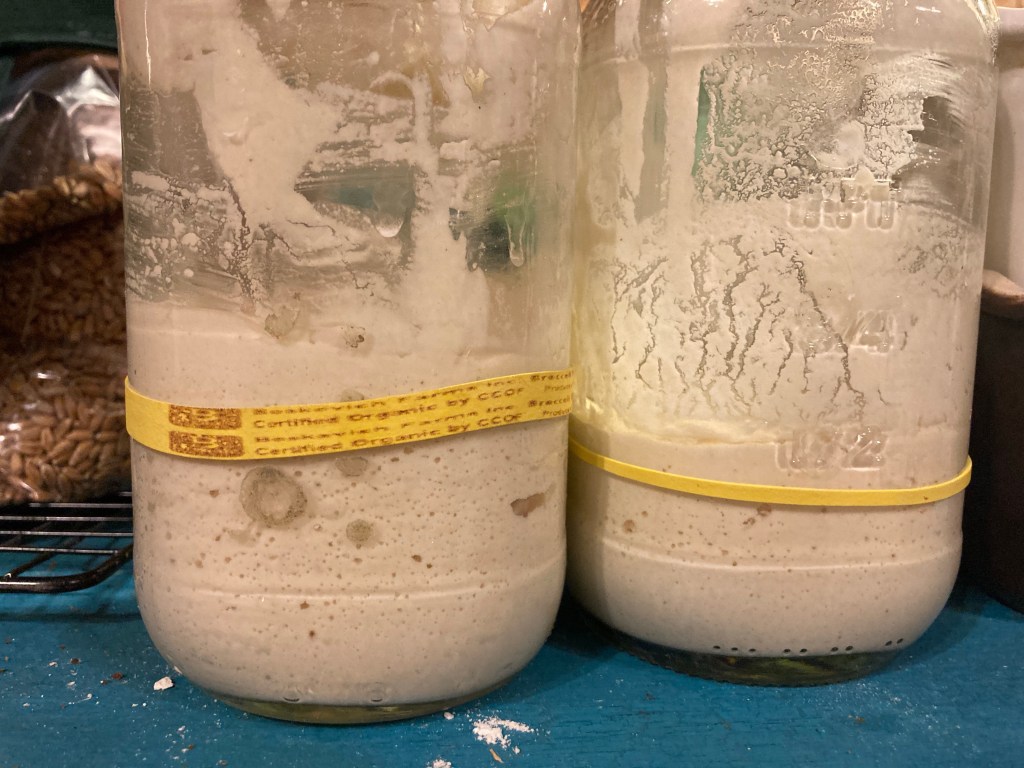
These are two gluten-free starters made from brown rice and quinoa. They are just starting to show signs of life. See the tiny bubbles?
I’ve been making sourdough bread for several years. My daughter and I made our first gluten-free sourdough starter in 2020 as part of her science experiment. I’ve since made several different gluten-free sourdough starters. What follows is the technique that I’ve found works the best.
(Note: This technique also works equally well with wheat wheat based, whole grain flours like hard white or red wheat, spelt, rye, khorasan, or einkorn.)
How to make your own Gluten-Free Sourdough Starter from Scratch:
1. Choose your flours: Sourdough always performs best when some of the flour the recipe is the same flour that the sourdough starter is made from. Unlike wheat baking, several different flours are needed in gluten-free baking to replicate the starch, protein, mineral, and vitamin content of the wheat berry in order to achieve the light, moist, nutritious baked goods we all enjoy. For gluten-free baking, this means that it is best to use between two to three different flours, rather than a single one, that you tolerate well when making your sourdough starter. This will ensure that your starter performs well because you will use the same flours in your baking that your starter is built from.
What flour combinations can I use tomake a gluten-free sourdough starter?
Choose 2-3 of the any of following flours to create your sourdough starter from scratch:
– Millet flour – Quinoa flour
– Brown rice flour – Buckwheat flour
– Sorghum flour – Oat flour
– Teff flour
Notice you don’t see any starches or nut flours in this list. I avoid starch based flours when making a sourdough starter as they just don’t have the same microbial content that whole grain gluten-free flours do. As a result using a starch like potato starch, tapioca flour, or arrowroot powder will not contribute much to the microbial makeup of your starter. I avoid nut flours also because of their high oil content. Flours with high oil contents can go rancid quickly, which would not be ideal for a sourdough that you might need to store in the fridge for a while if you come upon a time when you can’t feed or bake with it frequently.
Notice also that I put quinoa in bold. This is because quinoa is a microbial powerhouse! If you’re used to baking with wheat based sourdough you may know that the way to give your sourdough a microbial boost is to give it a feeding or two or rye flour. Well quinoa is the rye of the gluten-free world.
Using quinoa in your gluten-free sourdough will make it super active! In my experiments my quinoa starters matured more quickly (before any of my others) and were more active than any of my other sourdough starters. Quinoa even matures in cold temperatures when others don’t. It’s really quite an amazing, nutritious grain.
Quinoa should definitely be one of the 2-3 flours that you use to build your sourdough starter. It doesn’t take much. Only a teaspoon or less at each feeding.
2. Gather your Equipment :
The tools needed here are simple. All you need is…
– quart size jar
– plastic lid (not metal)
– a rubber band
– stirring implement
– small measuring cups or spoons
3. Mix your Sourdough:
So you’ve decided on the 2 or 3 flours that you plan to use from the discussion above and you’ve got your equipment ready. Let’s get started.
Steps for Mixing and Feeding Your Sourdough:
Gluten-free flours are much more expensive than wheat. Because of this, we are doing to mix in small amounts. This will keep us from wasting any of our flours and ending up with more sourdough starter than we can use.
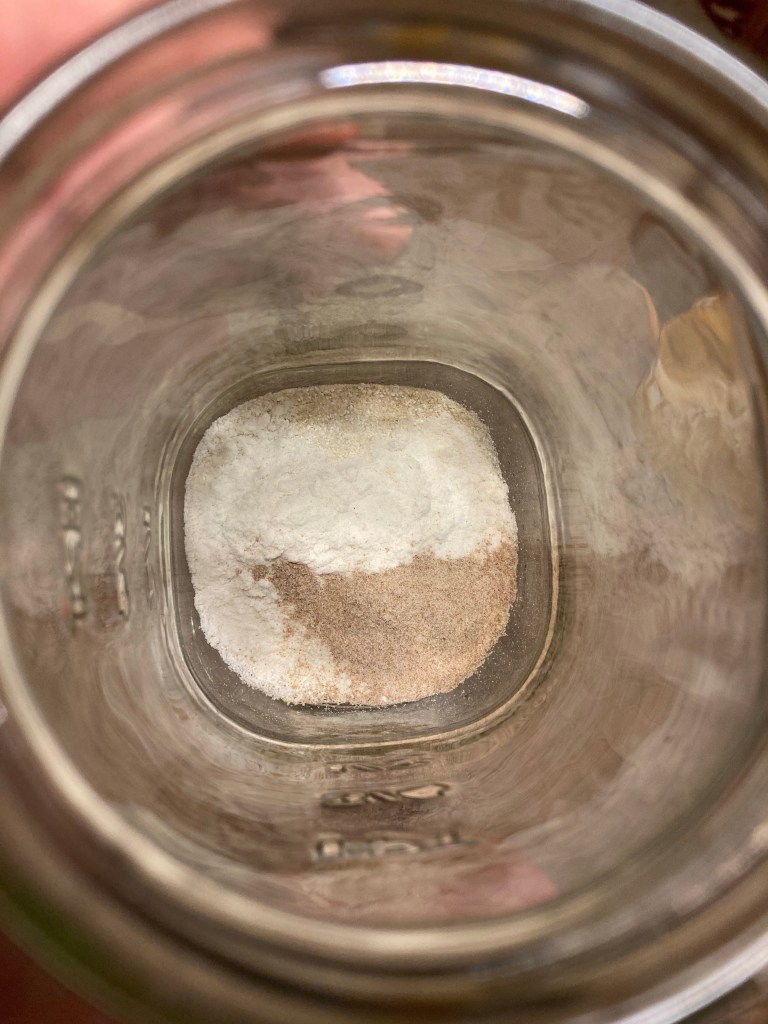
Day 1: Add 1 tablespoon each of your chosen flours to your quart sized jar. If you have planned to use 2 flours in your starter, feed it 2 tbsp total, one of each. If you chose 3 flours, feed it one tbsp of each flour type, and so on. Don’t forget to put quinoa in the mix if you can. Put a rubber band on the outside of the jar so you can keep an eye on the level of the starter. This will help you gauge the activity of the starter as it starts to get active and rise.
Pro Tip: Use a minimum of two gluten-free flours in your sourdough, but no more than five.
Next, into your quart size jar, add 1/2 tablespoon of water for each of the flours that you used. So if you used two flours, add 1 tablespoon of water. 3 flours – 1.5 tbsp water, 4 flours – 2 tbsp water, and so on.
Stir well and let it sit for 24 hours.
In the starter pictured below, I chose three flours – brown rice, quinoa, and teff flours.
Day 2: Repeat your day 1 feeding of 1 tablespoon each of each of the flours you chose and 1/2 tablespoon of water per flour used. Adjust the rubber band to the level of the starter in the jar after the feeding. Let it sit for another 24 hours.
Pro Tip: Different flours may need more or less water to fully hydrate. If you go to feed your starter on day 2 and it has a lot of liquid on top, then give it a little less water next time. On the other hand, if you go to feed your starter and it thick, dry, and crumbly, give it extra water at that feeding. Did you know that you can choose the texture of your sourdough? I like to keep mine like a thick cake batter, but you can use more water if you prefer a thinner, pancake batter like texture.
Here is a photo of my starter with water added after feeding. It’s still just a tiny amount, and that’s okay. It doesn’t have to be a large amount to ferment and flourish.
Day 3: Feed again as you did on day 1 and 2 and adjust the position of the rubber band, but this time, pop it in the fridge for 2 days for a cold ferment period.
Day 5: Your starter should have been happily sitting in the fridge for you for the past two days. Today, you should take it out, sit it on the counter, and let it warm back up for 24 hours.
Day 6: Feed your starter as before, adjust the rubber band to the level of the starter in the jar, and now let it sit at room temperature and wait. Let the starter sit undisturbed until you start to see bubbles and rise. Once it doubles or nearly doubles, your starter is ready. How fast a sourdough starter develops depends largely on the temperature in your kitchen. You may need to let it sit for 36-48 hours before you see rise.
Here is my starter after taking it from the fridge, feeding it, and letting it sit for 12 hours. Look how active and happy it is!
So with a little care and patience, you can have a robust, active, healthy, happy starter within a week.
Pro Tip: This method works with wheat based flours too. You can have a new wheat, spelt, or rye starter in a week’s time if needed.
How to maintain your gluten-free sourdough starter:
Once your starter is ready and has doubled in your jar, now you want to bake with it. You can try your hand at bread, or simply make some sourdough pancakes or muffins. The more you use your starter the more active it will become. Just remember, don’t use it all. Keep at least 1/2 cup – 1 cup in your jar at all times to continue feeding so that you will always have enough sourdough for your baking needs.
To keep the best and strongest starter, keep it on the counter and feed it twice a day, morning and evening for maintenance, baking something with it several times a week. If you find you need a break from feedings, pop it in the fridge and it will wait for you until you need it again, but it’s best to still feed your starter once a week even while you are keeping it in the fridge to keep it happy and active.
What if I don’t see bubbles?
If you have fed it several times, just let it sit at room temperature until you start to see bubbles. It will ferment if given enough time and your room temperature is warm enough. The ideal temp is between 65 and 75 degrees, but colder is fine too as it will ferment at any temperature above freezing. Just know, the cooler it is, the longer the fermentation will take. If it takes more than 36 hours, it’s not a bad idea to stir your starter every 12 hours without adding any more flour or water until you see tiny bubbles. This just helps prevent anything from getting moldy by keeping the parts that are exposed to air moving around. Once you start to see bubbles, stop stirring and let it sit.
What is my starter develops mold?
If this happens, and it does sometime, throw it out and start again. Now, if you have a mature, active starter and it develops mold, sometimes those can be saved. But in the early days of sourdough development, mold can sometimes happen before the starter is strong, active, and acidic enough to prevent it.
What if my starter smells like alcohol, acetone, kerosene, or vomit?
As unappealing as this is in the beginning, these smells are all a completely normal part of the development of sourdough. Don’t worry, as the starter continues to mature the smell will lessen and gradually progress into just smelling sour as it should. As long as your starter does not smell putrid or spoiled, it is fine to just keep on going.
Share Your Starter Stories:
I’d love to see pictures of your starters. Please share photos or ask questions here in the comments. 😊
All my recipes are available in this comprehensive book that I wrote for Homesteading Family. Get your copy here.
For Further Study:
• If you would like a video based sourdough course I recommend Homesteading Family’s The Art of Homemade Bread Course. Carolyn covers yeast and sourdough breads in step-by-step video lessons. It’s how I learned to make bread and now I’ve advanced to developing my own systems. So, if you are a visual learner, she gives you a daily video of what to do.
• If you are on the fence about the complete bread course, give Carolyn’s FREE bread training a try. She gives away a lot of good, free info that will get you baking good bread right away.
• Already have a sourdough starter? Homesteading Family’s Homestead Kitchen Community has a Sourdough Challenge doing on right now! It’s a great way to jump in to sourdough baking or advance your skills. And if you join you’ll get a sneak peek at the new Art of Gluten-Free Homemade Bread book that will be released this winter.
• If you are fascinated by microbes and all things sourdough take a deep dive into my friend Diana’s book: Olwes Miaken’s Creatures. She is truly a sourdough wizard and can make bring any flour or grain to life! Her book is fascinating and fun! She names all her creations. Check it out to see all that she has made.
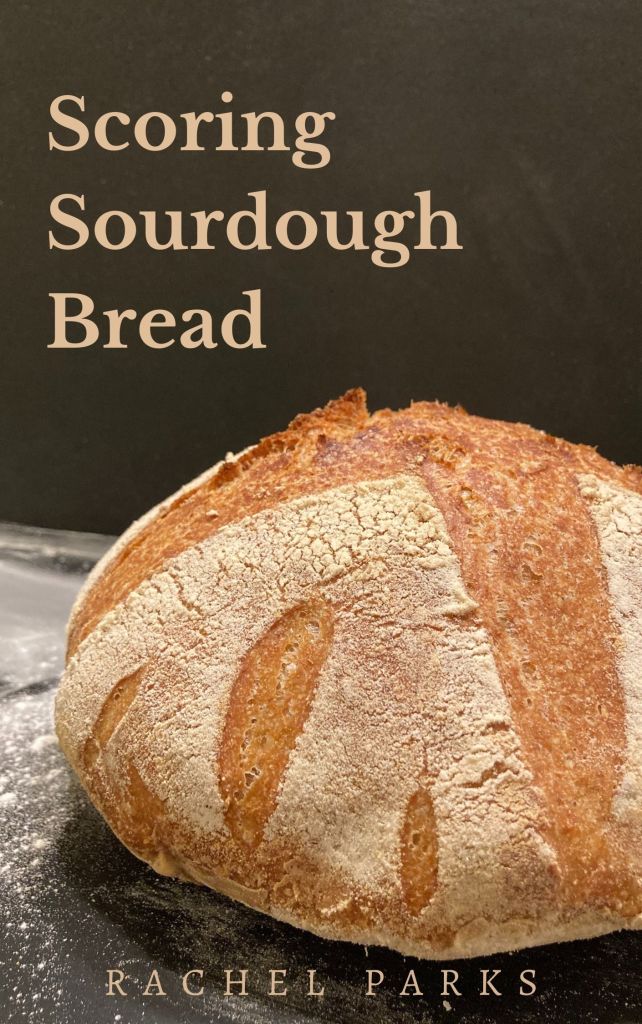
• And if you have success with sourdough and want to make it beautiful, check out my book on scoring sourdough. You can buy a copy of the e-book here on my blog, or you canvisitAmazon for a physical copy of Scoring Sourdough Bread.
The stress of moving and just life this summer resulted in me cutting out wheat products from my diet. I found that wheat was aggravating my stress symptoms.
Those of you that are gluten-free know that your options for good bread, buns, biscuit options are limited. This is a quick and easy recipe, and the best thing is that it only uses 5 main ingredients, and you can bake it in the oven!
The only piece of equipment that you need are a set of crumpet rings. This set of six crumpet rings is nice since that is about how many crumpets or biscuits this recipe makes. I only have a set of four rings so I have to bake in two batches. Get the set of six. It’s easier.
Crumpet rings are traditionally used for steaming wheat crumpets, but these rings are the perfect tool for baking this gluten-free recipe as they provide the structure that these need to bake properly. If you don’t have crumpet rings, you’ll need to bake this as a flatbread in a skillet, or you might be able to get away with using the rings from canning jars but they aren’t nearly as tall as crumpet rings so you would have to use less batter in each ring and your resulting crumpet or biscuit would be quite thin.
This gluten free crumpet slices easily and makes a great breakfast sandwich topped with egg and bacon. It is a great option for those that need to eat gluten-free and need an alternative to traditional wheat buns, biscuits, or rolls.
Gluten-free Crumpet Recipe:
1 cup heavy cream
3 egg yolks
1/3 cup tapioca starch
1/3 cup sweet rice flour
1/3 cup millet
1/2 tsp salt
1/2 tsp baking powder
Whisk together the egg yolks, cream, and salt. Add the flours and baking powder and stir until combined.
Let the batter sit for 15 minutes to fully hydrate. This step is especially important for gluten free baking as some of flours, like rice flours, take longer to absorb the liquids. If you skip this step, your end product may be grainy.
Texture after a 15 minute rest.
After the 15 minute rest, check the texture of the batter. It should be like a thin cake batter. You may need to add more flour if yours is too thin. If so, add 1/4 cup of either millet or tapioca flour, stir, and then re-evaluate the texture. If you want more of a biscuit texture, then add a little extra flour for a thicker batter. The more flour you add the heavier and drier the end product will be. For a lighter crumpet/English muffin type texture, aim for a thinner batter.
Baking Your Gluten Free Crumpets:
Once your batter is the right texture, preheat your oven to 400 degrees, and grease your crumpet rings either with butter or spray with olive oil. Set up your crumpet rings on a baking sheet and pour the batter quickly filling the rings about halfway full or a little more depending on how thick you want them to be. A little of the batter will probably leak under the bottom edge, but that’s okay. Don’t worry if it leaks under. Just pop them in them in the oven and they will bake up fine.
Bake at 400 degrees for 20-25 minutes. They are done when they are golden on the top.
These gluten free crumpets have a light buttery and nutty flavor and are delicious with butter and jam, they make a great PB&J, breakfast sandwich, or can even sub as a gluten free hamburger bun.
Enjoy! Don’t sacrifice the foods you love just because you can’t have wheat. 😊
I saw it recommended in Homesteading Family’s Homestead Kitchen Community. It’s become a good reference because even though I can’t use the recipes included in it because of all our allergies, I can use them as inspiration and modify them to suit our needs.
Do you have a sweet tooth and wish you have a healthier option from store bought cake mixes? Here’s your answer. Below, you’ll find make ahead mixes that will sit on your shelves for months until you need them.
Make Ahead Sweet Tooth Cake and Quick Bread Mixes:
Homemade Chocolate Cake Mix Recipe:
This recipe will fill two regular 24 oz spaghetti sauce jars or quart size canning jars.It yields two 9” cakes.
2 1/2 cups all purpose flour
1 1/2 cups sugar
1/4 cup cocoa powder
1 tsp salt
2 tsp baking powder
Combine all the above in a bowl, transfer to two glass jars, and label with ingredients, what to add on baking day, and baking instructions.
On Baking Day Add…
1 cup of milk
2 eggs
1/3 cup of oil
1 tsp vanilla
Chocolate Cake Baking Instructions:
Grease and flour two cake pans. Bake at 350 for 25 minutes until a toothpick comes out clean.
Cinnamon Coffee Cake Mix Recipe:
1 cup all purpose flour
1 cup whole wheat flour
3/4 tsp salt
1/4 tsp baking soda
1/8 tsp baking powder
2 tbsp sugar
1/4 cup brown sugar
1/2 tsp cinnamon
Combine all the above in a bowl, transfer to a glass jar, label with ingredients, what to add on baking day, and baking instructions.
On Baking Day Add…
3/4 cups milk
1 egg
1 tsp vanilla
1/3 cup oil
1 tbsp vinegar
Coffee Cake Topping:
Store this mixture in a baggie in the mouth of your jars. Pour topping mixture into a bowl and cut in 4 tbsp of butter. Then sprinkle on the top of yourcake just before baking.
1 tsp cinnamon
1/4 cup brown sugar
1/2 cup oatmeal or flakes spelt
1/4 cup all purpose flour
Coffee Cake Baking Instructions:
Bake in greased 9” cake pan, or 8×8” casserole on 350 for 35-40 minutes.
Homemade Banana Bread Baking Mix Recipe:
2 1/2 cups all purpose flour
3/4 cups whole wheat flour
1 1/2 tsp baking powder
1 1/2 tsp baking soda
1/2 cup sugar
1/4 cup brown sugar
1/2 tsp salt
1 tsp cinnamon
Optional: Add 1/4 cup chocolate chips.
Combine all the above in a bowl, transfer to two glass jars, and label with ingredients, what to add on baking day, and baking instructions.
On Baking Day Add…
2 eggs
1/3 cup oil
1-2 ripe bananas
Banana Bread Baking Instructions:
Bake in a greased 8×8” casserole on 325 for 1 hour until a toothpick comes out clean.
Shelf Life of Homemade Baking Mixes:
Shelf life is for all baking mixes is 4-5 months if kept cool and dry. See the note at the bottom of this post for how to extend the shelf life for a longer period.
I hope you’ll try some of these recipes. And guess what? If they sound good to you right now, there’s not need to wait for later. Go ahead and mix up a something sweet right now!
Pro Tips for Making Your Own Baking Mixes:
Pro Tip #1: Always use dried spices, never fresh as the moisture contained in fresh spices will cause your mixture to mold.
Pro Tip #2: Save your empty spaghetti sauce jars to fill with dry pantry mixes to give away to friends. That way you won’t have to give away your good canning jars.
Pro Tip #3: If using canning jars, use this little hand held vacuums sealer with this handy jar attachment to suck the air out of your jars and really increase the shelf life of the dry mixes that you make.
Preserving 101: Homesteading Family is currently running a Preserving Challenge in their Homestead Kitchen Community. Check it out if you want to learn more about stocking your pantry with shelf stable, natural foods. The challenge includes canning, dehydrating, freezing, fermenting, and freeze drying.
I saw this book recommended in Homesteading Family’s Homestead Kitchen Community the other day. It’s become a good reference for me as we can’t buy any packaged convenience meals, spice blends, cake mixes, and so on because of all of our unusual allergies and food sensitivities. But this book has been a great help to me because even though I can’t use the recipes included in it, I can take them as a starting off point and modify them to suit our food restrictions.
Here’s the ones we came up with. We decided to try two savory rice mixes, and three sweet ones. Comfort food you know… 😊
This week I’ll give you the instructions for the rice mixes, and next week I’ll share the sweet recipes which will include Cinnamon Coffee Cake, Chocolate Cake, and Banana Bread – all as shelf stable, make ahead desserts!
So, let’s get started!
Make Ahead Savory Rice Mixes:
Orange Rosemary Rice Mix Recipe:
This recipe will fill a regular 24 oz spaghetti sauce jar or quart size canning jar.
2.5 cups uncooked brown rice
1/4 cup dried orange peel
2 tsp dried chives
1 tsp salt
1/2 tsp pepper
1.5 tsp dried rosemary
1 tbsp parsley
1/2 tsp onion flakes
Herb & Spice Rice Mix Recipe:
This recipe will fill a regular 24 oz spaghetti sauce jar or quart size canning jar.
2 1/2 cups uncooked brown rice
2 tsp dry oregano
1/2 tsp dried Basil
1 tsp dried parsley
1 tsp paprika
1 tsp marjoram or thyme
1 tsp salt
1 tsp pepper
1/4 tsp chili powder
1/4 tsp cumin
Mixing and Storage Instructions for Rice Mixes:
Mix all the ingredients in a large bowl. Once combined, fill your jar, secure the lid, and label with ingredients and cooking instructions. Shelf life is 6 months it kept cool and dry. See the note at the bottom of this post for how to extend the shelf life for a longer period.
Cooking Instructions for Rice Mixes:
Add 2 cups of water for every cup of rice. Simmer covered for about 20 minutes until all the water is absorbed.
I hope you’ll try some of these recipes. And guess what? If they sound good to you right now, there’s not need to wait for later. Go ahead and mix up a batch of rice to go with dinner and something sweet for dessert.
Pro Tips for Making Your Own Baking Mixes:
Pro Tip #1: Always use dried spices, never fresh as the moisture contained in fresh spices will cause your mixture to mold.
Pro Tip #2: Save your empty spaghetti sauce jars to fill with dry pantry mixes to give away to friends. That way you won’t have to give away your good canning jars.
Pro Tip #3: If using canning jars, use this little hand held vacuums sealer with this handy jar attachment to suck the air out of your jars and really increase the shelf life of the dry mixes that you make.
Preserving 101: Homesteading Family is currently running a Preserving Challenge in their Homestead Kitchen Community. Check it out if you want to learn more about stocking your pantry with shelf stable, natural foods. The challenge includes canning, dehydrating, freezing, fermenting, and freeze drying.
Mix the above adding flour gradually until the texture of the dough is like a thick cream cheese frosting.
Prepare Topping/Filling:
Combine…
1/2 cup flour
6 tbsp cold butter
1/3 cup brown sugar
1.5 tsp cinnamon
Use a pastry cutter or your fingers to combine the butter, flour, sugar, and cinnamon until the mixture is crumbly or the butter is pea size.
Loosely mix 1/3 of the amount of your filling into your batter. Reserve the rest.
Prepare your pans:
Grease your pan(s) and fill halfway with batter. Sprinkle 1/3 more of the prepared topping/filling on top of the batter. Fill with more batter until the pan(s) are 2/3 full. Sprinkle the remaining 1/3 of the topping on the top and use your fingers to poke some down into the batter like you would if denting focaccia bread.
Rise:
Cover with a lid or a damp tea towel. Let the bread rise for 1-4 hours until 1/2 inch from the top of the pan.
Bake:
Bake covered if you have a lidded pan or baking dish for 20 minutes at 400 degrees, and 20-30 minutes more uncovered at 350 until the internal temp measures 190 degrees.
Cool and enjoy.
Makes 1 large 5×13” Pullman style loaf, or two 9×5” loaf pan loaves.
The Art of Homemade Bread will teach you all you need to know if you want to learn more about making healthy bread at home.
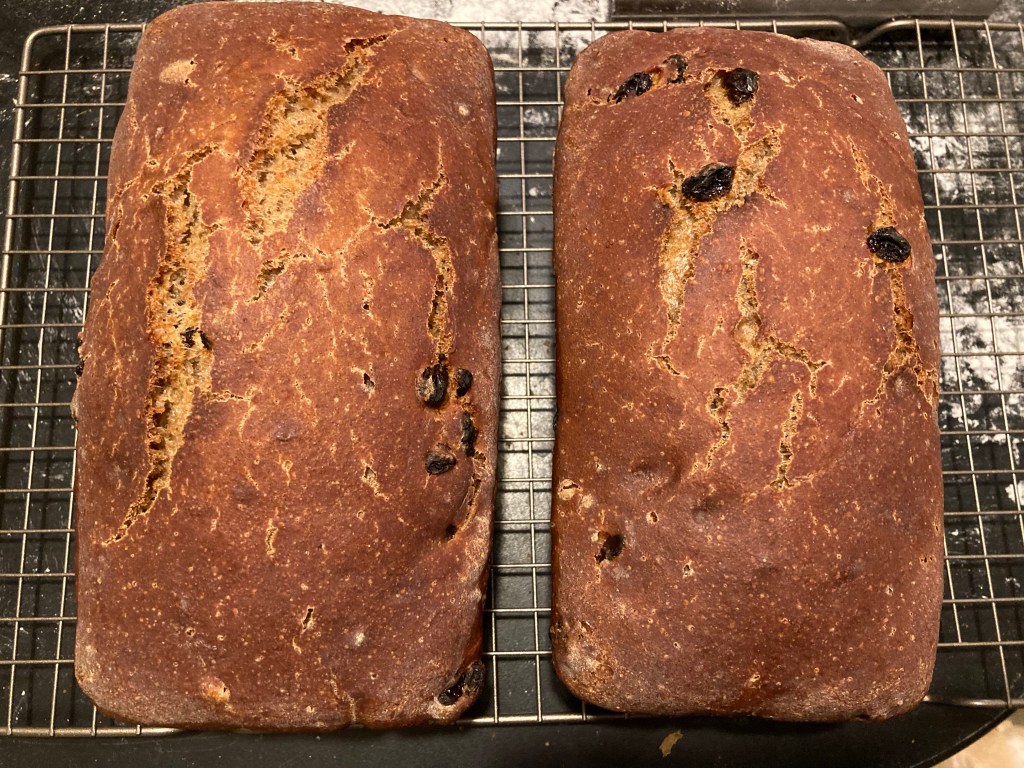
Forgive the misshapen loaf. One spot stuck and a bit a surgery had to be performed in order to remove it from the pan. Thankfully that doesn’t affect the taste. 😊
Banana Blueberry Batter Bread:
3 cups sourdough starter (fed or unfed)
1 1/2 tsp salt
1 tsp vanilla
1/4 cup oil
1/3 cup heavy cream
1 cup water
1/2 cup honey
1/2 cup sugar
3 very ripe, mashed bananas.
Mix all of the above together and then add…
2 cups all purpose flour
1 1/2 tsp baking soda
1 tbsp cinnamon
2 cups fresh or frozen blueberries
1-3 cups whole wheat or whole grain spelt flour. Add 1/2 cup at a time until the batter is about the texture of softened cream cheese.
Pour into greased loaf pans.
Cover and let it rise for about an hour or until it almost reaches the top of the pan.
Bake at 400 degrees for 50-60 minutes. Internal temp should register 190 degrees.
Remove from pans immediately and place on cooling rack to cool. Makes 2 loaves.
Enjoy!
And if you want to learn more, The Art of Homemade Bread will teach you all you need to know about making healthy bread at home.











 Remembering Maggie Lane