The Best Online Classes for Learning Traditional Skills – Bread Making, Fresh-Milled Flour, Homemade Cheese, Herbal Medicine, Canning, Preserving, Gardening, and More…

Traditional Skills That Are Making a Comeback

If you’ve followed my blog for any amount of time, you know that I love the classes at Homesteading Family. I’ve learned so much from them – bread making, sourdough, homemade cheese, canning. Their classes on herbal medicine, preserving, and permaculture are a great starting point if you are wanting to learn more about traditional homemade skills. The skills that our grandparents knew are becoming less commonly known, if not forgotten altogether, but they are so much more important to our daily lives as grocery prices soar and uncertainty looms around the corner. Consider these Homesteading Family Classes as a way to take back some of your independence and the skills we have lost.

Read to the end for a special coupon code! Take advantage of this discount code just for Maggie Lane subscribers!

Traditional Food Preparation Skills

1. The Art of Homemade Bread

This course covers yeast and sourdough. It is broken down step-by-step so that anyone can do it. If you’ve tried to make bread before and failed, this course is for you. By the end you’ll know just what to do to achieve the perfect loaf every time. What’s the secret? Knowing how to read the dough. The course gives you benchmarks at each step to know when your dough is ready for the next step.

2. Homemade Dairy Masterclass

Think you can’t make use of this class because you don’t have a cow? Think again. You can make all the recipes in this course using store-bought milk. Every recipe I’ve made have been made with milk from the store. The course starts out simple and builds your skills so that you can make the simplest fresh cheese all the way up to mozzarella or hard cheeses like cheddar and parmesan. No special equipment needed. You can use the things you already have in your own kitchen.

3. Baking with Home-Milled Flour

Want to learn the ins-and-outs of milling your own flour at home. This mini-course is a great companion to the Art of Homemade Bread class and gives you even more tips on using fresh-milled flour at home.

Food Preservation Techniques

4. The Abundant Pantry Canning Masterclass

Learn how to safely water bath and pressure can in this masterclass. This comprehensive course gives you step by step instructions in over 70 lessons. You’ll get all your questions answered and learn to can with confidence. This class will remove all the doubt in eating your home-canned food.

5. Preserving Eggs & Wild Milk!

If you have your own animals, these two classes will help you know what to do with all those eggs from your chickens and milk from your cow rather than give them to the neighbors. Learn to preserve your eggs like they are fresh for over a year, and find out how to use the good bacteria naturally present in your raw milk to your advantage.

Medicinal Herb & Garden Skills

6. The Herbal Medicine Cabinet

Discover how to grow, harvest, and prepare your own herbal remedies. This beginner course is just what you need if you’ve been wanting to learn how to make your own teas, tinctures, gylcerites, syrups, herbal vinegars, oxymels, and steams, but don’t know where to start.

7. Permaculture

Learn how to work with nature in this introductory course to growing a productive and sustainable garden. Gain the basic skills you need to maximize your food production and provide your family with good home-grown food.

Household & Kitchen Resources

8. Handmade Home

This course is part of Homesteading Family’s Homestead Kitchen Membership. It covers soap making and making your own herbal oil and salves.

9. Home Management

Gain tips on managing a busy home, homeschool, and homestead. From tips to streamline breakfast to managing your time and finding joy in your day, let this course guide you to peaceful productivity.

10. In the Homestead Kitchen Magazine

This digital and print magazine is a beautiful addition to your coffee table and a valuable resource to your kitchen. The kitchen is truly the hub of the home. Whether your homestead is acres of land or a tiny balcony garden, you can make use of these tips and recipes in any kitchen. Take your cooking from scratch skills up a notch. This will soon become your favorite cookbook!

Want access to all these classes and more?

Homesteading Family offers a monthly or annual membership to their Homestead Kitchen Community. Membership offers you all these classes plus access to members-only content and challenges.

Whether you’re seeking greater self-sufficiency, trying to balance the budget, or simply wanting to experience the joy of making things at home, these online courses offer guidance and experience that makes traditional skills accessible to anyone.

Special BONUS for Maggie Lane readers!

Enter your email below to get the Homesteading Family coupon code.

View Homesteading Family classes here.

Not ready to sign up for full class? These FREE trainings might be just what you need.

FREE Dairy Training – click the link to sign up.

FREE Canning Training – click the link to sign up.

FREE Bread Making Class – click the link to sign up.

FREE Herbal Medicine Training – click the link to sign up.
Note: This post contains affiliate links.

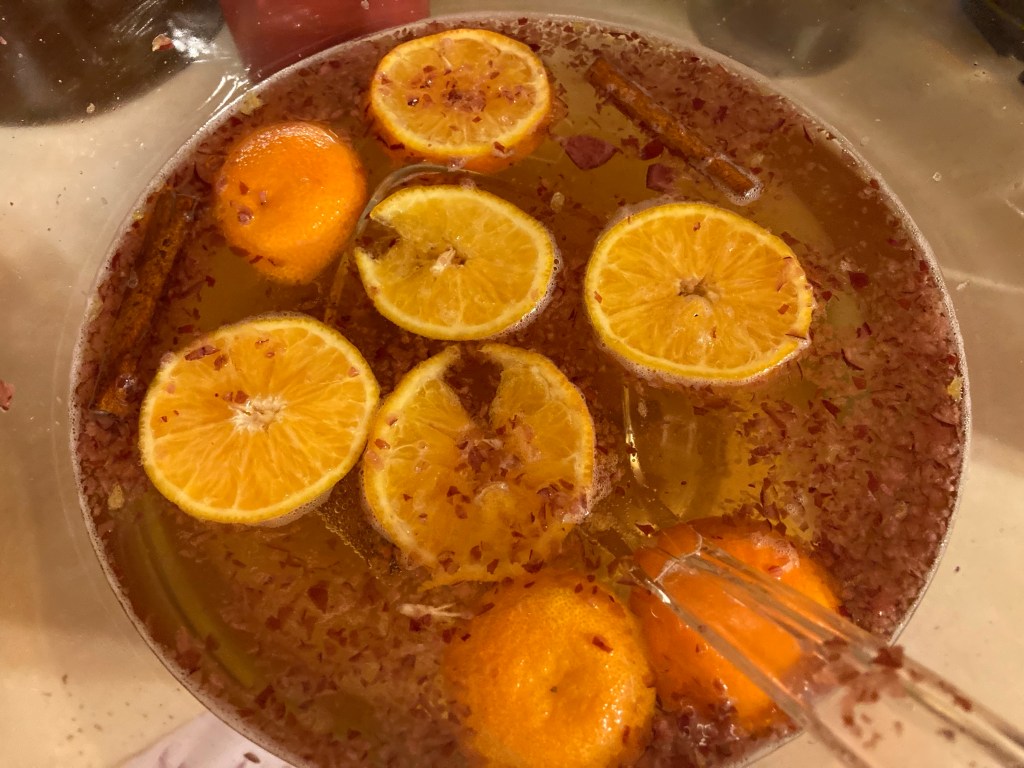
Cranberry Orange Cinnamon Christmas Punch

For those of you that have made my fermented lemon cranberry relish, pull out whatever you have left from Thanksgiving and use for it for your Christmas parties. 🎄

I improvised this yummy Christmas punch for my daughter’s Christmas party. It was super easy and delicious too!

Cranberry Orange Cinnamon Christmas Punch Recipe:

1 bottle of apple juice
1 – 2 liter bottle of Sprite
3 heaping spoonfuls of cranberry relish
3-4 cinnamon sticks
Slices of 1 large or 2 small oranges

This punch is delicious! It’s best if you add everything but the sprite and let it chill overnight and then add the Sprite right before serving. It’s also super quick to mix up more when your bowl runs low. Just combine everything together again and you’ve got another bowl ready to go.

And if you need to avoid refined sugar, try this sugar-free modification…

Sugar-Free Cranberry Orange Christmas Punch Recipe:

If you need to omit refined sugar, simply follow the recipe above, but instead double the amount of lemon cranberry honey relish that you add, and use orange flavored seltzer water instead of Sprite and you’ll have a yummy holiday punch with no refined sugar.

Merry Christmas everyone! 🎄

Cranberries! Try this Fermented Lemon Cranberry Relish for Thanksgiving!

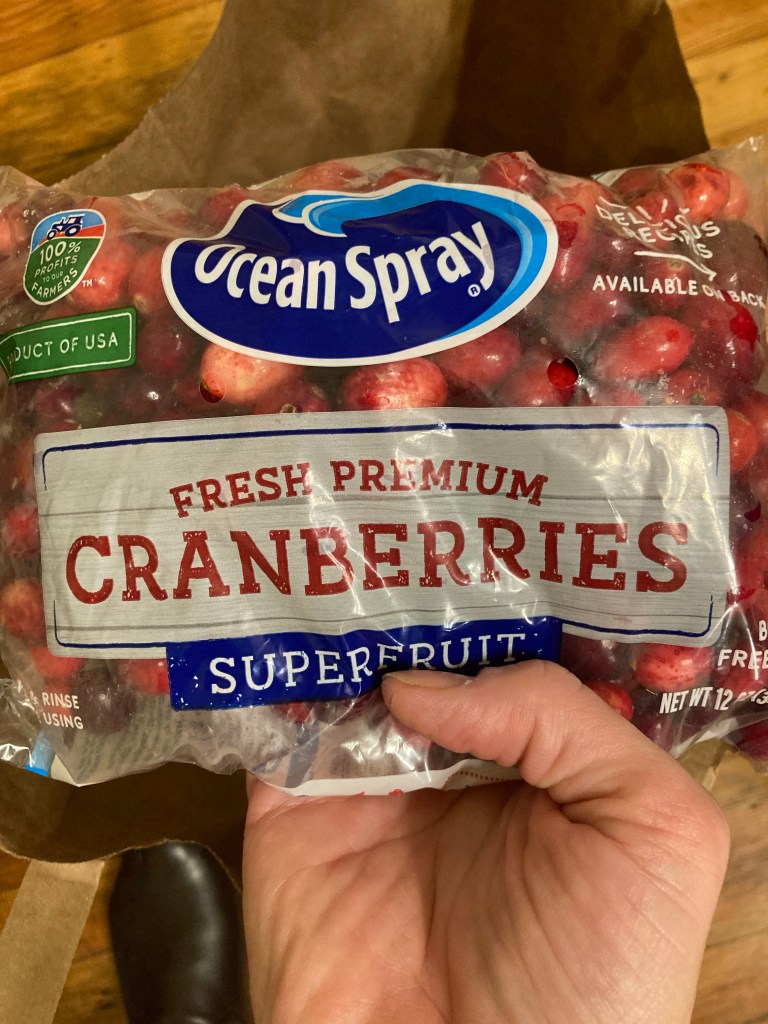
Do your local grocery stores have fresh cranberries yet? If so, snatch them up while you can. I’ve made this fermented Lemon Cranberry Honey the last couple of years and realized last year that I didn’t make nearly enough last time. So I upped my game and instead of the two jars I made last year, this year I made six! One bag of cranberries will yield about three cups worth of relish. Hopefully this will last us through till next year when I can get fresh cranberries again. I tell you there is nothing better on toast in the morning and it makes whipping up a batch of lemon cranberry scones a cinch!

It couldn’t be easier, chop the cranberries in your food processor, put them in a jar, add some lemon peel, cover them with honey, and put on the lid. Let it sit on the counter for a couple of weeks agitating the jar a little each day and then move to cold storage. I’ve had a forgotten jar last nearly a year and it was still delicious.

If you want to delve deeper into ferments, try Homesteading Family’s Fearless Fermenting Workshop.

Note: This post contains affiliate links.

Fermented Cherry Tomatoes

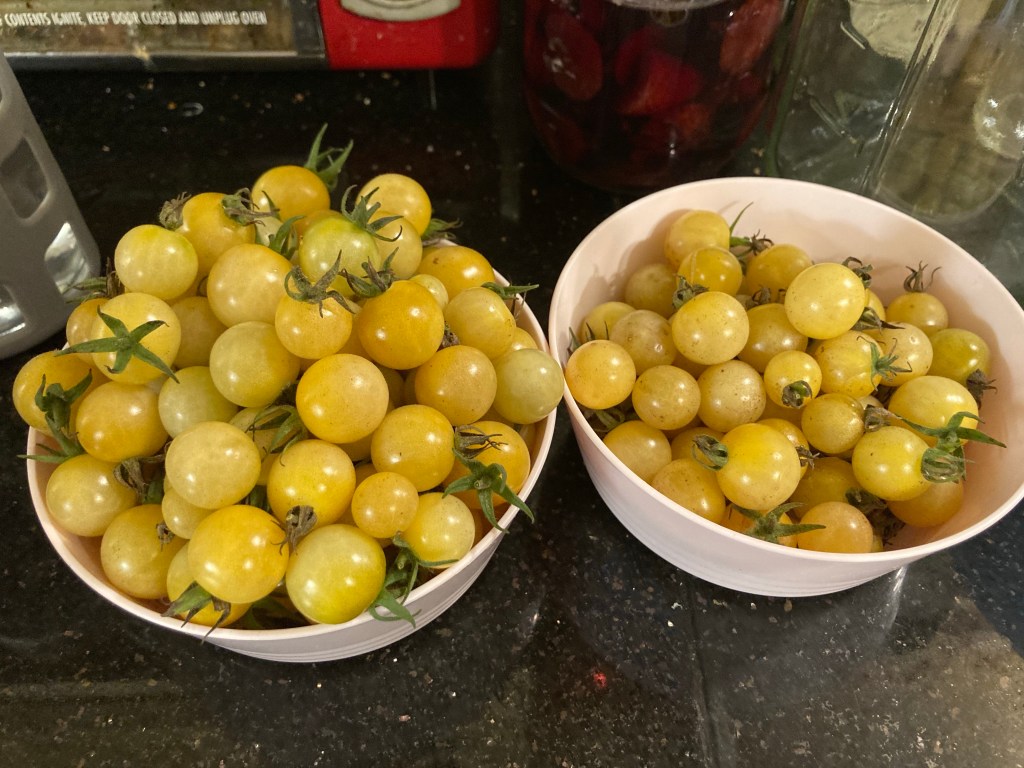
We finally had cherry tomatoes begin to ripen after a long, cool spring, and the hottest, driest summer I can remember. And they are ripening just as it’s beginning to hit the 30’s at night, so I’m trying to bring them in as soon as there is a hint of yellow.

Of course, there are too many to eat fresh, even with a tomato loving six year old, so I have to do something with the extras.

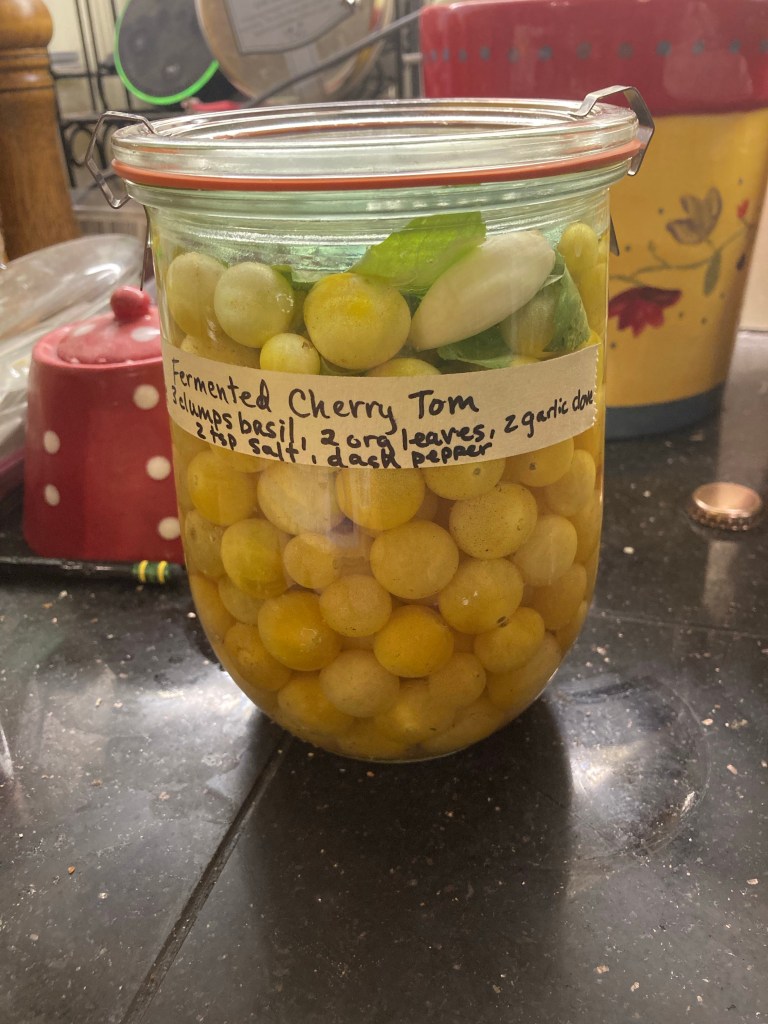
So I made a batch of fermented garlic Basil tomatoes which I’ll probably blend up later on to use as a pasta sauce. After it ferments I’ll strain it and blend it all together in the food processor adding little bits of the fermenting liquid until I like the texture, and then pour over and toss with cooked pasta.

If you want to try your own, take fill a quart size jar with cherry tomatoes to about 1/2” below the shoulder. Add 2 1/2 tsp of salt, a few basil leaves if desired, and 1-2 cloves of garlic (also optional). Cover with filtered or distilled water. Weight down and cover with a glass weight, clean onion skin, or zip-lock baggie filled with a bit of water. Your goal here is to keep all the food particles under the liquid so that they are not exposed to oxygen so that they will not mold.

Loosely screw on your lid, and you’re done! That was easy wasn’t it? Let it sit for 2-3 weeks until it hits a flavor profile that you like, and when it does, move it to cold storage in the fridge. Fell free to open your jar to taste the tomatoes after the first week to see how they are progressing so that you can learn what flavors you like and when to stop the fermenting process by moving it to cold storage. But, each time you open the jar be sure that you settle everything back under the liquid and your weight or follower as fermenting weights are called.

You may notice that the jar I am using is not a regular mason jar. Any glass jar that you have will do. I have used canning jars, old jelly jars, spaghetti sauce jars, etc. as long as it is clean and you have a way to keep the contents submerged, you’re good to go! But these Weck jars are my new favorite jars for fermenting. Why? Well, they are very pretty, but the main reason is that they have glass lids that clip on. This means that I can grab a lid from a jar that is the next smallest size down and use that lid as my weight. It’s so easy and it fits perfectly! I love it! And they don’t need to be burped because the lids clip on. They will release the pressure on their own or you can just give the little tab on the sealing ring a pull if you want to and you never have to remove the lid until it’s ready to be eaten. Plus, if you are a canner, they work for that too. The rings can even be reused. So they are very versatile. They can be pricey if purchased new, but last a long while if cared for well, and I have even found some at thrift stores before and I definitely snatched them up!

Weck Small Batch Preserving (affiliate link) is a great book if you’d like to investigate using Weck jars further for either canning or fermenting. It’s available through most libraries as an e-book, which is how I discovered it. And if you are new to fermenting, the Fearless Fermenting workshop (affiliate link) by Carolyn at Homesteading Family is a great course to get you started.

Hope you get to concoct something fun and yummy in your kitchen soon! 😊

Homemade Citrus Scrap Vinegar

I’ve been experimenting with making citrus scrap vinegar this summer and I must say that I am hooked!

Pictured here is a batch of lemon grapefruit vinegar and it couldn’t be easier to make your own. And the best part is, it’s a great way to use up all the rinds from oranges, lemons, limes, grapefruit, or whatever citrus you have on hand. Just keep the rinds in a jar in the fridge for a couple of weeks until you accumulate enough to make a batch.

So far I’ve tried lemon, lime (my favorite so far – the flavors are complex and delicious!), orange, orange with blood orange, orange and lemon, and now grapefruit and lemon, and they are all great!

To make a batch first collect your jar of rinds, add some sugar, add some just boiled water, cover with a coffee filter kept on the jar with a rubber band, and stir daily for 4-5 days. You will see it start tomorrow bubble. When the bubbling slows down, add more sugar and stir for another week. Strain out the fruit scraps pour back into a clean jar, cover again with the coffee filter and let it sit for a month. If a opaque film develops on the surface, don’t worry, that is the vinegar mother and a good thing.

For a 1/2 gallon jar of citrus peels add 1/3 cup sugar at the first mixing, and then another 1/4 cup somewhere around day 5 or once the bubbling settles down.

For a quart jar of citrus peels add 2 tbsp sugar at the first mixing, and then another 2 tsp somewhere around day 5 or once the bubbling settles down.

After a month can test the acidity of your vinegar if you like to be sure it is acidic enough (4-5 on the pH scale) using paper test strips, or you can just taste it. If it tastes like vinegar, then it’s done! You can store it in the fridge to age and mellow it if you want or keep it in a cool, dark cupboard or your pantry as you would your other vinegars.

You can really make vinegar out of almost anything with fruit or some level of sugar content. I’ve been really enjoying this book if you want to learn more. Kirsten does a great job of explaining it ALL!

Homebrewed Vinegar by Kirsten Shockey (affiliate link)

Fermented Chard, Jalapeño, and Onion Relish

It may sound strange, and I’m not sure what to name it (comment if you have suggestions), but it is beautiful, delicious, and easy to make.

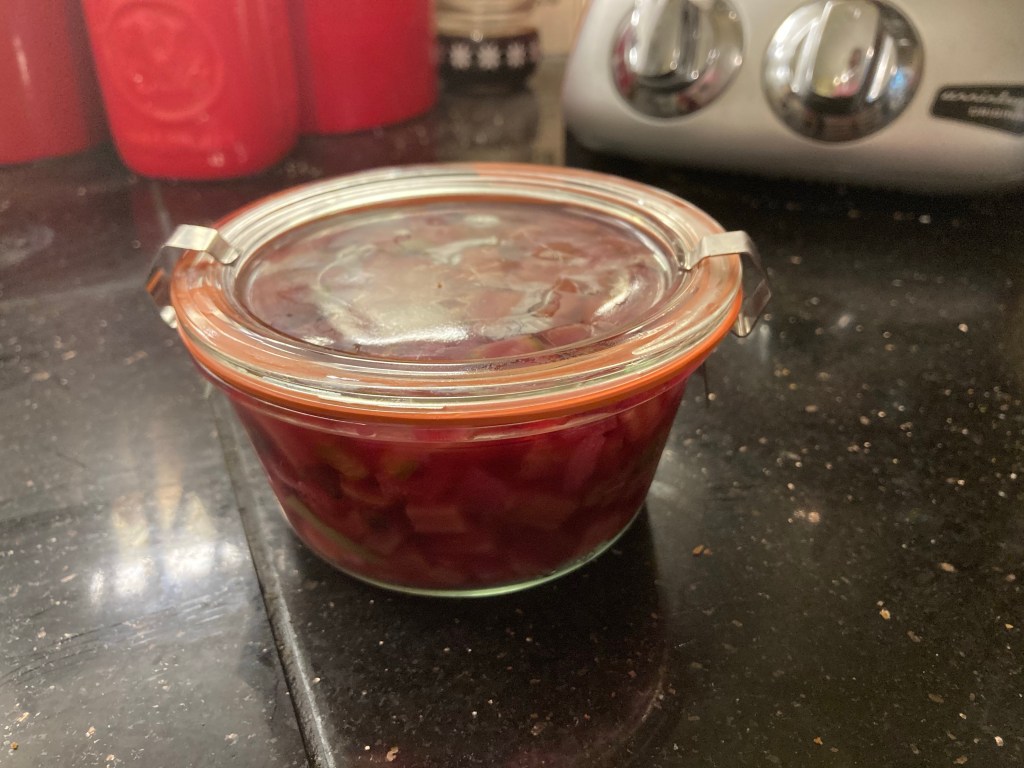
I saved my stems from my red Swiss Chard, chopped them, added some chopped onions, and a few slices of a chopped Jalapeño, added sea salt and mixed until it tasted pleasantly salty, covered with water and a follower (in this case a zip lock baggie with water), let it sit for 2-3 days on the counter and Voilà! I have a delicious, beautiful, probiotic rich relish that livens up any meal. I’ve added it to dinners, topped my lunches with it, and even added it to my fried egg with breakfast.

For other fermented vegetables ideas try some of these recipes:

Mexican Cole Slaw

Three New Ferments in my Kitchen

Fermented Lemon Cranberry Honey

Fermented Cherry Tomatoes (scroll to the bottom)

Visit the Pantry and the Cellar for more discussions on ferments.

Want to delve deeper into Ferments?

Check out Homesteading Family’s Fearless Fermenting course to learn about more delicious ways you can ferment vegetables.

Note: This post contains affiliate links.

Nectarine Jalapeño Kombucha

Who doesn’t like a little spice in life? I know I do.

I was bottling up some kombucha for a second ferment tonight planning to add some strawberries. But alas, the strawberries had gotten pushed to the back of thr fridge and when I finally found them they were moldy. 🫤

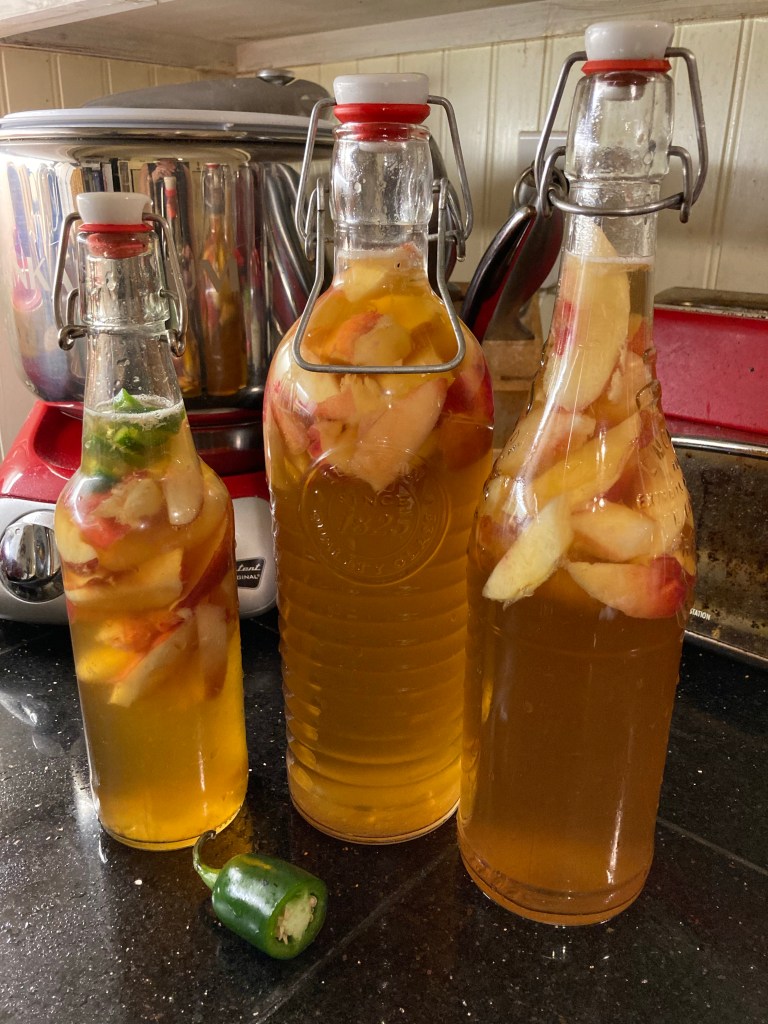
But there’s always some fruit around here that is on the edge needing to be used up, so nectarines to the rescue. I sliced up some white nectaries that were over ripe which makes them perfect for this use as there will be lots of good sugars to feed the bacteria, and while I was slicing them I noticed half of a Jalepeno on the counter from dinner.

🤔 My wheels started turning and I got to wondering how that would go with the nectarines. I think it might be pretty good. I’ve never made a spicy kombucha before, so I decided to add a couple slices to one bottle and see how it turns out. At the very least, this will ensure that I’ll get a bottle to myself before the kids drink up the other two. 😂

Playing with flavors can be fun, and I’ll be sure to edit this post and let you all know how it turns out. To see my other favorite kombucha flavors visit this post on Flavored Kombucha.

And if you like spice, stay tuned for a post later in the week on my new favorite spicy fermented relish. 😁

Happy brewing!

Ferments on the Road

Meet my favorite ferments.

From left to right….

My wheat sourdough starter (half all purpose and half whole wheat), my delicious fermented cranberry lemon honey, my gluten-free sourdough starter, and my homemade wild sour cream.

My family and I hit the road this summer for a 3,000 mile road trip to visit family, and these little guys came along for the ride.

I packed them carefully in my electric cooler and at each place we stay I’ve been able to bake bread for my family, cranberry lemon scones for the aunts, uncles, and cousins, GF bread for my SIL, and most importantly, I can keep my clabber culture going so that I can make cheese once we get home. It needs to be fed weekly and would have certainly died while we were away if I had left it at home.

Ferments can behave differently during the summer. Changes in temperature, humidity, barometric pressure, elevation, all affect how your cultures perform and you need to know them well enough to adjust your technique accordingly. At the lake where we are at a higher elevation than at home in New York, my sourdough and yeast breads rise faster, and my clabber takes longer to culture because of the cooler temperatures. Each ferment has a personality. You have to get to know it and adjust how you use it accordingly. For example, I have to watch the rise on my breads much more closely and reduce the amount of yeast that I use. I have to allow more time for my clabber to set up for fresh homemade sour cream.

I plan to start some new cheeses when I get home. And you’ll probably see some new fermented vegetables on my counter once I get back to my garden.

What’s bubbling in your kitchen this summer?

Need some ideas for what to ferment first? Or do ferments intimidate you and you don’t know where to start? Homesteading Family has some great courses to get your creative juices flowing and things bubbling in your kitchen. Check out their courses on The Art of Homemade Bread which includes sourdough, Fearless Fermenting, and Practical Homemade Dairy (affiliate links).

Flavored Kombucha

Who makes kombucha? 🙋🏻‍♀️

Did you know that you can set your kombucha up for a second ferment to add flavor and fizz?

I just poured up a new batch tonight into these flip top bottles and added blood oranges. I let it sit for 2-3 more days until the orange is infused and it becomes this beautiful pink color. It will also become fuzzy and carbonate which can be quite refreshing.

If you decide to try a second ferment, use glass bottles with flip top lids or plastic bottles. Don’t use a glass container with tight fitting lids as it will continue to ferment and build up pressure and jars have been know to break from the pressure build up. It’s a good idea to burp your container once or twice a day.

What flavor will you try? Some of my favorites are….

Blackberry Lime – add fresh or frozen berries and lime slices or zest.

Blueberry Lemon – add fresh or frozen blueberries and lemon slices or zest.

Raspberry – add fresh or frozen raspberries.

Strawberry Basil – add fresh or frozen strawberries and fresh basil.

Mango – add fresh or frozen mango. (Watch out! The sugars in this one cause it to ferment fast.)

Orange – add fresh orange slices with the rind. I like blood oranges, as you can see.

Cranberry Ginger – add fresh or dried cranberries and grated ginger root.

Or come up with your own combo. Use what you have or whatever yummy flavors strike your fancy.

Happy brewing!

Mexican Coleslaw – three different ways…. Plain, Creamy, and Fermented

Sometimes your best meals come for what is lying around in your pantry waiting to be used.

Such is the case with this recipe.

I had leftover pinto beans and hamburger to use up for lunch one day this week, and I was trying trying to think of how to make it a little different or special since we had just eaten the same meal for lunch the day before.

What do I have I asked myself?

I had a Napa Cabbage that needed to be used up. What could I do with that. Well, I could make coleslaw, but traditional cole slaw doesn’t really fit with this meal, and only one of my kids really likes it.

Cross that off the list.

What about Mexican Coleslaw. Yes. That might work.

What can I put in it.

Cabbage, red onion, garlic…. The recipe started formulating in my mind. Here it is for your enjoyment.

Mexican Coleslaw:

Cabbage (green or Napa work well), chopped or grated. Grate the amount needed for the dish you are serving this week and the number of people in your family.

1 cup red onion, chopped

4-6 cloves of garlic, chopped

1/8 cup salt for every 4 cups of cabbage

Black pepper, a few good shakes

1/2 tsp chili powder for every 4 cups of cabbage

1.5 tsp cumin for every 4 cups of cabbage

Juice from 1 lime, or 2 tbsp of bottles lime juice per every 4 cups of cabbage

Throw it all in a bowl and toss together.

Now this is where your options come in.

Mexican Coleslaw Three Ways:

1. Plain: Eat it as is. This is what we did. We used it as a topping for our Mexican lunch in place of lettuce. If you find it a bit dry, drizzle a little bit of olive oil to distribute the spices and moisten it up a little.

2. Creamy: Add mayonnaise. If you want a creamier slaw, add a little Mayo at the end and mix in. This would be wonderful on top of Mexican food as well.

3. Fermented: If you haven’t added oil or Mayo, this is where it gets interesting. You can add more salt and turn it into a Mexican lacto-ferments sauerkraut. This could be done with any leftovers that didn’t get eaten at your meal, or with the whole batch if you desire. Add about 1 tsp of good sea salt per every 4 cups of cabbage. Go by taste. It should be salty, but not so salty so that you don’t want to eat it. Taste as you go when adding salt. Once salted, pack into a clean jar, cover with a follower (glass weight, sterilized rock, ziplock baggie filled with marbles). Cover with filtered water so that all the food contents are submerged. Cover loosely with a lid. Label and date. Loosen the lid at least once a day to release any gases. Eat at any point, but allow it to ferment for 1-2 weeks or until the taste is to your liking before transferring to cold storage.

I enjoyed mine with a taco bowl topped with my homegrown, fermented cherry tomatoes (see lead photo).

For more information on fermented foods visit the Pantry. Or for a more thorough resource, I highly recommend Shannon Stronger’s Traditionally Fermented Foods book (affiliate link).

Extra Cranberries? Try this yummy relish….

Do you have extra cranberries to use up after Thanksgiving? Try this Lemon Cranberry Relish. It couldn’t be easier. It works for Thanksgiving, but I’ll tell you a secret. I made extra this year so that I have some for Christmas too. That beautiful red color will be lovely on my Christmas table.

This recipe can easily be halved or doubled. Here’s what you need:

1 package whole fresh cranberries

1/4 cup chopped lemon peel or 1-2 tbsp lemon zest

Honey

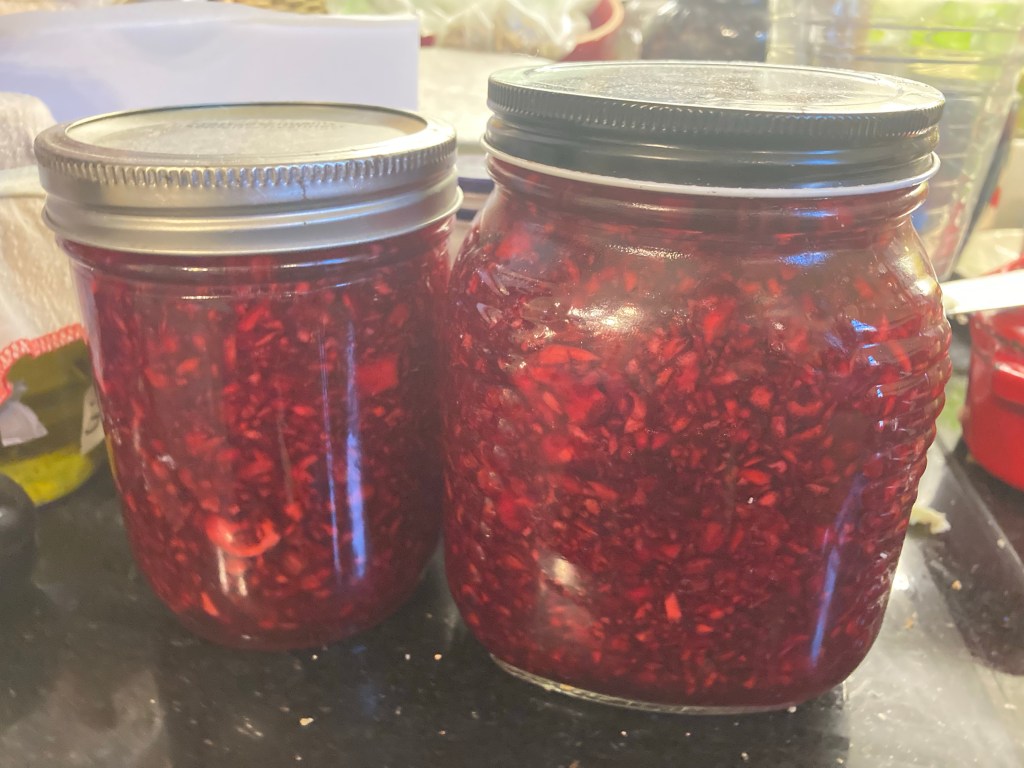
Simply chop the cranberries in your food processor (or leave them whole if you want), cut up your lemon peel into little pieces or chunks (you could use lemon zest too if you don’t want the chunks of peel in there), put in a jar, and cover with honey to 1” above the fruit level. That’s it!

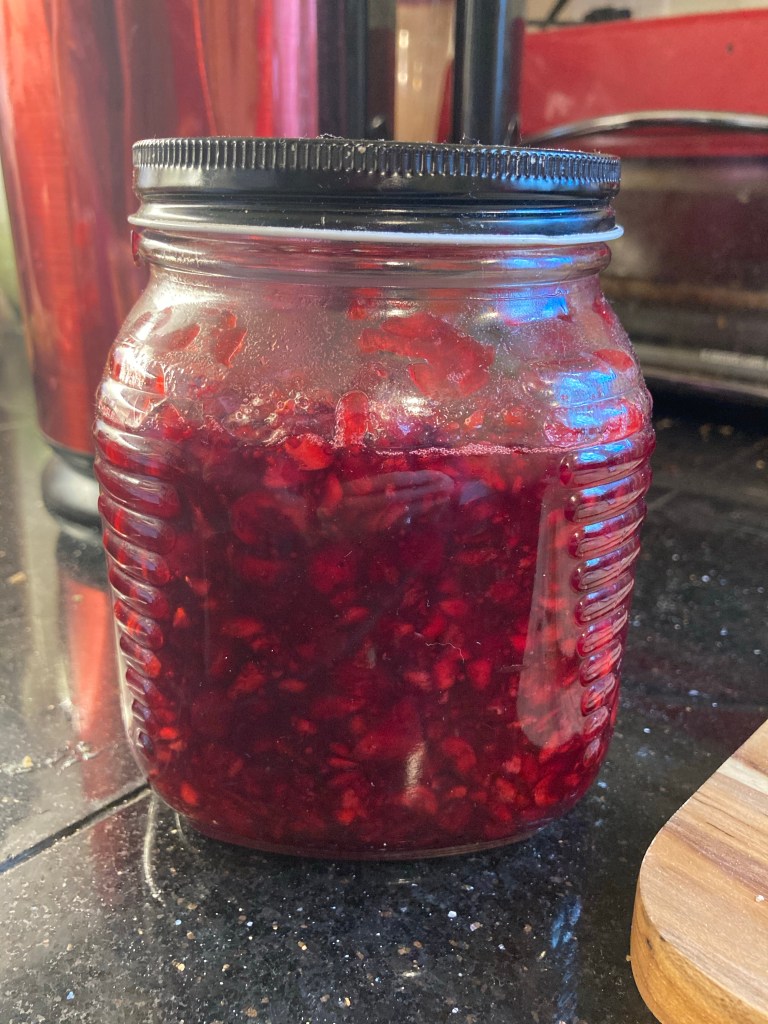
Swirl the cranberries around 2-3 times per day or whenever you pass by the jar to keep them well coated as submerged. After a couple of days you’ll notice that the honey becomes more liquid as the fruit release their juices into it. You can begin eating it at any point, but the flavor is best after a week or more of fermentation time.

Amazingly this is a fermented relish. The anti-microbial properties of the honey are acting as a preservative for the fruit long enough for the liquid to be released into the honey which then allows the honey to ferment. After fully fermented, which takes about 2 weeks (more like 4 weeks if you use whole cranberries) the this will last indefinitely in the fridge. If kept at room temperature it will continue to ferment and eventually turn to alcohol if left out long enough. I keep mine out on the counter, but it never lasts long enough to bother putting it in the fridge. We eat it up.

And feel free to play with flavors. I’ve also tried adding orange and cinnamon, but the lemon is my favorite. 

This recipe makes a great jam substitute if you are trying to avoid sugar. I also use it in baking to make flavored biscotti or scones, or even as a flavoring or sweetener in my morning tea.

Lemon Cranberry Honey

Are you ready for the easiest recipe you’ll make this week?

I’ve become addicted to this lemon cranberry honey. It’s sooooo good!

Here’s what you need:

1 package whole fresh cranberries

1/2 chopped lemon peel

Honey

Simply chop the cranberries in your food processor (or leave them whole if you want), cut up your lemon peel into little pieces or chunks, put in a jar, and cover with honey to 1” above the fruit level. That’s it!

You’ve now made fermented cranberry lemon honey. Just swirl the cranberries around 2-3 times per day or whenever you pass by the jar to keep them well coated as submerged. After a couple of days you’ll notice that the honey becomes more liquid as the fruit release their juices into it. You can begin eating it at any point, but the flavor is best after a week or more of fermentation time.

So, what’s actually happening here? The anti-microbial properties of the honey are acting as a preservative for the fruit long enough for the liquid to be released into the honey which then allows the honey to ferment. After fully fermented, which takes about 2 weeks (more like 4 weeks if you use whole cranberries) the this will last indefinitely in the fridge. If kept at room temperature it will continue to ferment and eventually turn to alcohol if left out long enough. I keep mine out on the counter, but it never lasts long enough to bother putting it in the fridge. We eat it up.

And feel free to play with flavors. I’ve also tried adding orange and cinnamon, but the lemon is my favorite.

This recipe makes a great jam substitute if you are trying to avoid sugar. I also use it in baking to make flavored biscotti or scones, or even as a flavoring or sweetener in my morning tea.

Homesteading Family’s Fearless Fermenting workshop will help you dive deeper into Fermenting if you want to learn more.

Note: This post contains affiliate links.