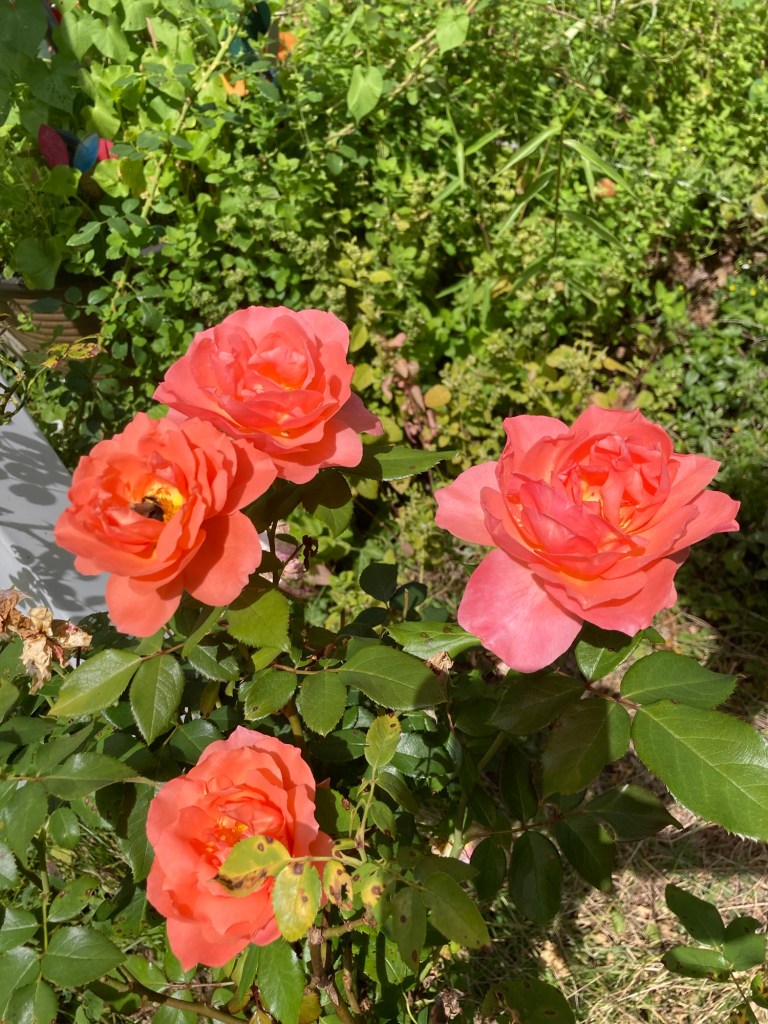
DIY Rose Oil ~ Make this oil from your own Rose 🥀Petals!

What do you make with your flowers? 🥀

This is infused Rose oil is one my favorite things to make. I use it on my face and hands daily. 🥀

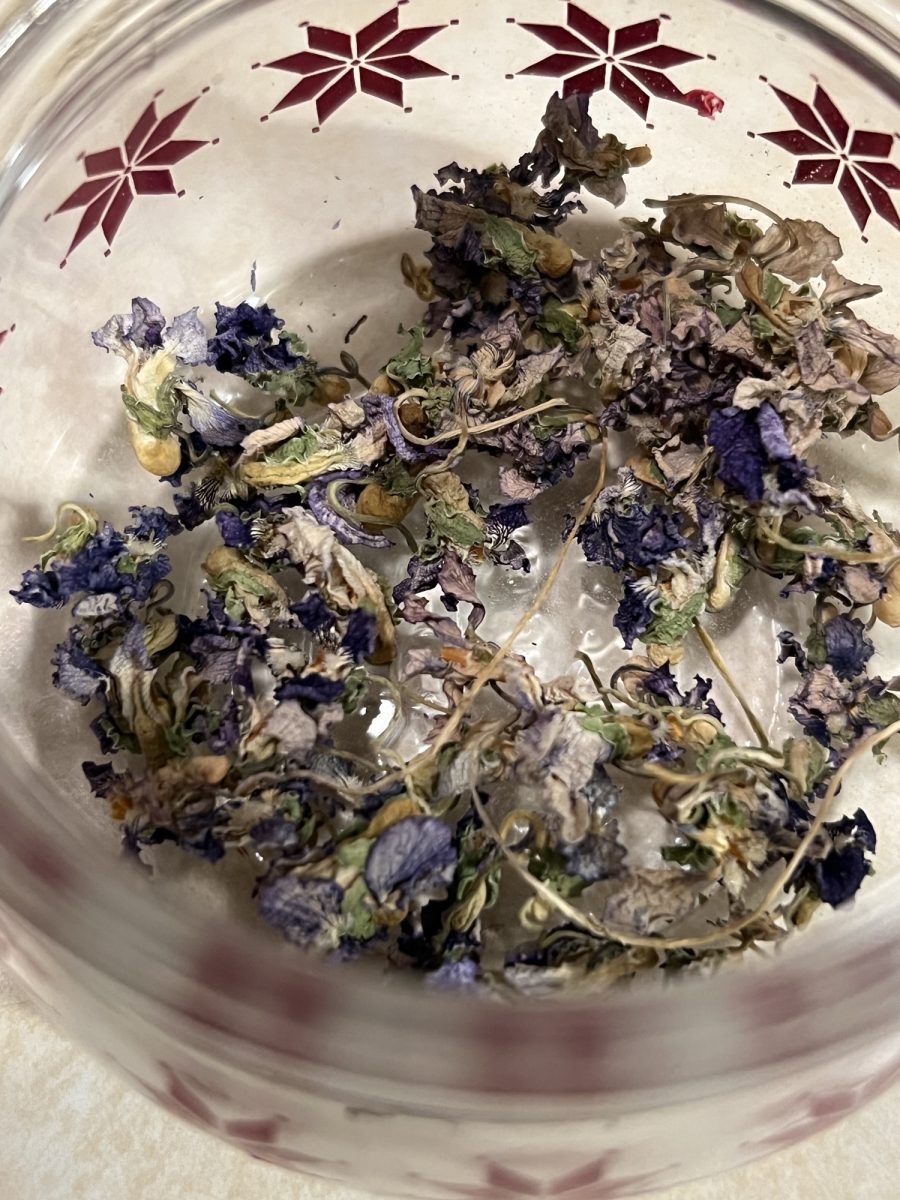
🥀 I harvest my rose petals, air dry them inside a pretty tea towel until crunchy, and store them in a clear glass jar in a dark cabinet where I can check back often to watch for condensation (a sign that they aren’t fully dry).

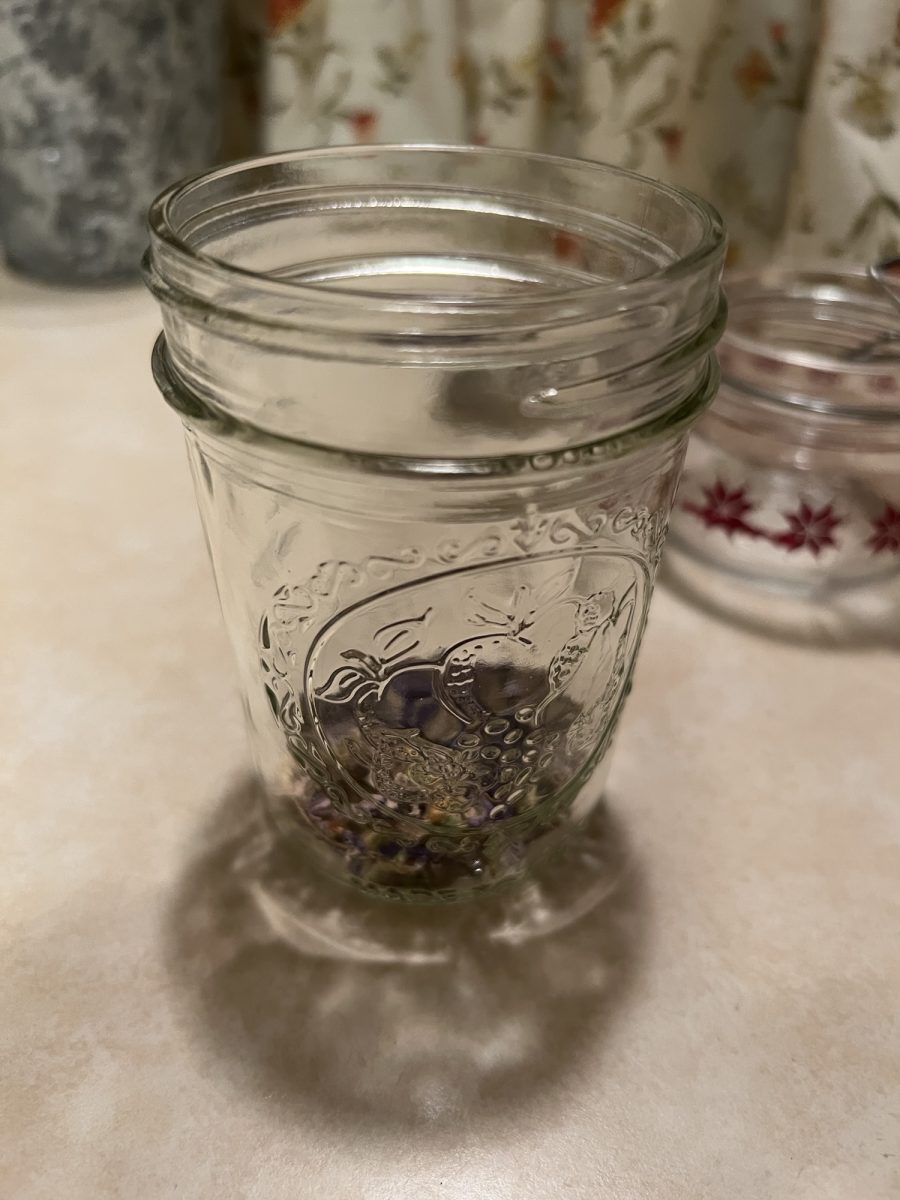
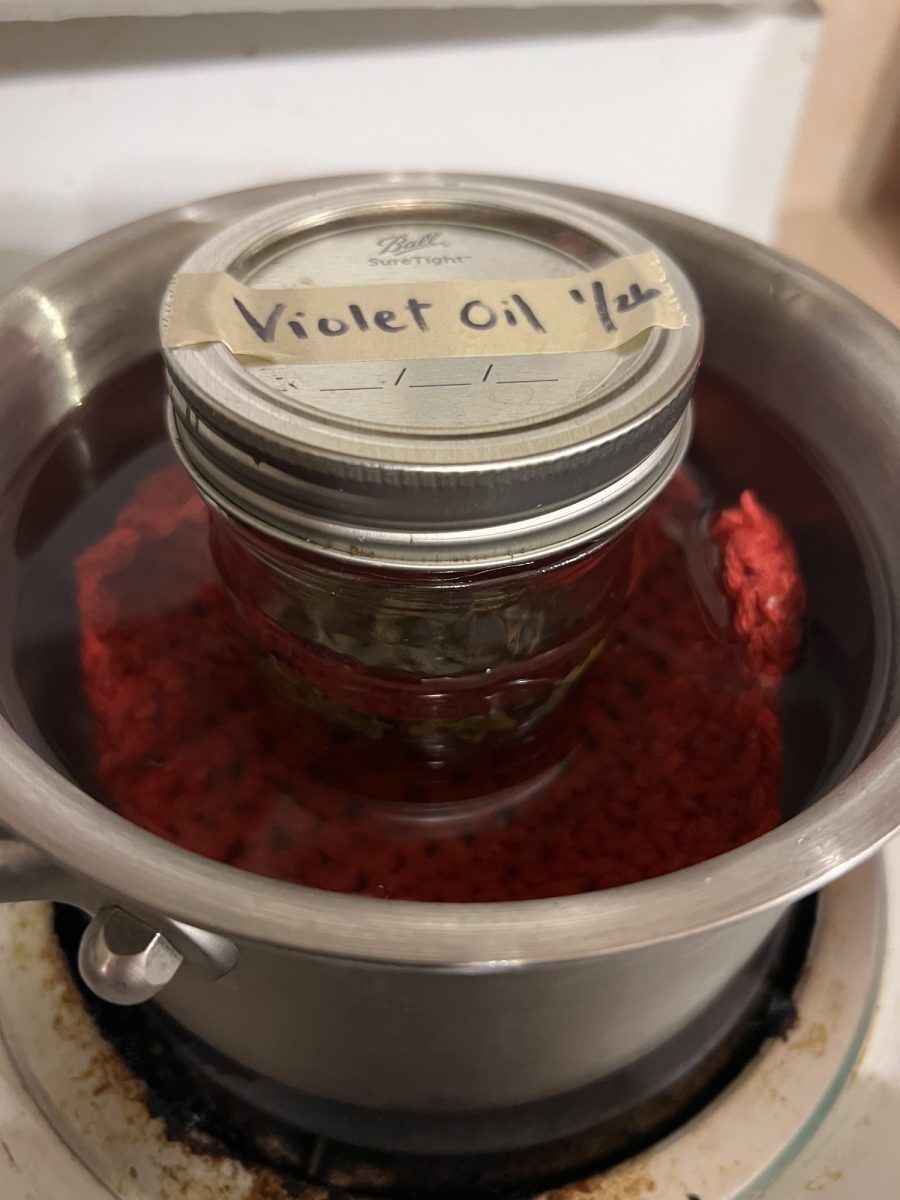
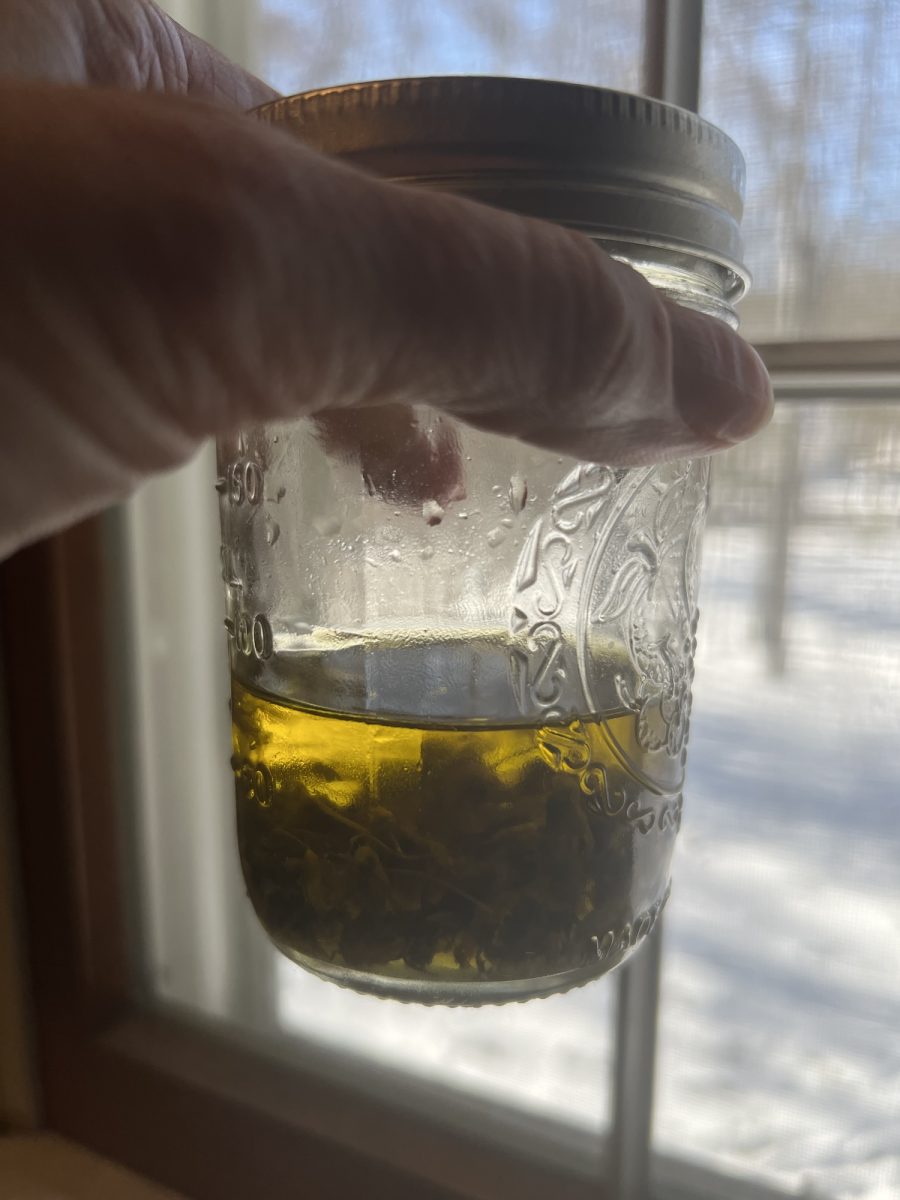
When I need to make more Rose oil I simply put some of my dried petals in a jar, cover them with my favorite oil (I use olive, but almond is lovely, or you can use any oil you would cook with that is liquid at room temperature), and then I sit the jar in a sunny window to add some gentle warmth. 

When I need more Rose 🥀 oil, I strain the petals and pour some into a 2 ounce spray bottle for easy application. 

Hint: You wouldn’t think it, but the 2 ounce travel bottles from Walmart work best. Then I can take my oil with me on the go. I have a bottle in my bag right now actually. 😊

Once strained, I store extra oil in glass jelly jars labeled with masking tape with the name and date. 

🥀 Who would have thought that something so lovely and useable would come out of such a simple flower? 

When my hands get dry this time of year I just take some out and squirt some into my palm. It sprays out in a nice, neat stream. Because Rose 🥀 Family plants are all astringent, Rose oil not only moisturizes, but tones my skin. And it smells as good as your Roses 🥀 do in your garden in the summer. There’s nothing like the aroma of Roses to lift your spirits when winter days are dreary.

It’s the simple ways you use your plants that make them that much more special. 🥀

Subscribe or follow on Facebook to learn how to recognize and use the plants that grow around you. 


Visit our sister site, http://www.botanyinanhour.com, to learn more about your botany basics, plant recognition, and how to put your knowledge to use so that you can garden better, forage safely, harvest more, preserve easily, heal locally, and teach your kids plant skills for life.

#botanyinanhour #botany 

#flowerfamilies #roses #roseoil #rosefamiky #gardenbetter #foragesafely #harvestmore #preserveeasily #heallocally 

Exciting News! I’ve launched a new website! Easy, quick, and stress-free plant identification at Botany in an Hour!

Botany in an Hour is where YOU become the plant ID expert!

If you’ve followed me for a while, many of you know that I love plants and I love teaching! So, teaching Botany for our local homeschool group has been one of my greatest joys.

I’m so excited to announce that I’ve taken my in-person plant ID workshops and turned it into an online class. My new website will allow me to just just teach students local to me plant identification, but now I can teach you all the plants too! My method is quick and it’s easy. In just one hour I can teach you what you need to know in order to identify over 40,000 plants by sight. Think I’m joking? I’m not. I teach this every summer to groups of homeschool students and their parents. I love this, because even my Pre-K students can do this! I can take a four-year-old, tell them what to look for, turn them loose in a garden, and they can find the plants and identify them accurately every time! Hop on over to Botany in an Hour and check it out!

At the very least take advantage of my free download – The Best Botany Resources, to find out which books are the best for learning plant identification quickly and easily and at the same time, you’ll get a special coupon code for the launch of my new course! I hope I’ll see you in Botany Class!

What people are saying about Botany in an Hour!

“This is way more fun than learning from a book.” ~ Sal Y.

“I highly recommend this class. It was a great way to learn about the amazing world of botany!
My son said, “I never knew Botany could be so much fun!”.” ~ Lisa VH

“My family loved this class! The children and I learned so much – we love going on
nature walks and try to identify and classify the plants and trees.” ~ Giovanna D.

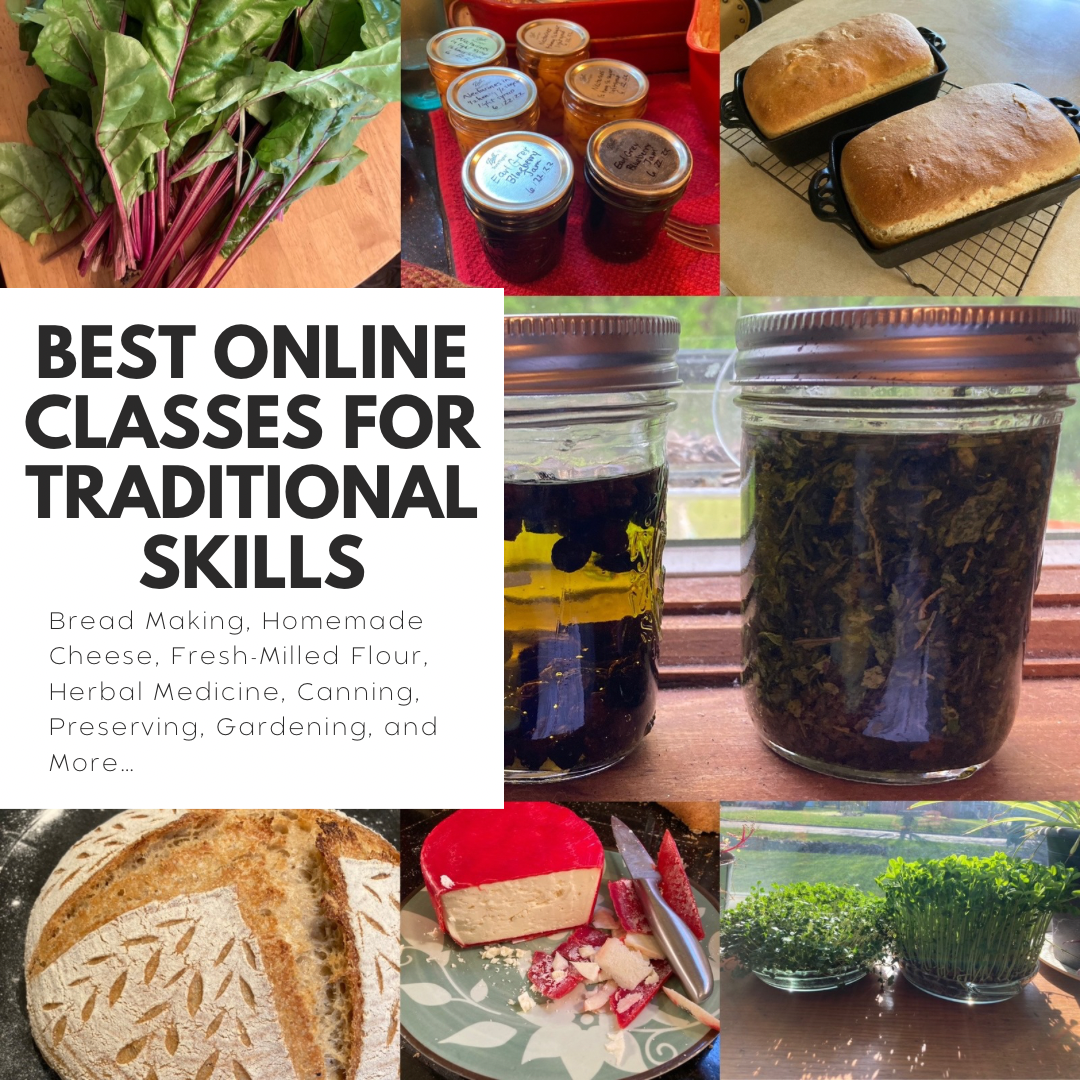
The Best Online Classes for Learning Traditional Skills – Bread Making, Fresh-Milled Flour, Homemade Cheese, Herbal Medicine, Canning, Preserving, Gardening, and More…

Traditional Skills That Are Making a Comeback

If you’ve followed my blog for any amount of time, you know that I love the classes at Homesteading Family. I’ve learned so much from them – bread making, sourdough, homemade cheese, canning. Their classes on herbal medicine, preserving, and permaculture are a great starting point if you are wanting to learn more about traditional homemade skills. The skills that our grandparents knew are becoming less commonly known, if not forgotten altogether, but they are so much more important to our daily lives as grocery prices soar and uncertainty looms around the corner. Consider these Homesteading Family Classes as a way to take back some of your independence and the skills we have lost.

Read to the end for a special coupon code! Take advantage of this discount code just for Maggie Lane subscribers!

Traditional Food Preparation Skills

1. The Art of Homemade Bread

This course covers yeast and sourdough. It is broken down step-by-step so that anyone can do it. If you’ve tried to make bread before and failed, this course is for you. By the end you’ll know just what to do to achieve the perfect loaf every time. What’s the secret? Knowing how to read the dough. The course gives you benchmarks at each step to know when your dough is ready for the next step.

2. Homemade Dairy Masterclass

Think you can’t make use of this class because you don’t have a cow? Think again. You can make all the recipes in this course using store-bought milk. Every recipe I’ve made have been made with milk from the store. The course starts out simple and builds your skills so that you can make the simplest fresh cheese all the way up to mozzarella or hard cheeses like cheddar and parmesan. No special equipment needed. You can use the things you already have in your own kitchen.

3. Baking with Home-Milled Flour

Want to learn the ins-and-outs of milling your own flour at home. This mini-course is a great companion to the Art of Homemade Bread class and gives you even more tips on using fresh-milled flour at home.

Food Preservation Techniques

4. The Abundant Pantry Canning Masterclass

Learn how to safely water bath and pressure can in this masterclass. This comprehensive course gives you step by step instructions in over 70 lessons. You’ll get all your questions answered and learn to can with confidence. This class will remove all the doubt in eating your home-canned food.

5. Preserving Eggs & Wild Milk!

If you have your own animals, these two classes will help you know what to do with all those eggs from your chickens and milk from your cow rather than give them to the neighbors. Learn to preserve your eggs like they are fresh for over a year, and find out how to use the good bacteria naturally present in your raw milk to your advantage.

Medicinal Herb & Garden Skills

6. The Herbal Medicine Cabinet

Discover how to grow, harvest, and prepare your own herbal remedies. This beginner course is just what you need if you’ve been wanting to learn how to make your own teas, tinctures, gylcerites, syrups, herbal vinegars, oxymels, and steams, but don’t know where to start.

7. Permaculture

Learn how to work with nature in this introductory course to growing a productive and sustainable garden. Gain the basic skills you need to maximize your food production and provide your family with good home-grown food.

Household & Kitchen Resources

8. Handmade Home

This course is part of Homesteading Family’s Homestead Kitchen Membership. It covers soap making and making your own herbal oil and salves.

9. Home Management

Gain tips on managing a busy home, homeschool, and homestead. From tips to streamline breakfast to managing your time and finding joy in your day, let this course guide you to peaceful productivity.

10. In the Homestead Kitchen Magazine

This digital and print magazine is a beautiful addition to your coffee table and a valuable resource to your kitchen. The kitchen is truly the hub of the home. Whether your homestead is acres of land or a tiny balcony garden, you can make use of these tips and recipes in any kitchen. Take your cooking from scratch skills up a notch. This will soon become your favorite cookbook!

Want access to all these classes and more?

Homesteading Family offers a monthly or annual membership to their Homestead Kitchen Community. Membership offers you all these classes plus access to members-only content and challenges.

Whether you’re seeking greater self-sufficiency, trying to balance the budget, or simply wanting to experience the joy of making things at home, these online courses offer guidance and experience that makes traditional skills accessible to anyone.

Special BONUS for Maggie Lane readers!

Enter your email below to get the Homesteading Family coupon code.

View Homesteading Family classes here.

Not ready to sign up for full class? These FREE trainings might be just what you need.

FREE Dairy Training – click the link to sign up.

FREE Canning Training – click the link to sign up.

FREE Bread Making Class – click the link to sign up.

FREE Herbal Medicine Training – click the link to sign up.

Note: This post contains affiliate links.

Dead Flowers = SEEDS! Seed saving made simple!

Summer has or is coming to a close in most parts of the country. As the flowers fade and die they make something wonderful! Seeds!

Seeds are amazing! Even though many flowers have run their course by this time of year, fall is my favorite time to teach my homeschool Botany class. One of the first things I teach them is that Dead Flowers = SEEDS!

There is a certain wonder about picking an apparently dead flower head, crushing it open with your fingers and watching all the seeds fall out. Imagine the amount of life contained in that little handful of seeds.

Have you ever thought about that? Imagine if you were given one cherry tomato seed. You plant it, it germinates, grows, thrives, and produces fruit. How many tomatoes would that one plant make in a growing season? Let’s say it makes 100 cherry tomatoes. How many seeds are in each of those tomatoes? Even if it is only ten, that is 1,000 seeds from that one little seed that we started with. Imagine the number of seeds that could be produced if all those seeds were planted, and compound that over the seasons and years and the yield is incalculable.

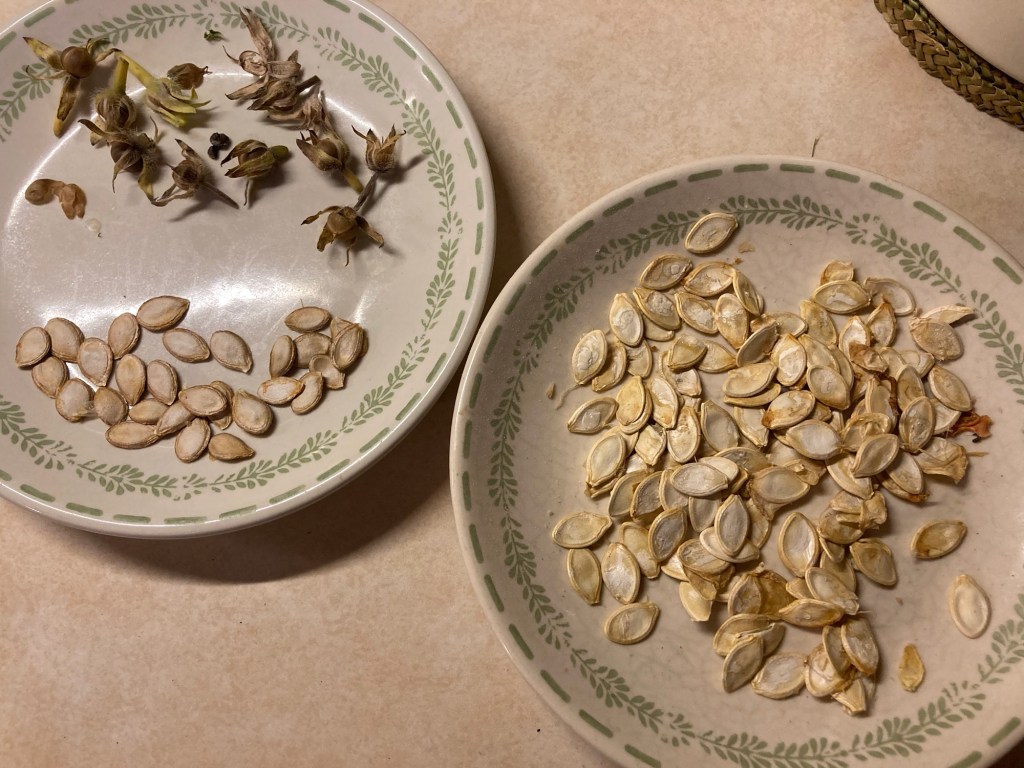
I really enjoy saving seeds. I saved the seeds from a HUGE zucchini that we grew this year (plate on the left, bottom). The plate on the right has the seeds of an organic butternut squash that we bought from Misfits Market. And the brown seeds at the top of the plate on the left are some morning glory seed pods that I snipped off of my morning glory plant this evening on a whim. I’ll let them dry out and then scatter them in a new spot where I have some trellises set up.

There is an art and a science to seed saving. Plants will make seeds whether you do anything or not. The only question is whether you want to control where and when they germinate.

If you have several varieties of the same plant, the seed saving can also be an experiment as often you can end up with seeds that are not true to type, meaning that they may look different from the parent plant. There is nothing wrong with this. It happens in nature. Personally, I quite enjoy what surprises come from cross pollination, but if you have multiple varieties of the same species in your garden, and you want you keep your seeds true to the parent plant, you should either buy your seeds fresh every year from a reputable supplier, or take steps to prevent the cross pollination.

If you want to learn more about the world of seed saving, I recommend Seed to Seed. It’s a great book and will tell you more than you probably ever wanted to know about the ins and outs of seed saving. But, this book isn’t really necessary. Remember all you really need to know is what I teach my elementary Botany class. Dead Flowers = SEEDS! Start exploring the dead flowers that you find in your garden. It’s a fascinating adventure.

If you do decide to save some seeds, be sure to keep them cool and dry, and label the package with the seed and the collection date. Trust me you won’t remember what they are in the spring when you go to plant them. I like to use these little paper seed packs. They are inexpensive and are a great way to organize your seeds, and if you have an abundance, these little seed packs make a great gift that you can share with friends.

Morning glory seed pods (top) and zucchini seeds from one of my garden zucchini.

Note: This post contains affiliate links.

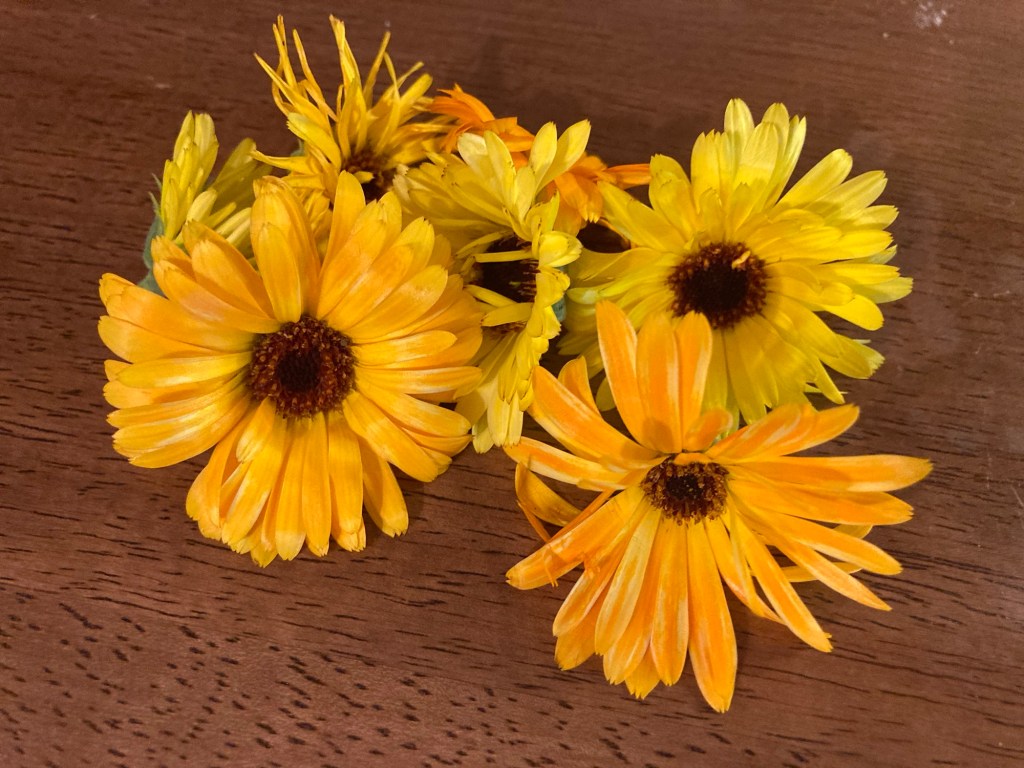
Air Drying Calendula Blossoms

Air Drying Calendula Blossoms

Calendula is one of the few plants in the Aster family that we use as my son has a allergy to ragweed which makes him sensitive to many of the plants in that same plant family.

I’ve grown Calendula for years and thought I’d share how I air dry them without a dehydrator. It is often recommended that you dry calendula with a dehydrator since the centers are so thick and resinous that they can be hard to air dry, and if not completely dry, they can mold in storage.

Why this method of air drying Calendula works. Two reasons:

  1. Good air flow.
  2. Long drying time.

Because my calendula is grown in containers, I usually have small harvests, meaning I’m not harvesting basketfuls at a time. I might harvest 2-3 flower heads per day. This is certainly not enough to warrant pulling out the dehydrator in order to dry them.

So mine sit and wait for me, and as they wait, they dry.

Here’s what I do…

Each flower that I pick goes into a little linen bag. This is in fact a little bag for sprouting micro greens, but since I use a different method for that, I’ve never used that bag for sprouting so I turned it into my calendula drying bag. Now, let’s stop here. You don’t need a bag for this. Any airy, piece of fabric, linen, muslin, flannel, burlap, or scrap of cheesecloth that is large enough to lay the flowers on and fold over on top of them will do. The purpose of the fabric is to keep your flowers clean and free of dust while drying.

Tiny harvest. These Calendula blossoms have been drying for a few weeks.

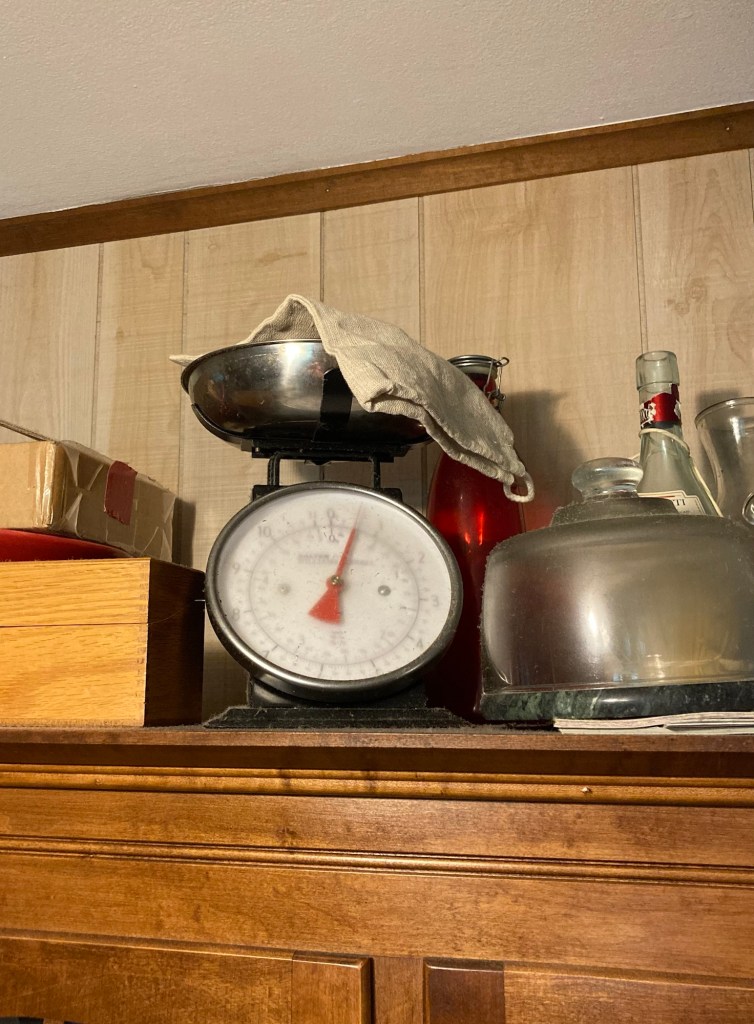
Next I lay this little bag on top of my hutch where the air is warm. I usually lay it in the bowl of my old fashioned kitchen scale which lives up here, but anywhere high and warm that is open to the air will do. On top of the fridge would work quite nicely. (Do not place anything inside an upper cupboard though. There would not be enough air flow in there.)

As I pick new flowers, I add them to the bag. Each time I take it down to add more I shuffle them around to ensure they are all getting moved around so that all the parts dry well.

New flowers added to the bag.

When I have new blooms to pick, I add the new flowers to the bag and it goes back up on the hutch. Sometime in the fall when they are all good and dry, I’ll take them down, ensure that they are all dry and can be crushed, and I’ll store them in a glass jar until I need them to make more infused oil or Calendula salve. They wait quite happily for me, and by the time I’m ready to use them in winter, they are dry and ready to use. In fact, most years, they just sit there until I remember to take them down sometime in December.

Growing, harvesting, and drying herbs doesn’t have to be a fussy process. Find a method that works and feels easy to you and go with it. What’s stopping you?

Want to turn your Calendula flowers into an infused oil. Check out my step by step process for making a home as herbal infused oil. These steps are written to make Plantain oil, but the process is the same for making an infused oil with any plant.

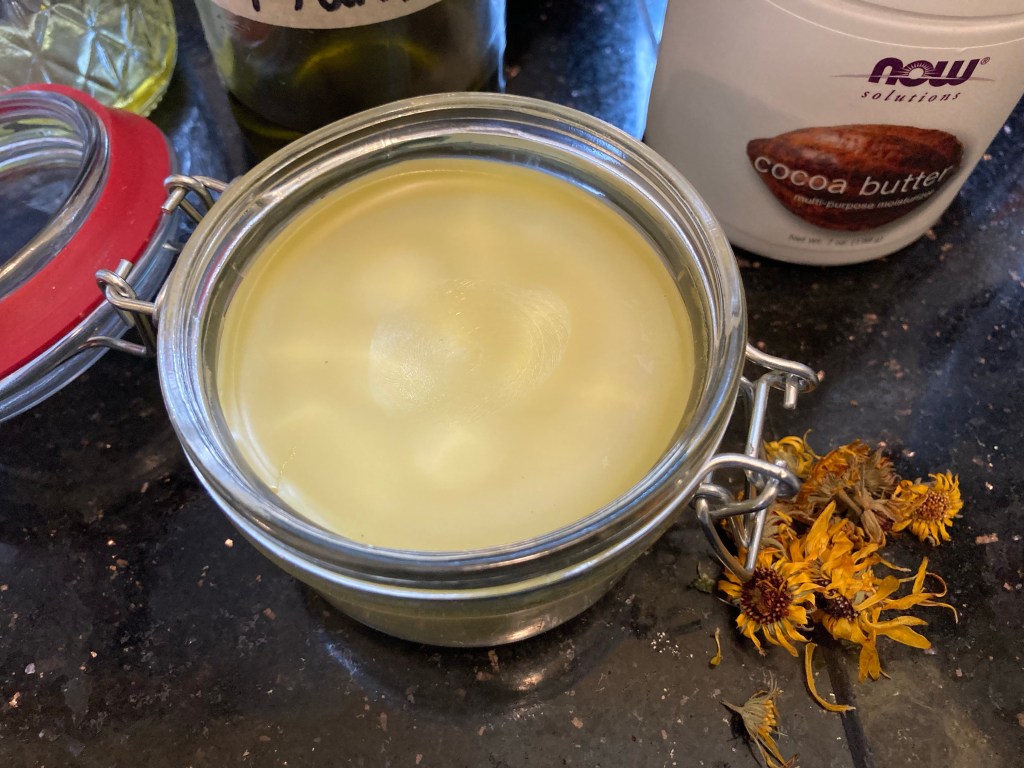
And once you have a homemade infused oil, you’re only one step away from making your own salve. You might want to check out my Healing Salve which is made with Calendula. (See the little dried up Calendula flowers laying there?) 😊

And if you really want to wrap your head around making all your own infused oils and slaves, let Carolyn with Homesteading Family hold your hand through the process. She recently came out with a Herbal Oils class that is quite nice which covers the basics of making culinary oils, infused medicinal oils, and using essential oils for your own handmade salves, balms, lip balms, and more. You can get access to it as part of their Homestead Kitchen Membership.

Note: This post contains affiliate links.

Gardening – Instant Garden Bed Covers – Mesh Picnic Food Tents

Little green things are sprouting in my garden.

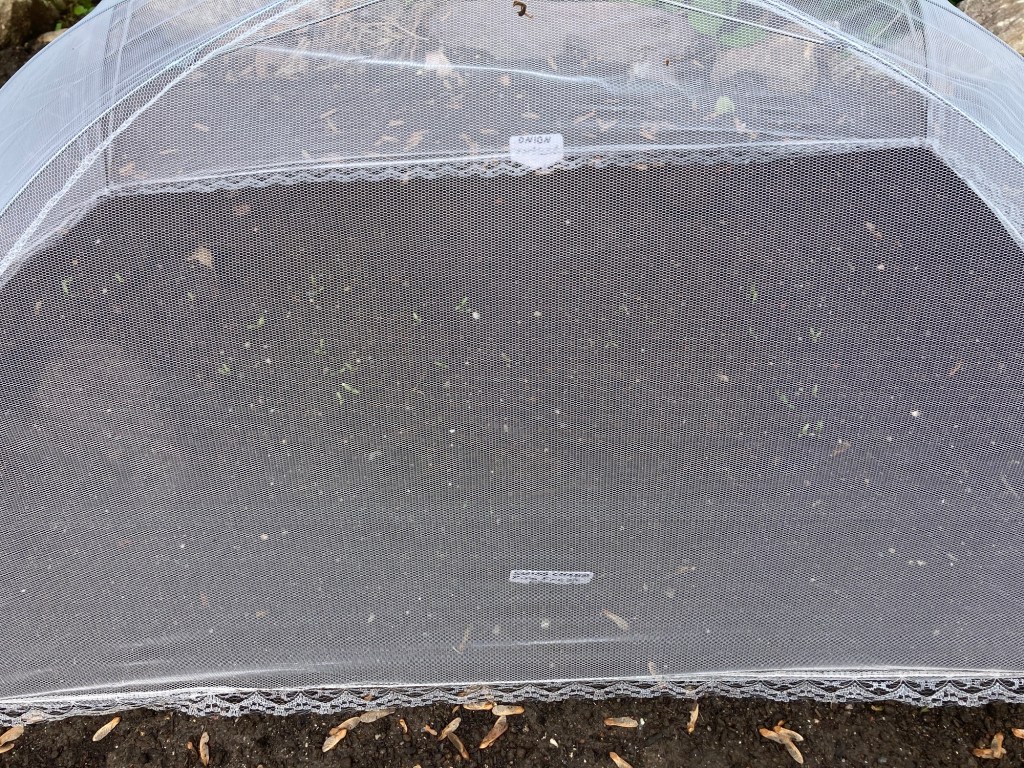
I like to use these mesh picnic table covers to cover my seedlings while we are in the process of planting. We will add permanent covers on the garden later, but these keep the birds from eating the seedlings until everything is in the garden and we can put the permanent bed covers on.

I find that the smaller size works well for small sections or containers, and the extra large covers are great for rows or raised beds.

Garden Update 2024 – Rainwater Harvesting

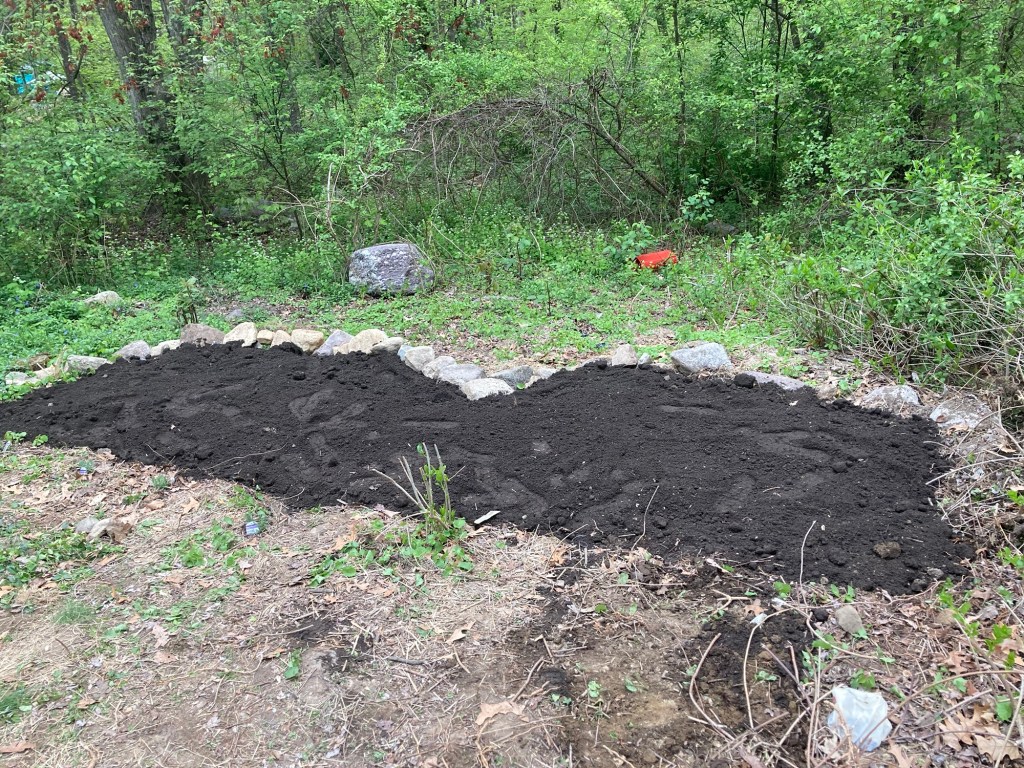
My first in-ground garden!

I’m so excited!

My sweet husband built these beds for me. You’ll notice that they aren’t your traditional raised garden beds. We decided to take advantage of the rocks on our property to build up the back wall of the beds and we used the slope of the terrain here to build contoured terraces which will harvest the natural runoff of rainwater that flows from the front of the property.

If harvesting rainwater is a new idea for you I’d highly recommend Rainwater Harvesting, Vol 2 by Brad Lancaster. There is a volume one, but this 3 volume set isn’t cheap, and the second one is the most essential in terms of implementation and determining what is most useful for your site.

So far our plan seems to be working. We have three drain pipes that are directed to this site and between collecting the rain flow and the runoff from the drain pipes the garden seems to be staying well watered. I put in our first seeds 1.5 weeks ago and I haven’t had to water once to keep them moist. We have had periodic rain and it seems like our rainwater harvest is a success so far.

Stay tuned as I post garden updates through the season. Next week I’ll give more details on how we built our beds.

Note: This post contains affiliate links.

2024 Garden Planning

We are putting in a couple of garden beds since we have a little space at our new house.

Here are the books I’ve been referencing from the bottom up.

Botany In A Dayprobably my most referenced and studied botany book ever! This is the best book out there for learning plant identification. It teaches you the characteristics by plant families and in kids some basic medicinal qualities of each plant. It’s my go to for plant ID. I use it in my Botany classes and have taught Kindergartners through adults plant identification using this method. You can check out my online homeschool Botany Class here.

Eat Your FlowersThis book is hefty and beautiful. It’s a gorgeous hardcover and honestly the photographs and cooking ideas for edible flowers had me squealing in the bookstore as I was paying through it. My daughter said she could hear me on the other side of the store. Definitely deserves a place on your shelf if you have a garden.

Cooking with Flowers – this was a thrift store find so you’ll have to hunt down your own used copy. It’s older, so no beautiful photography here. But the recipes are solid and creative. Includes holiday ideas for using edible flowers.

Rainwater Harvesting for Drylands, Vol 2 – This is all you ever wanted to know and more about rainwater catchment systems from barrels and cisterns, to berms and terraces, and more. I’ve been studying this book and I’m planning my garden around the water flow of my site in hopes to not have to water this summer. We shall see.

Better Homes and Gardens Complete Guide to Gardening – This one is older too but a good reference book if you are new to gardening.

Native Plants of the Northeast – this is a good reference as well if you live in the Northeast and want to focus on native plants that will grow well in your garden and benefit wildlife.

Betty Crocker’s Kitchen GardenThis book was a gift from a dear friend. She thought that I would love it and she was right. If your dream is an old fashioned kitchen garden, this is the book for you. Paintings and illustrations by Tasha Tudor just making it all the more charming. Also an old book so you’ll probably have to source a used one.

Next in the stack are some seed catalogs from Johnny’s Seeds, Bluestone Perennials, and Heirloom Roses.

The Tri-State Gardener’s GuideThis books is useful for those of you who live in New York, New Jersey, and Connecticut. It mostly addresses landscaping plants but is useful for finding possible deer resistant varieties.

Companion Planting for BeginnersThis book is a good reference for beginners especially if you plan to use raised beds.

Territorial Seed Company – I plan to order seeds from Territorial this year as they are well tested, have many open pollinated varieties, and many varieties good for long term root cellar storage.

Root Cellaring – This is my go to reference for cool crop storage.

Made from Scratch LifeI almost passed this book by because I thought, I can’t possibly need one more gardening/homemaking/homesteading book. But I was wrong. I love books with working charts. She has charts with to help you figure out how many of plants you need for each veggie, and charts to help you determine the best preserving methods for each veggie. There are charts for you to fill in as you make your garden plan so this little book becomes your garden journal. In my opinion all the recipes in the back are just a bonus. I would buy the book for the charts alone.

Preserving FoodThis was a serendipitous find at a book store. I love it because it’s full of old time, little know, traditional preservation techniques.

The top two items of the stack are my Kindle and my paper garden journal.

I watch for good deals on Kindle books and Square Foot Gardening is one that I referenced this time around.

And lastly, but most importantly, my garden journal. I make lists of plant varieties that I want to try, add charts with plant heights, spacing, and planting times, and draw diagrams of my garden beds. Planning this year was bittersweet as I thumbed through the pages of my past gardens at our old house. I hope you have a trusty garden journal. Everyone should have one. As you see mine is old and worn and scribbled in. But I wouldn’t trade it for the world. ❤️

Note: This post contains Amazon affiliate links.

My Favorite Books on Herbal Medicine

I spent a fun morning talking about herbs with some local moms today. 🌿

Below you can find my favorite herb books with the reasons why I like the them. Maybe you’ll find something to add to your bookshelf.

(Books are not listed in any particular order.)

Basic Book Resources:

1. Nutritional Herbology by Mark Pedersen, https://amzn.to/3EnyQfV

Has nutritional profiles for each herb.

2. Prescription for Herbal Healing, by Phyllis Balch, https://amzn.to/3g1gBVf

Complete. Very good at listing possible cautions and contraindications.

3. Northeast Medicinal Plants, https://amzn.to/3TCcPiO

Very good on listing plants that grow in this area, as well and when and how to ID, harvest, and the remedies best suited for each plant.

4. Botany in a Day, https://amzn.to/3hFKc6X

Best book for learning plant ID and plant families.

5. Homegrown Herbs, by Hartung, https://amzn.to/3TAMD8a

Best book for growing and using medicinal herbs yourself. Excellent charts for growing and harvesting.

6. The Herbal Apothecary, https://amzn.to/3E3SFbV

This is excellent at giving you the personality of each herb and helping you get to know the plants.

7. Wild Remedies by Rosalee de la Floret, https://amzn.to/3TxQFyh

Good for wildcrafting basics.

8. Alchemy of Herbs, https://amzn.to/3UxMN1z

Anything by Rosalee is well done. I find the herb profiles on her website useful and have found some of her podcasts to be interesting.

9. Rosemary Gladstar’s Medicinal Herbs,https://amzn.to/3UBgfni

Very basic. Good for beginners who don’t know where to start. Has some good basic recipes.

10. The Herbal Kitchen, https://amzn.to/3WYgOJp

Good for using herbs medicinally in your kitchen as food. Also good basics for making infused oils.

11. The Healing Garden, https://amzn.to/3E3jxZw

This book is newer to me. It includes some herbs that my other books do not have listed that I wanted to study. I haven’t delved too deeply into it but it is a lovely book.

Technical Resources:

These are more technical and get into the more medical side is using herbs.

1. Practical Herbalism by Fritchey, https://amzn.to/3Adn46l

2. Modern Herbal Dispensatory by Easley, https://amzn.to/3WVAmhv

3. Materia Medica of Western Herbs by Carole Fisher, https://amzn.to/3g5eZtt

Other Resources:

1. The Big Book of Homemade Products by Jan Berry, https://amzn.to/3hAxPJu

This is her newer book. I had the older one with me. It is excellent as are herb books on soapmaking.

2. Fermented Vegetables by Shockey, https://amzn.to/3G8fzl3

Anything by the Shockeys is good. I also have their books on Vinegars and Firey Ferments.

Botany Basics:

Exploring Creation with Botany by Apologia, https://amzn.to/3Gc9UdK

Good intro to basic Botany.

Elementary Botany Class:

This is a link to my online Botany class which includes learning to ID plants by plant family.

Last but not least, write your own book…

Keep your own notes on each herb and ailment you study by creating your own book. I use an old address book that has alphabetical sections. I write the name of the herb or ailment alphabetically and make notes of what I learn about it.

Not sure where to go from to increase your knowledge of herbs and home remedies?

Homesteading Family often does Free herbal trainings.

Note: This post contains affiliate links.

Garden Tool Organization and Seed Saving Tips

Check out friend Michele’s tips for organizing your garden tools and saving seeds. You can follow her on FB and IG, or on her blog at Chocolate Box Cottage.

Free Traditional Skills Summit!

Many of you know that I’m a big fan of Carolyn Thomas and her Homemaking masterclasses over at Homesteading Family. I love her classes on breadmaking, fermenting, herbal medicine, homemade dairy, and I’ve just recently gotten into her canning class. And then there’s also her Home Management and Home Milled Flour classes which are also great! Well, she is participating in a collaboration that I thought you might be interested in.

The School of Traditional Skills brings together experts in homemaking, homesteading, gardening, and real food topics. September 12-15 you have the chance to attend an amazing and FREE Summit featuring the following speakers:

Joel Salatin on Reclaiming Pasture

Justin Rhodes on Raising Pastured Chickens

Melissa K Norris on Garden Season Extension

Paul Gautschi on his Back to Eden Garden method

Carolyn Thomas on Pressure Canning (Yay!!!)

Sally Fallon on Traditional Bone Broths (Who doesn’t have Nourishing Traditions on their shelf yet?)

Lisa Bass on Vegetable Fermentation

Anne of All Trades on Milk Goats

Brandon Sheard on Traditional Salt Curing of Pork

Brian Lowell on Raised Bed Gardens

Maureen Diaz on Sour Dough Bread (I love my sourdough you know!)

Harvey Ussery on Homestead Egg Laying Chickens

If any of these topics peaks your interest check it out! Live sessions will be available for replay so you won’t have to worry about missing out on your favorite topic.

Note: This post contains affiliate links from School of Traditional Skills, Homesteading Family, and Amazon.

Herb Harvest 2020

I’ve always enjoyed picking herbs from my garden. But I typically just pick what I need for mmmmm for culinary use. I’ve been harvesting more herbs this to dry and save for medicinal and beauty uses this year.

Scroll on to see what’s been in my herb basket this year.

Sage, Calendula, and one big Mullein leaf.
Basil!
Mint and Catmint
Spearmint
Cilantro
Roses!
I lay my rose petals between two paper towels to air dry.
Pretty little Calendula flowers. I air dry these the same way I do the rose petals.