
Just in time for Thanksgiving and Christmas! Sourdough rolls for your dinner table!
$10 per dozen. For ordering instructions and availability visit the Bread Box Cottage Bakery page.

Just in time for Thanksgiving and Christmas! Sourdough rolls for your dinner table!
$10 per dozen. For ordering instructions and availability visit the Bread Box Cottage Bakery page.

This is a great healthy snack. It’s sugar free, egg free, and dairy free. Read on…
Two of our family are taking a break from sugar at the moment, and another can’t do dairy and eggs. This means it’s time to develop a new recipe, and Fall is a great time of year to try this one.
Carrot Spice Bread:
Makes 2 loaves.
2 cups all purpose flour
2 cups whole wheat, spelt, or your flour choice
1 tsp salt
2 tsp baking soda
1 tsp cinnamon
1/4 tsp cloves
2 cups finely shredded carrot
2 ripe bananas, mashed
2 cups orange juice
1/3 cup oil
Mix all dry ingredients. Mix all wet ingredients in a separate bowl. Add the wet to the dry. Mix well. Pour into greased bread pan. Bake at 350 for 50-55 minutes or until the center tests clean.
Cool on wire racks.
* Note: You could also make this in cake form if desired. Just cook in two greased and floured cake pans instead. I also sometimes make it in a 9×12 casserole as well. And if you aren’t avoiding caloric sweeteners all together like we are, add 1/4 cup of honey or maple syrup to make it that much better.
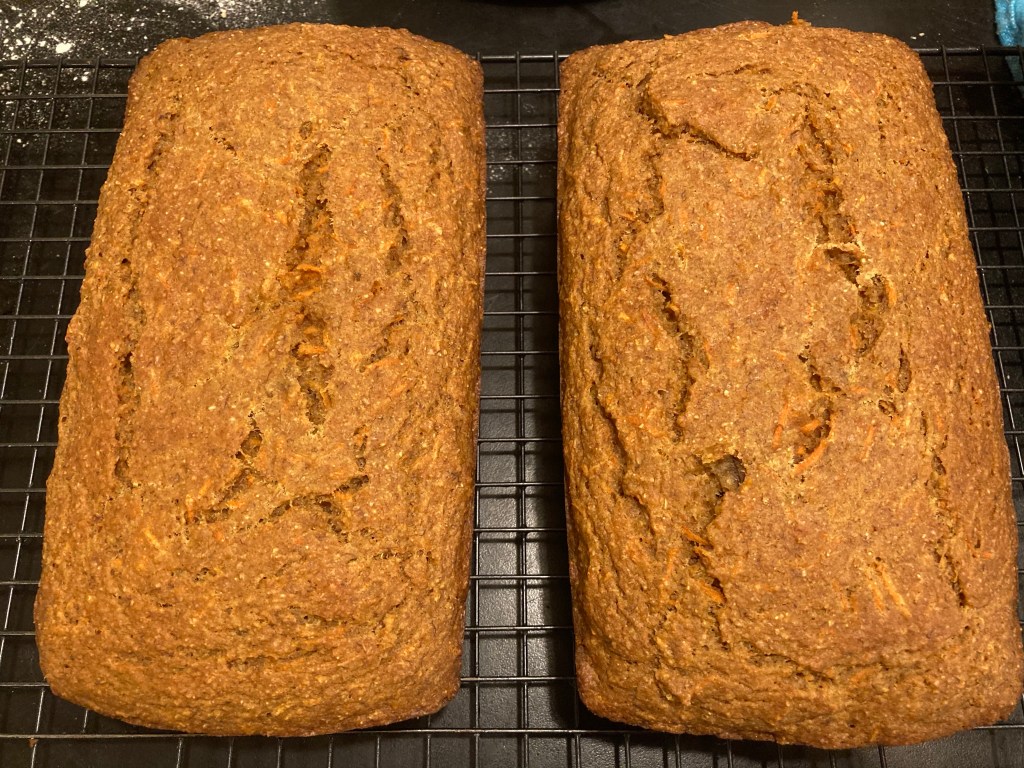
This bread is just slightly sweet so it’s a great snack any time.
And stayed tuned for the sourdough version in a couple of weeks.

This has become my favorite loaf to make. It’s so big, and tall, and luscious. It’s the perfect loaf for anyone with an Emile Henry Italian loaf baker. Give it a try with the recipe below and let me know how it turns out. Post a picture of your loaf in the comments!
Sourdough Sandwich Loaf Recipe:
Begin with approximately 2 cups of activated sourdough starter. This means that the starter should have been fed within the last 2-3 hours. I don’t specifically measure. I just eyeball it.
Add the following…
1 1/2 tsp salt
2 tbls honey
1 1/2 cups water
Stir all this into the starter.

Next add your flour. If you are using an all purpose starter, add the all purpose flour first. If you have a whole wheat starter or other whole grain add the whole grain flour first. You want to be sure that the flour that your starter is used to being fed is mixed into the starter well before another type of flour is added. So….
2 cups all purpose flour
1 3/4 – 2 1/2 cups whole grain flour
The whole grain flour could be whole wheat, spelt, etc. I use freshly milled flour.
The reason I give a range here on the flour is that this can vary for you depending on how thick/thin you keep your starter. I typically use about 2 cups of whole grain flour.
The other thing to keep in mind is that this is a fairly stiff dough. For those of you used to high hydration loaves, you may feel like you are over flouring here.
After you have mixed in the flour that your starter is typically used to being fed, then mix in the other flour one cup at a time. You need to read your dough after the first cup of flour. You are going for a dough that is fairly stiff and just cleans the side of the bowl.
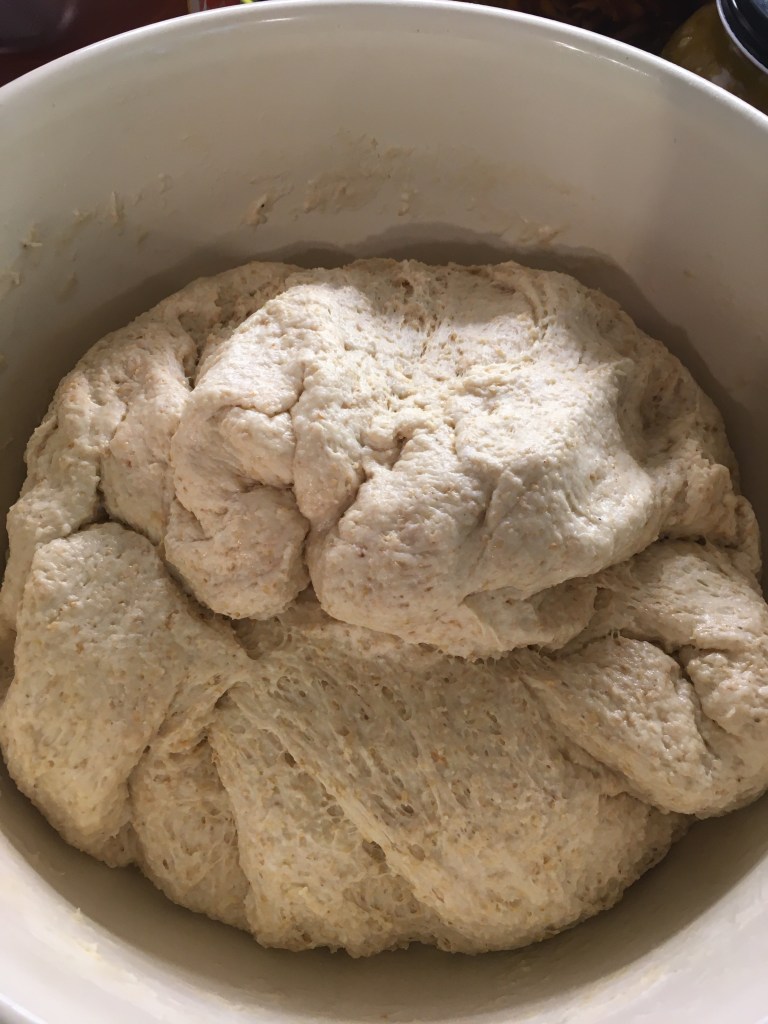
After you think you have added enough flour, covet the bowl with a wet towel and let the dough rest for 30 minutes.
After the first 30 minute rest, you want to perform 4-5 sets of stretch and folds every 20-30 minutes. To execute a stretch and fold, reach under the dough and pull a section of the dough up and fold it toward the center of the dough. Do this all the way around the circumference of the ball of dough. Let the dough rest for at least 20 minutes, and perform another stretch and fold until you have done it 4-5 times.
Now give the dough a final 20 minute rest and while you prepare your loaf pan.
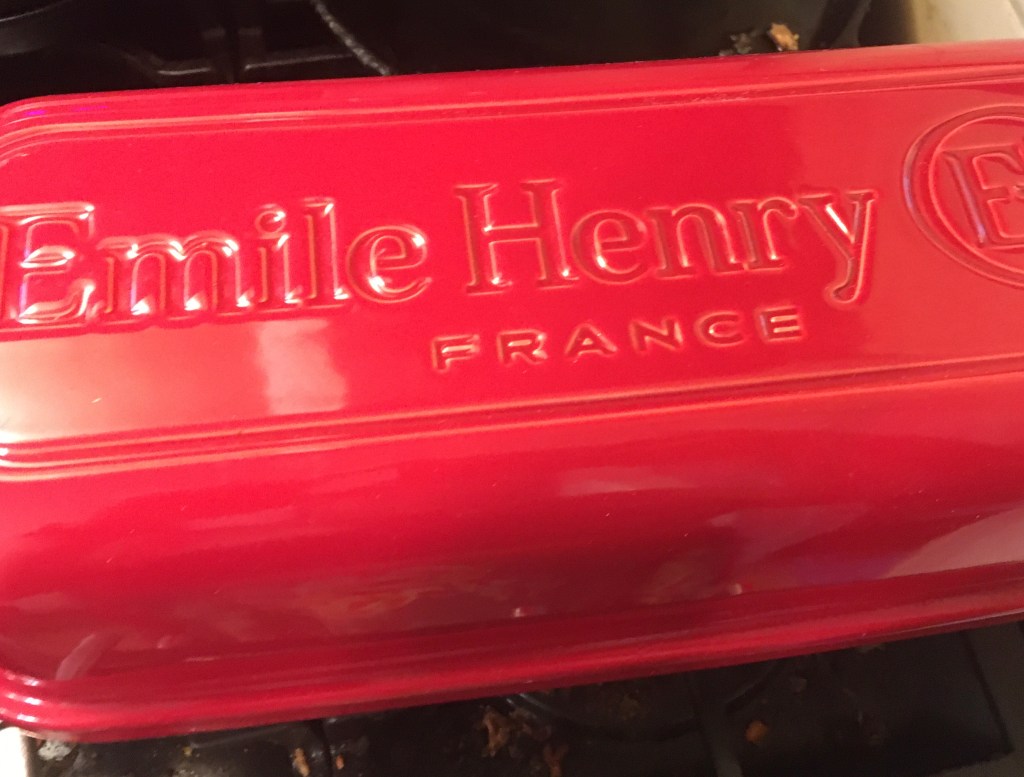

I use an Emile Henry Italian Baker (affiliate link). As you can see, this is an extra-large loaf pan. You could use an oval Dutch oven to make this loaf, or divide the dough into two regular sized loaf pans. You could also cut the recipe in half if you only want to make one loaf in a regular sized loaf pan.
If using loaf pans, butter or grease your pans well.
After the dough has completed its final rest (divide it in half if using two loaf pans) and then flatten it into a rough rectangle just slightly smaller than the length of your pan. Roll it into a log shape, pinch the seam closed, and place it in the loaf pan for its final rise. If you have the EH Italian baker, cover the dough with the lid while it rises. (Note: if baking in a Dutch oven, let your dough rise in a covered, oblong banneton, and use parchment paper to line your Dutch oven with rather than greasing it.)

Let the dough rise until it reaches the top of your loaf pan or banneton.
Once it had risen to the top of the pan, preheat the oven to 400 degrees.
Once the oven is hot, place your loaf pan in the oven and bake covered for 30 minutes. Then remove the cover and bake for 15 more. If baking in regular loaf pans, you can bake uncovered, just watch the loaf for the last 15 minutes to be sure that it is not browning too quickly. If you find it browns too fast, reduce the heat to 350 for the last 15 minutes.

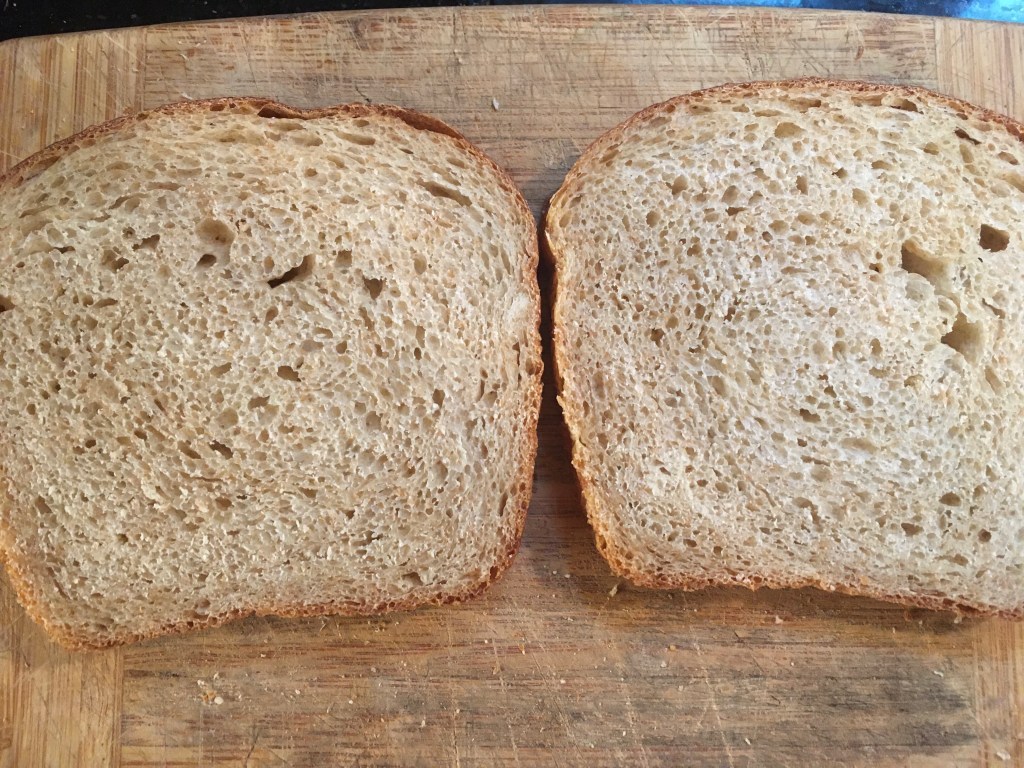
Cool completely on a wire rack and enjoy your beautiful loaf!

Printable Recipe:
2 cups sourdough starter
1/2 tsp salt
2 tbls honey
1 1/2 cups water
2 cups of flour (same as starter)
1 3/4 – 2 cups flour of choice
Mix all ingredients well. Perform 4-5 sets of stretch and folds. Shape and place in loaf pan for second rise. Preheat oven to 400 when bread reaches the top of the pan. Bake for at least 30 minutes or until golden brown.
My Favorite Loaf Pan and Grain Mill:
If you are new to sourdough and want to dive into milling your own grains, the Family Grain Mill is my favorite mill. It is a workhorse. Mine is a hand me down from my mom. It is 20 years old and still going strong. You can buy it with a motorized base or a hand crank which is nice if you live in an area prone to power outages. And as far as grain mills go it is one of the most inexpensive on the market. Still an investment but much cheaper than some of the fancier ones. It’s simple, strong, and will last you for decades.
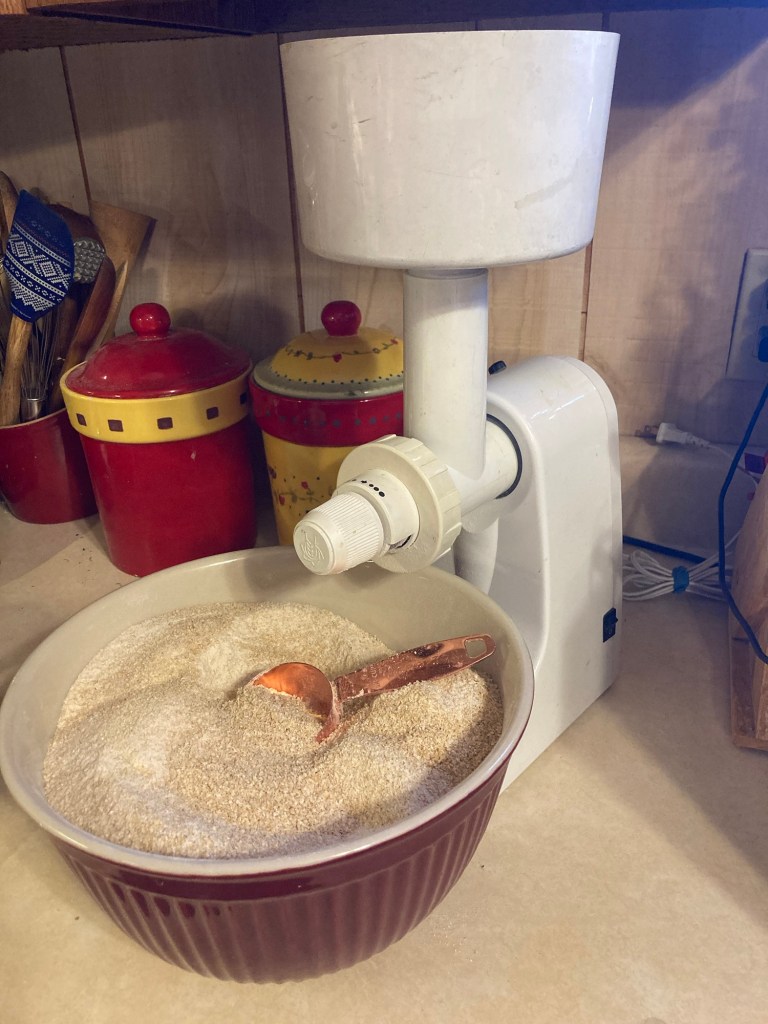
And if you want you want to try the loaf pan I feature here in this recipe – it is worth every penny. The Emile Henry Italian Baker is expensive, and normally I err on the side of economy but I love this pan so much! It’s a pleasure to bake in, perfect if you have a large family, and baking the loaves with a cover really does give them beautiful rise and shape.
Need a Gluten-Free Recipe?
Try my Gluten-Free Seedy Bread. But if you really want more info on baking gluten-free yeast and sourdough bread, or the basics of ancient grains, check out the book I wrote for Homesteading Family called The Art of Gluten-Free Homemade Bread. It’s written specifically for families with multiple food sensitivities like mine. I assumes that you’ll need to tweak the recipes to match your dietary needs and it teaches you how to do it.
This post contains affiliate links.
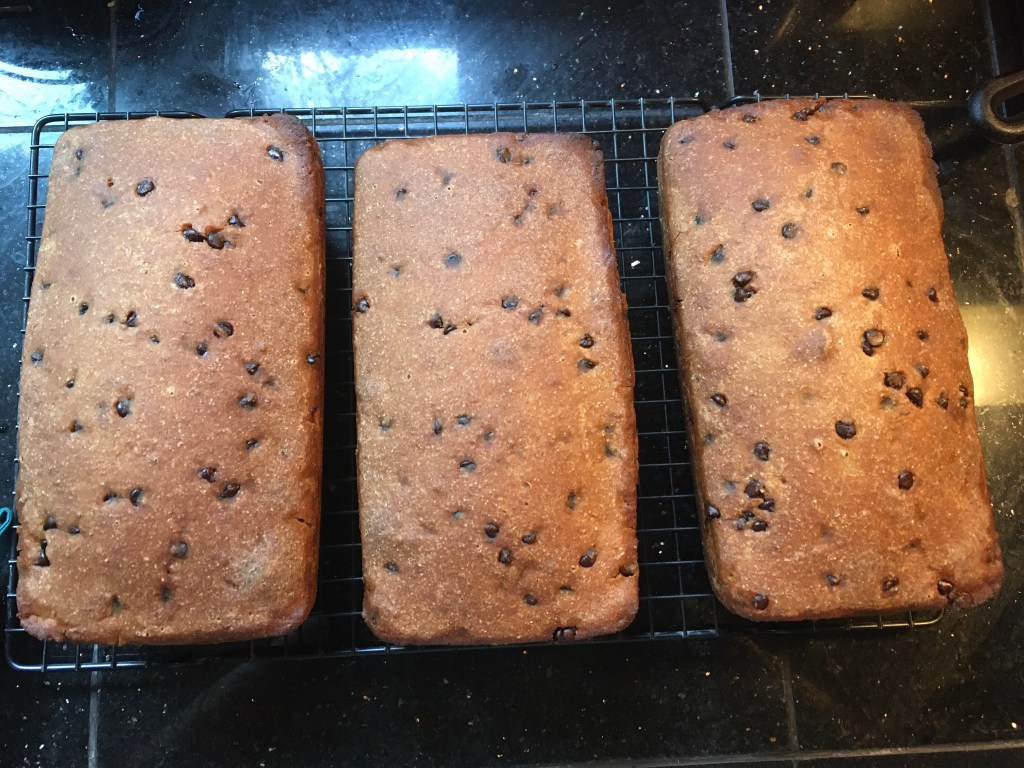
I had a bunch of starter to use up today.
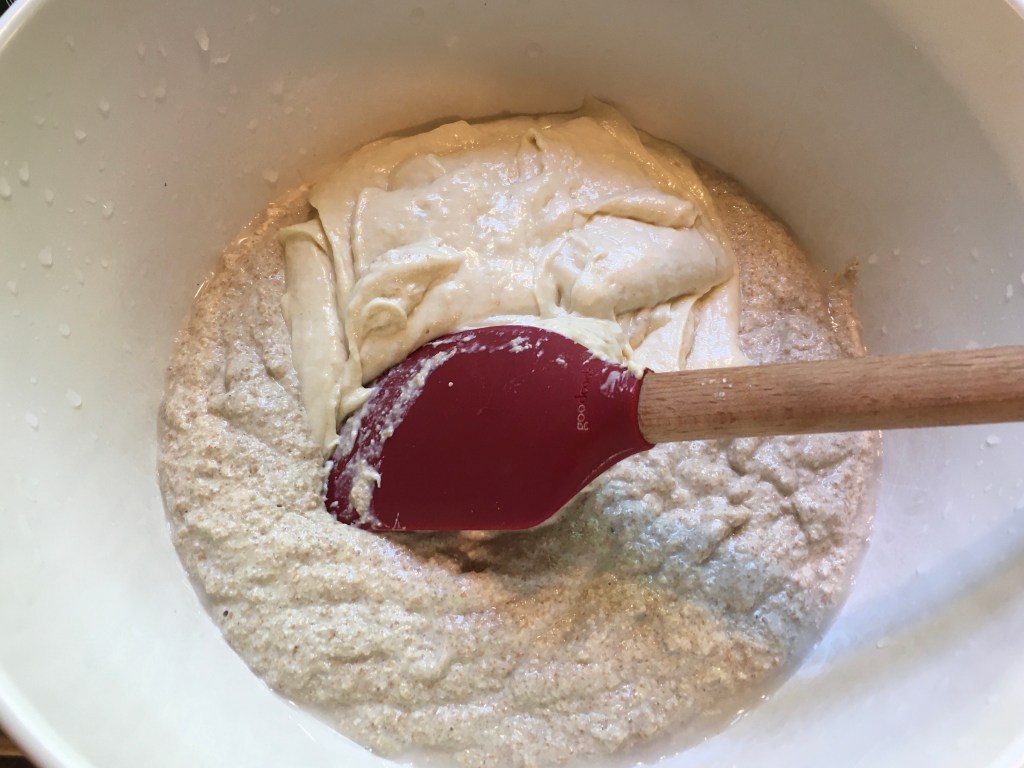
At least six cups to be exact. What should I do with all of it? Invent a new batter bread of course! It uses up a lot of starter and it’s yummy!
The recipe below is for one loaf. You can easily double, triple, or in my case quadruple it depending on how much starter you have to use up.
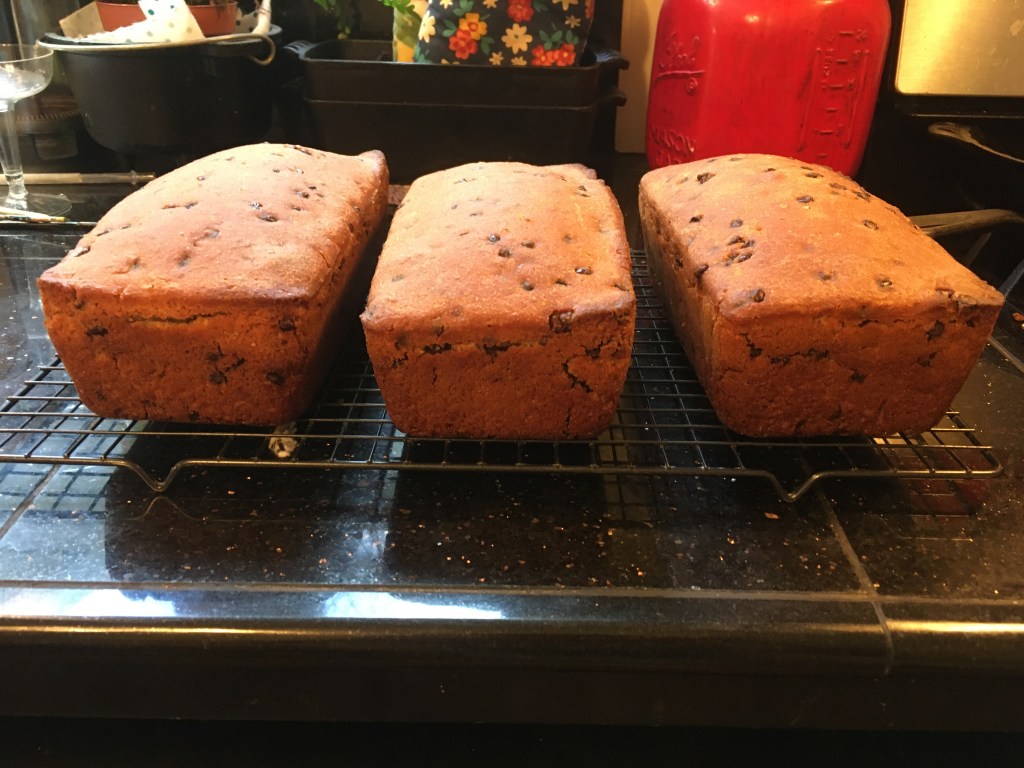
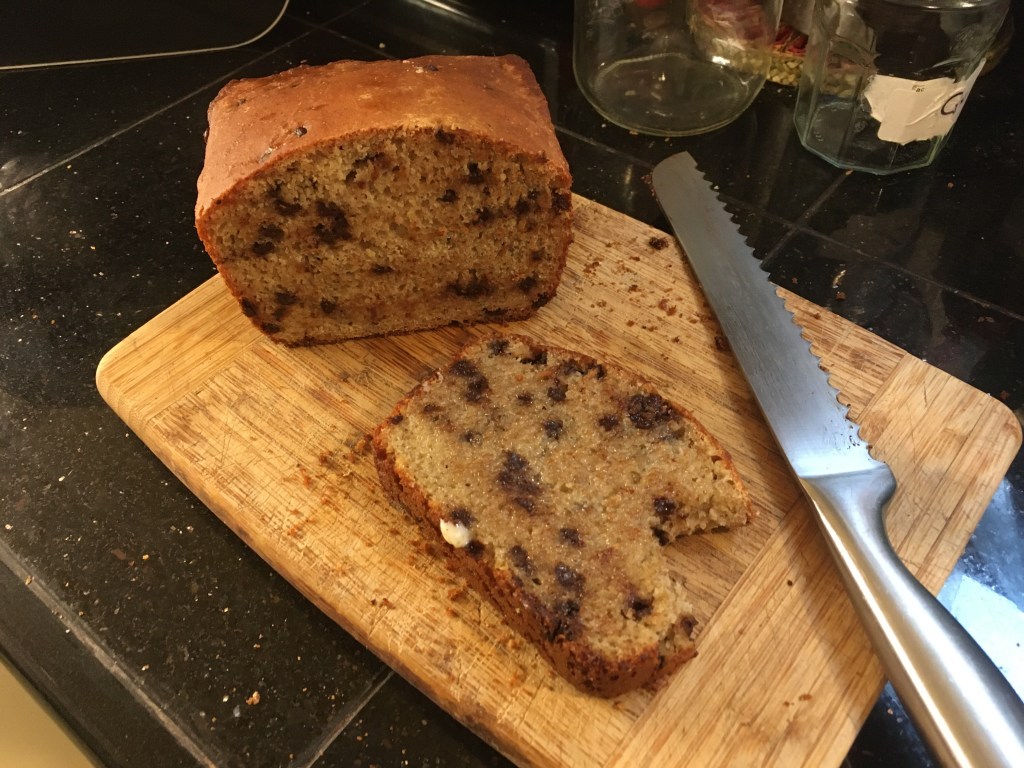
Sourdough Chocolate Chip Batter Bread:
2 cups sourdough starter
1/2 cup water
1/2 tsp salt
1/2 cup sugar
1/2 tsp vanilla
Mix all of the above together until well blended.
Then add…
1/2 cup of flour
1 tsp baking soda
1/2 cup+ chocolate chips
Mix well. Add more flour if needed until the batter resembles the texture of soft cream cheese.
Grease a loaf pan or 8×8 casserole dish, pour in your batter, let it rise 1-2 hours or until your batter is about 1/2 inch from the top of your pan if using a loaf pan, or about 1/2 way up if using an 8×8 pan.

Bake at 400 for 35 minutes. If using a loaf pan or may need 10 minutes more. To ensure that the bread is done, check the center with a skewer as you would test a cake, or use an instant read thermometer. Internal temp should be between 190-200 degrees.
If the bread is already looking brown at the 35 minute mark, tent with foil and continue baking if more time is needed.
And if you want to learn more, check out Homesteading Family’s the Art of Homemade Bread course. It will teach you all you need to know about making healthy bread at home.
Note: This post contains affiliate links.

This batter bread is delicious, savory, and filling. Trying as a surprise side dish with dinner. It’s great way to use up your extra sourdough starter.
Garlic Herb Batter Bread:
3/4 cup sourdough starter
1 tsp. salt
1 cup water
1 tsp baking soda
1 tbls garlic powder or granulated garlic
1 tbls Italian seasoning
handful of sliced black olives
Add all purpose flour 1/2 cup at a time until the batter resembles a stiff buttercream frosting.
To bake, spray a casserole with oil. Pour in the batter and let it rise in a warm place for 2 hours. Preheat the oven to 400 degrees. Bake for 30 minutes.

Try this with your mature sourdough starter. (Note: If your starter is not mature yet, you can still make this. Double the starter and baking soda and decrease the water half.)
1 cup activated starter (this means starter that has been fed within the past 2 hours)
1 cup water
1/2 cup brown sugar
1/4 cup oil
3 mashed bananas
Mix all these wet ingredients. Then add….
2 tbls cocoa powder
3/4 tsp. salt
1 tsp baking soda
Handful of chocolate chips
Add flour until the dough resembles a stiff buttercream frosting.
Pour into an oiled or buttered casserole. Let it rise, covered, in a warm place until it reaches the top of the pan, or about 2 hours.
Remove the cover and bake at 400 degrees for 30 minutes, or until a toothpick comes out clean.

Poured into casserole. Ready to rise.
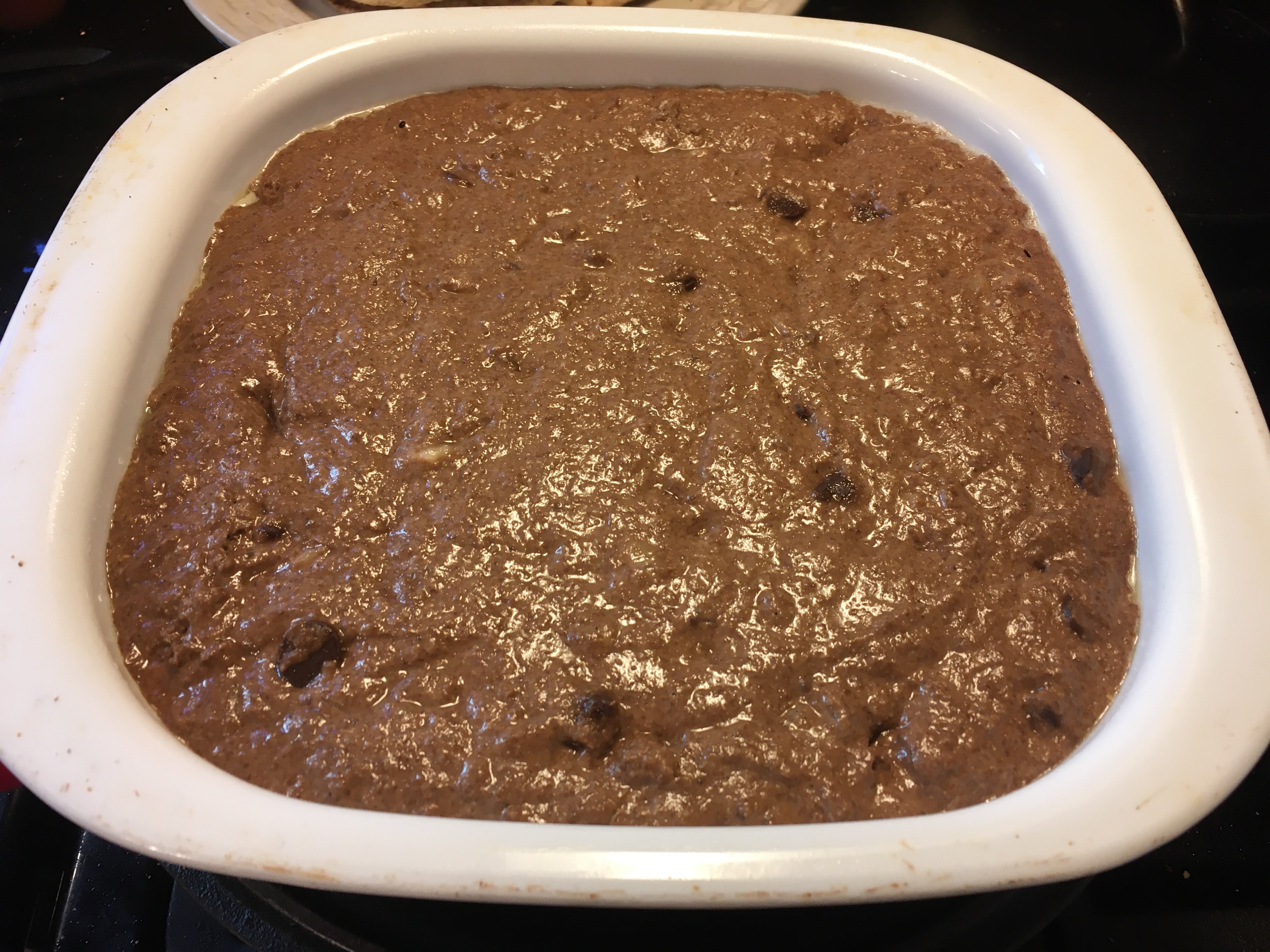
Risen for two hours. Ready for the oven.
And if you want to learn more, check out Homesteading Family’s the Art of Homemade Bread course. It will teach you all you need to know about making healthy bread at home.
Note: This post contains affiliate links.
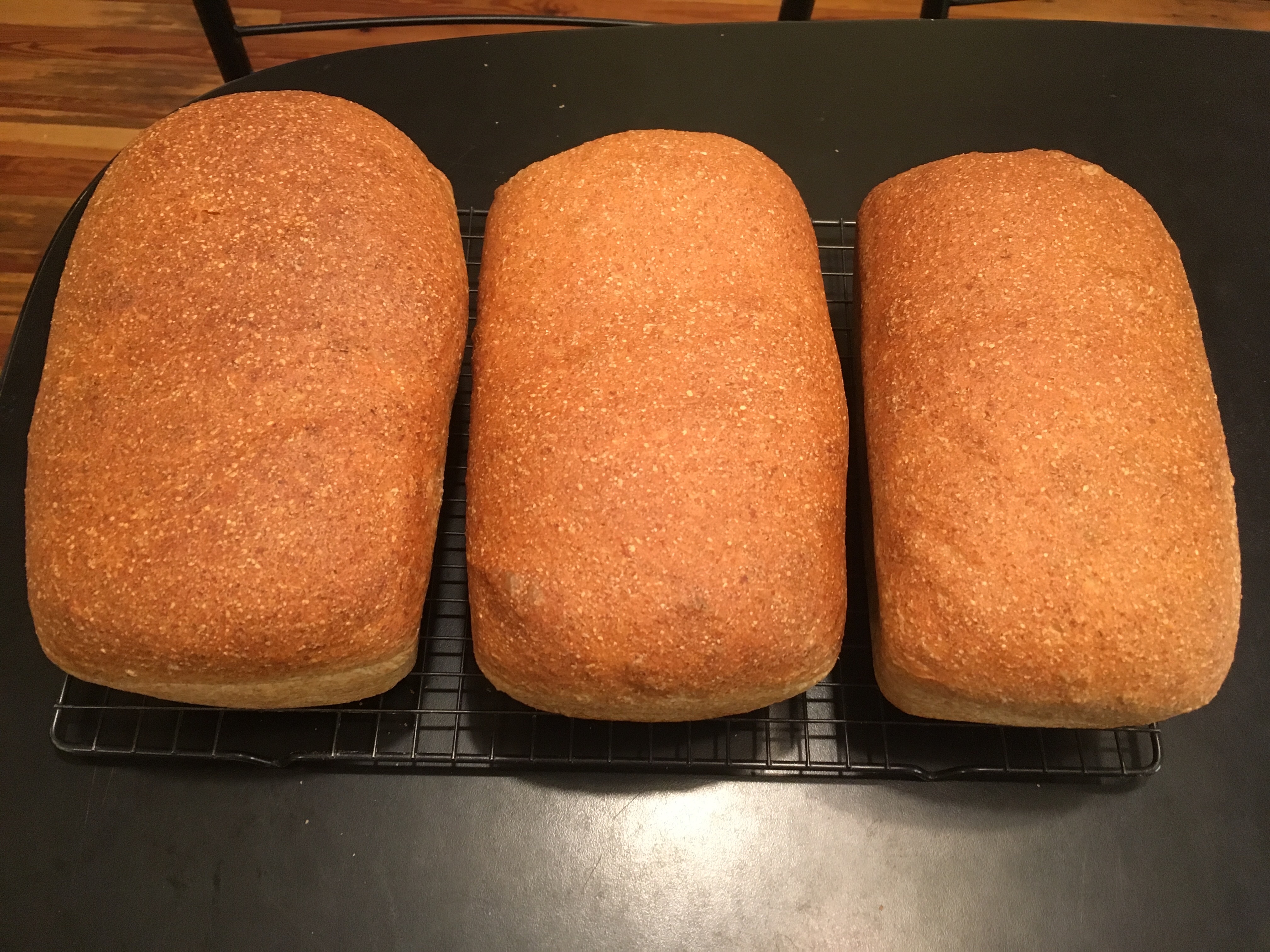
If my latest posts on homemaking, baking bread, and sprouting grains has peaked your interest and you want to be able to make beautiful loaves like for your family each week, you should consider learning from the best.
I took the breadmaking course from Homesteading Family (affiliate link) 10 months ago, and making fresh whole wheat, spelt, or sprouted grain breads is totally doable. Carolyn Thomas is a great teacher. She’s a wonderful lady and homeschool mom. I figured if she could make bread for her family, so could I. And so can you! Happy bread making!
If you aren’t sure about the class, try her free bread webinar instead.
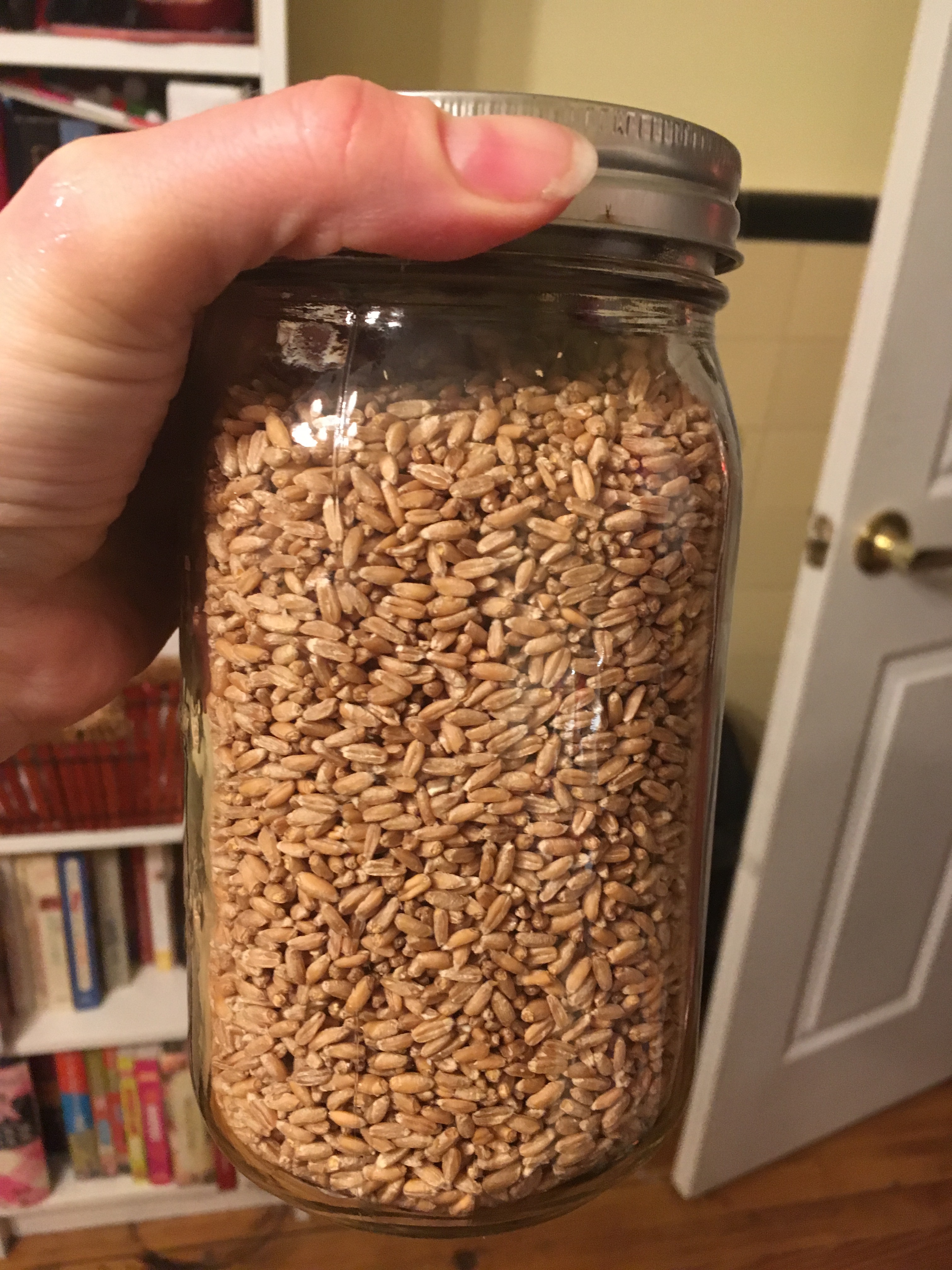
Sprouted and ready to store in the freezer.
I’ve been sprouting spelt for the last 9 months to grind to make our bread each week. I was so intimidated by the idea when I started. And I really couldn’t find any reliable information or consistent techniques online. But, now that I have it figured out….. it’s so easy! There’s really nothing to it. Once you have it worked into your routine, you can easily sprout a batch ahead, and always benefit from the additional nutrition that sprouting makes accessible to your body in your breads and baked goods.
Easy Steps to Sprouting Grain:
(These steps work with any grain.)
That’s it! Give it a try. Sprouted grain makes a softer flour, is easier to grind than unsprouted, and I think makes lighter baked goods.
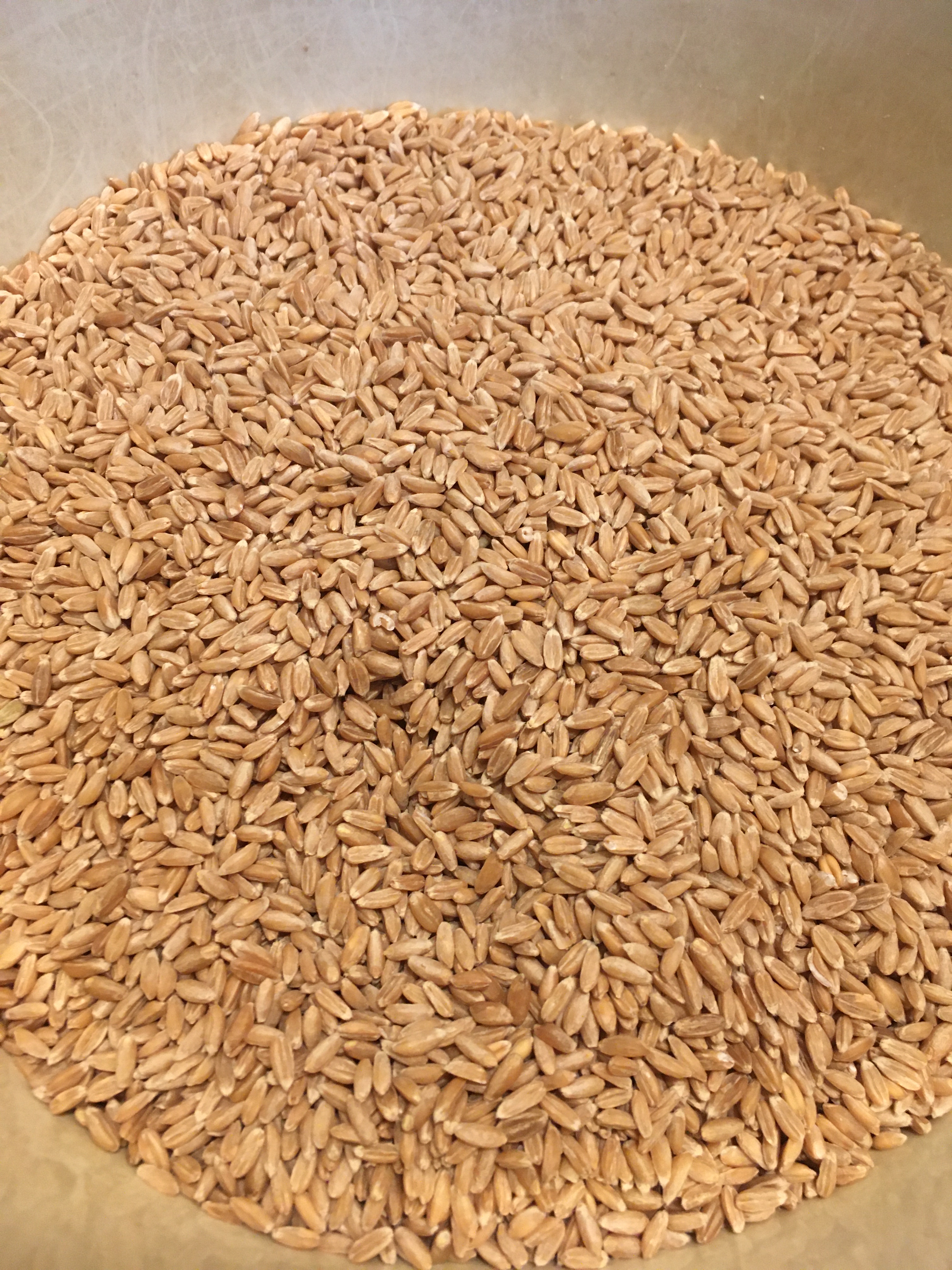
Unsprouted spelt berries.
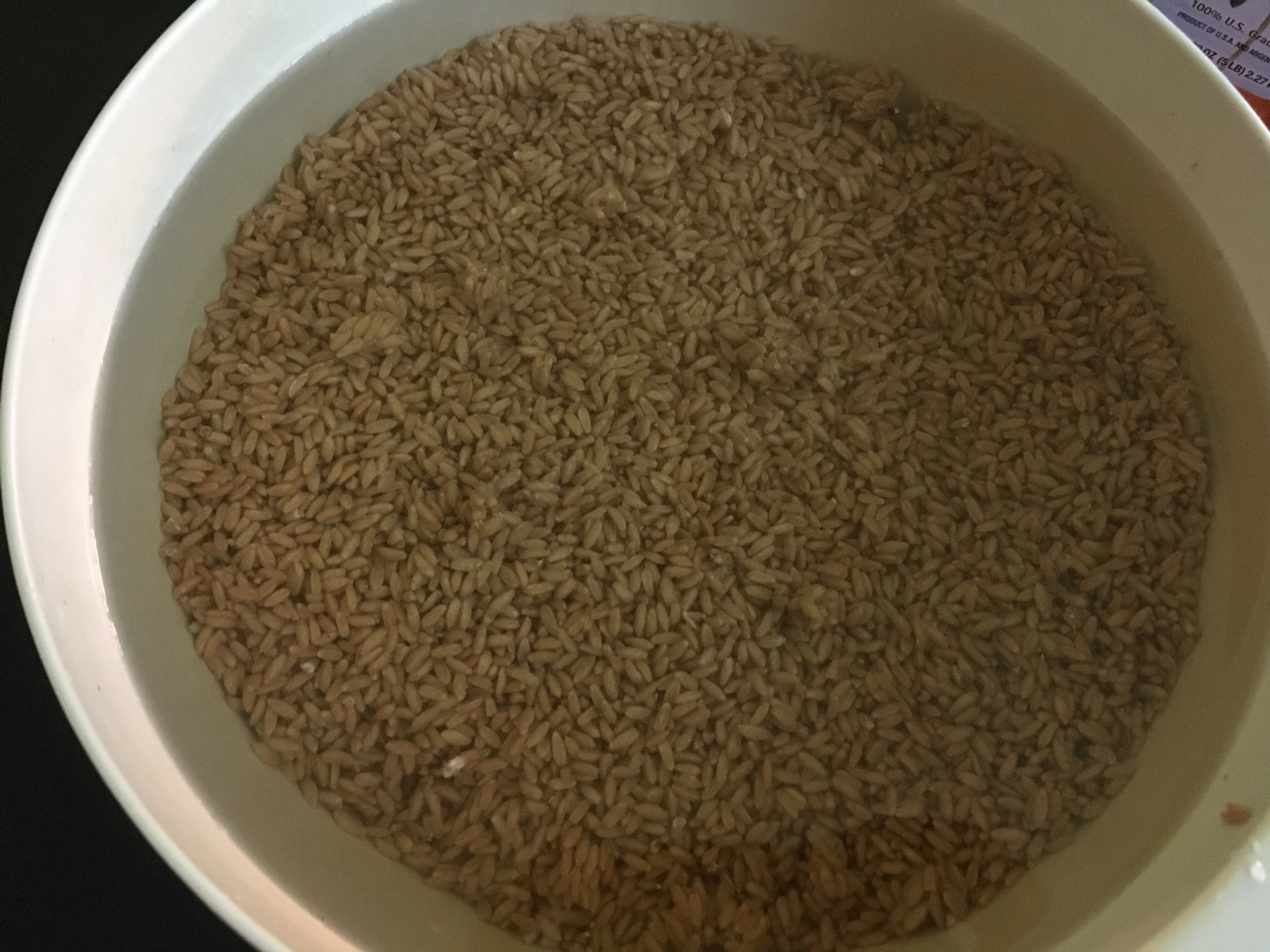
Cover with water and soak for 12 hours.
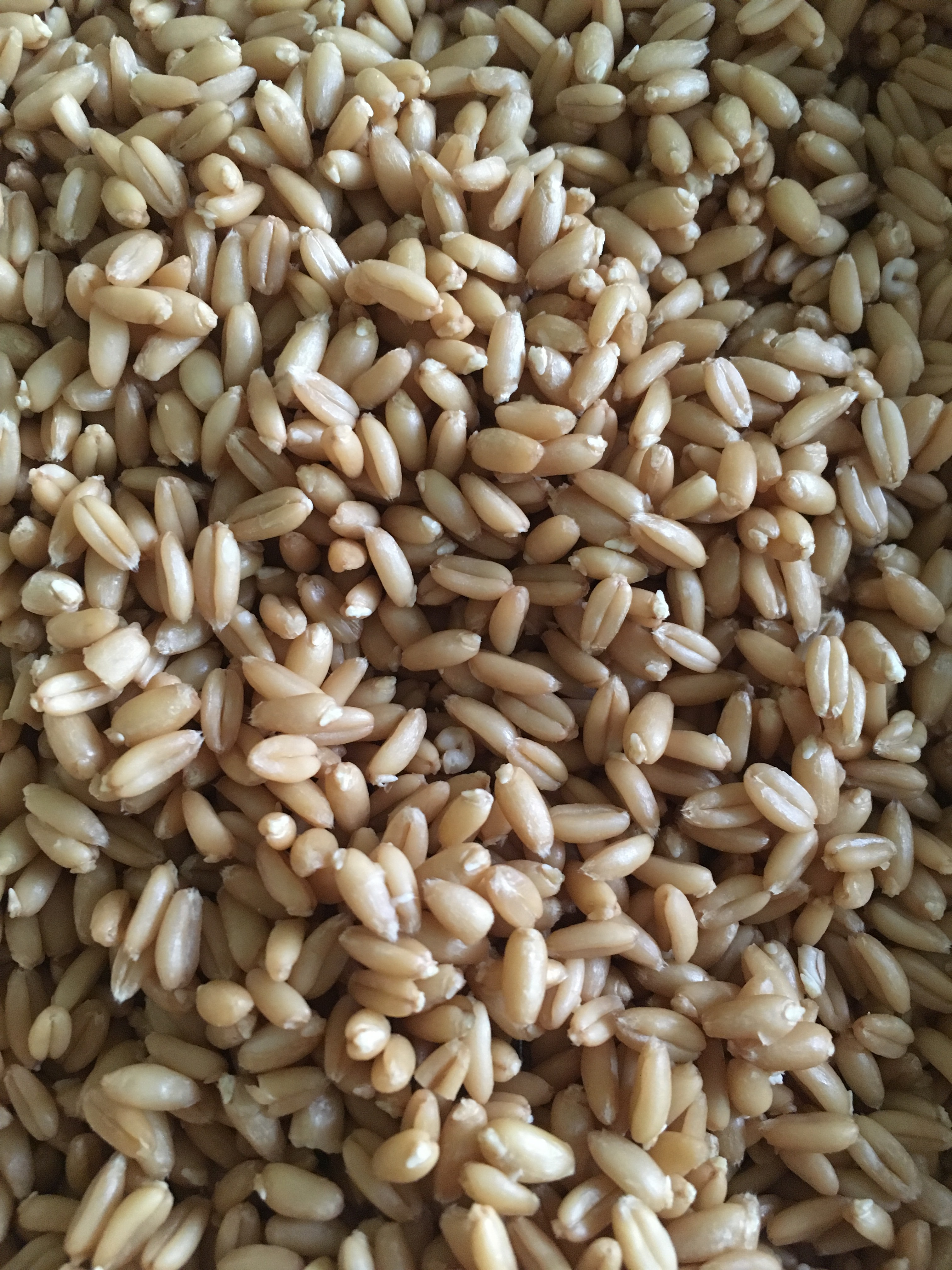
Sprouted. See the tiny tails on the tip of each seed?
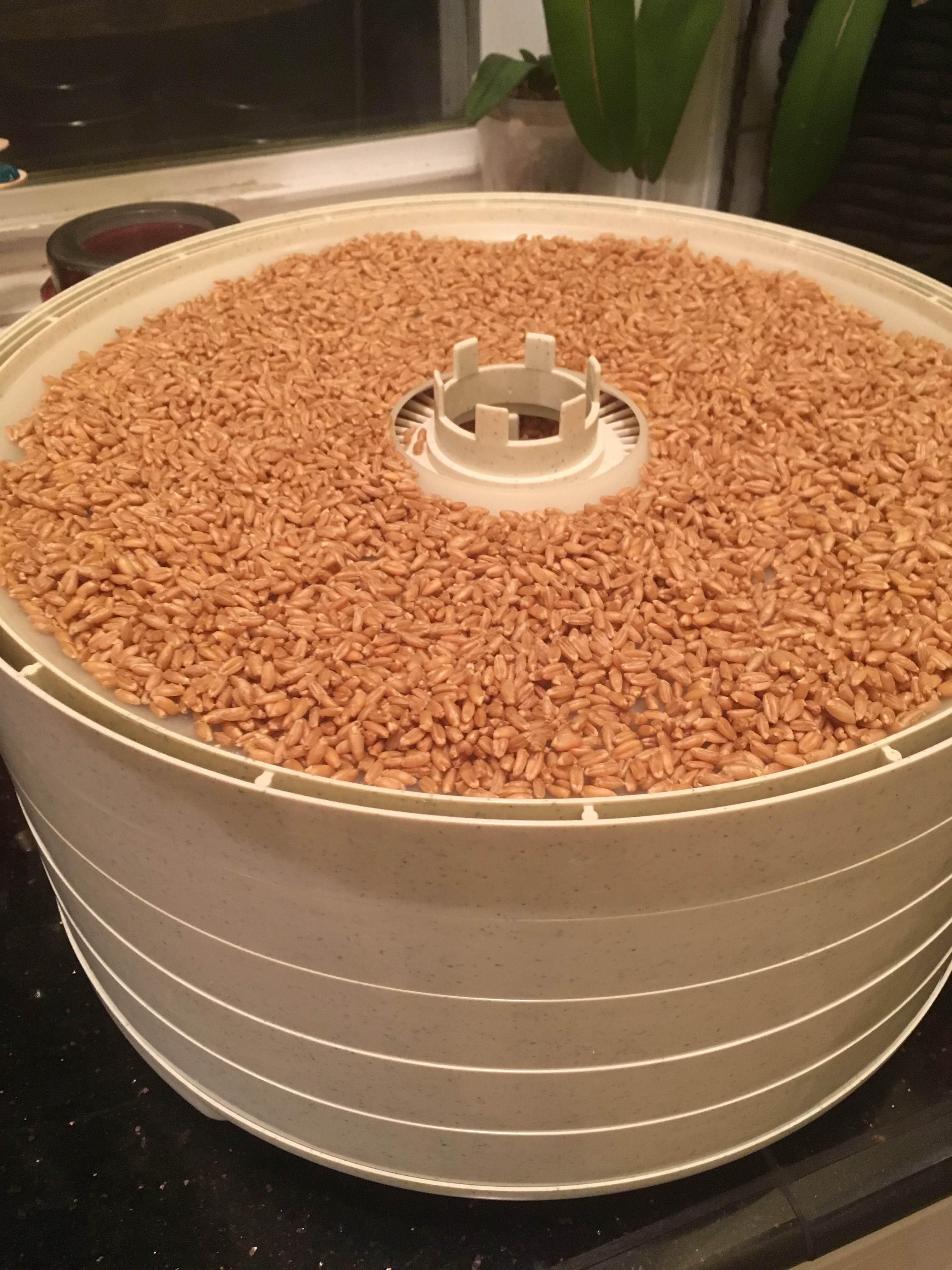
Before dehydrating.

After dehydrating.
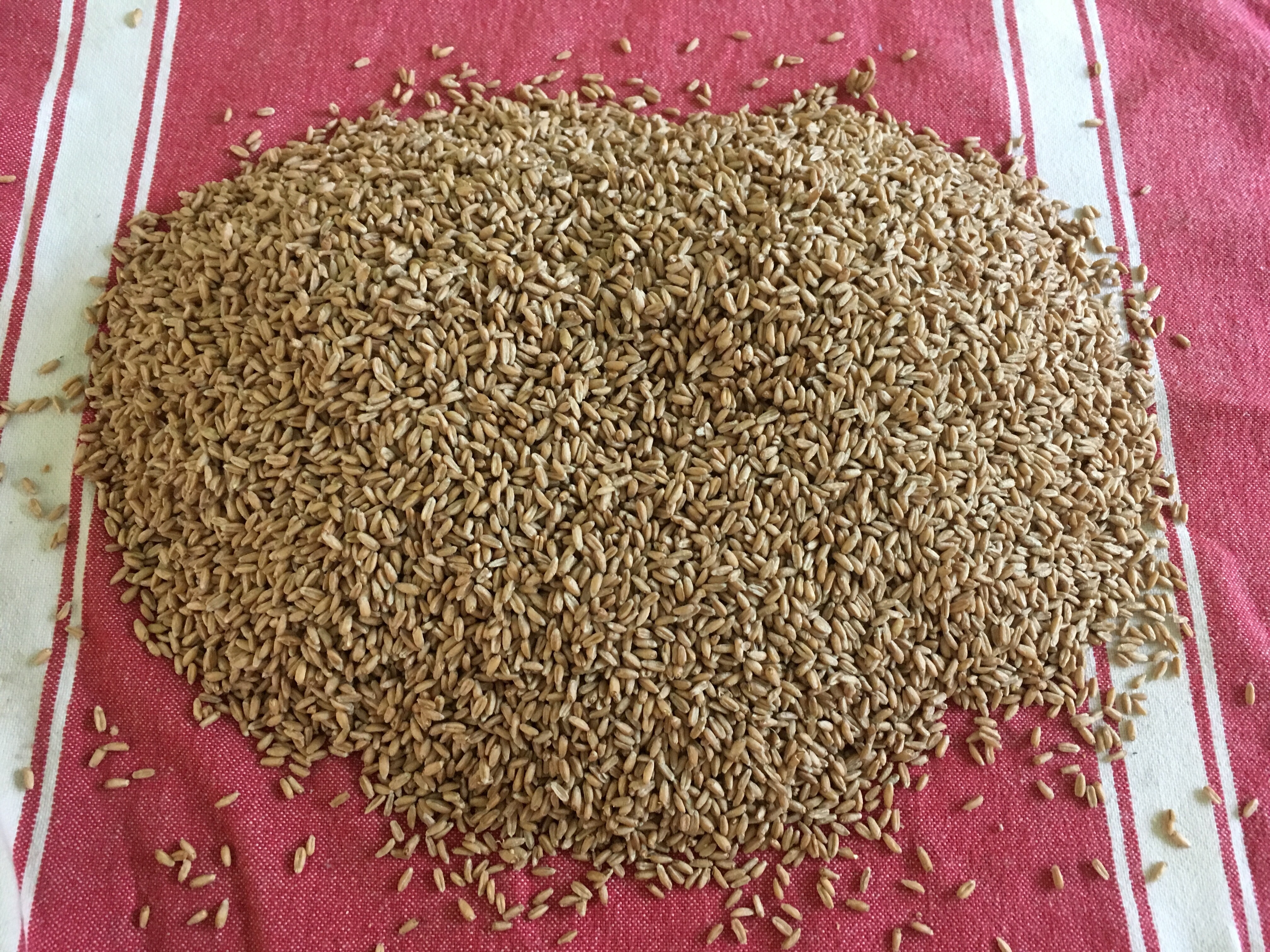
Dehydrated and ready to go in the grain mill.
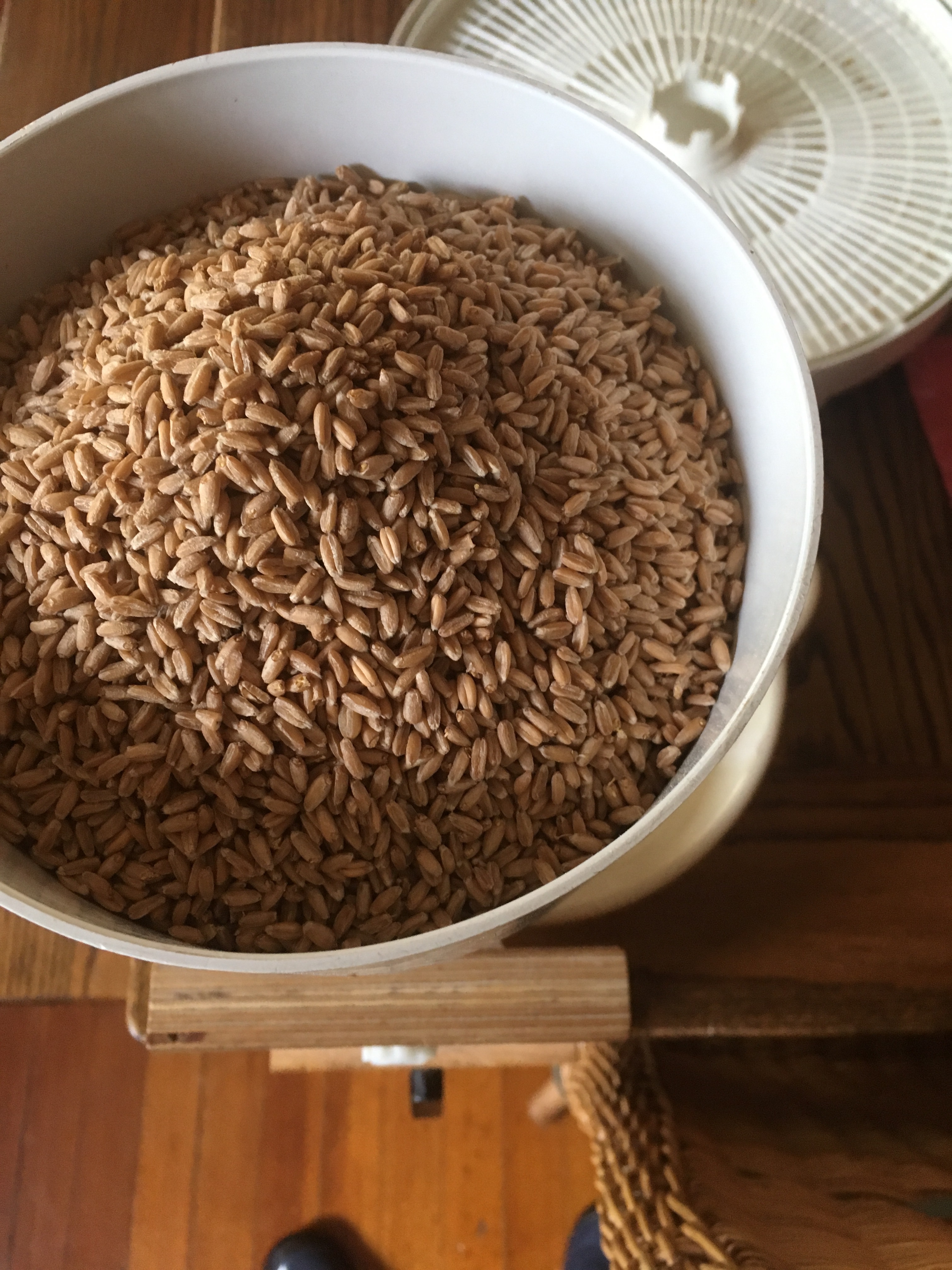
In the mill. About to become flour.
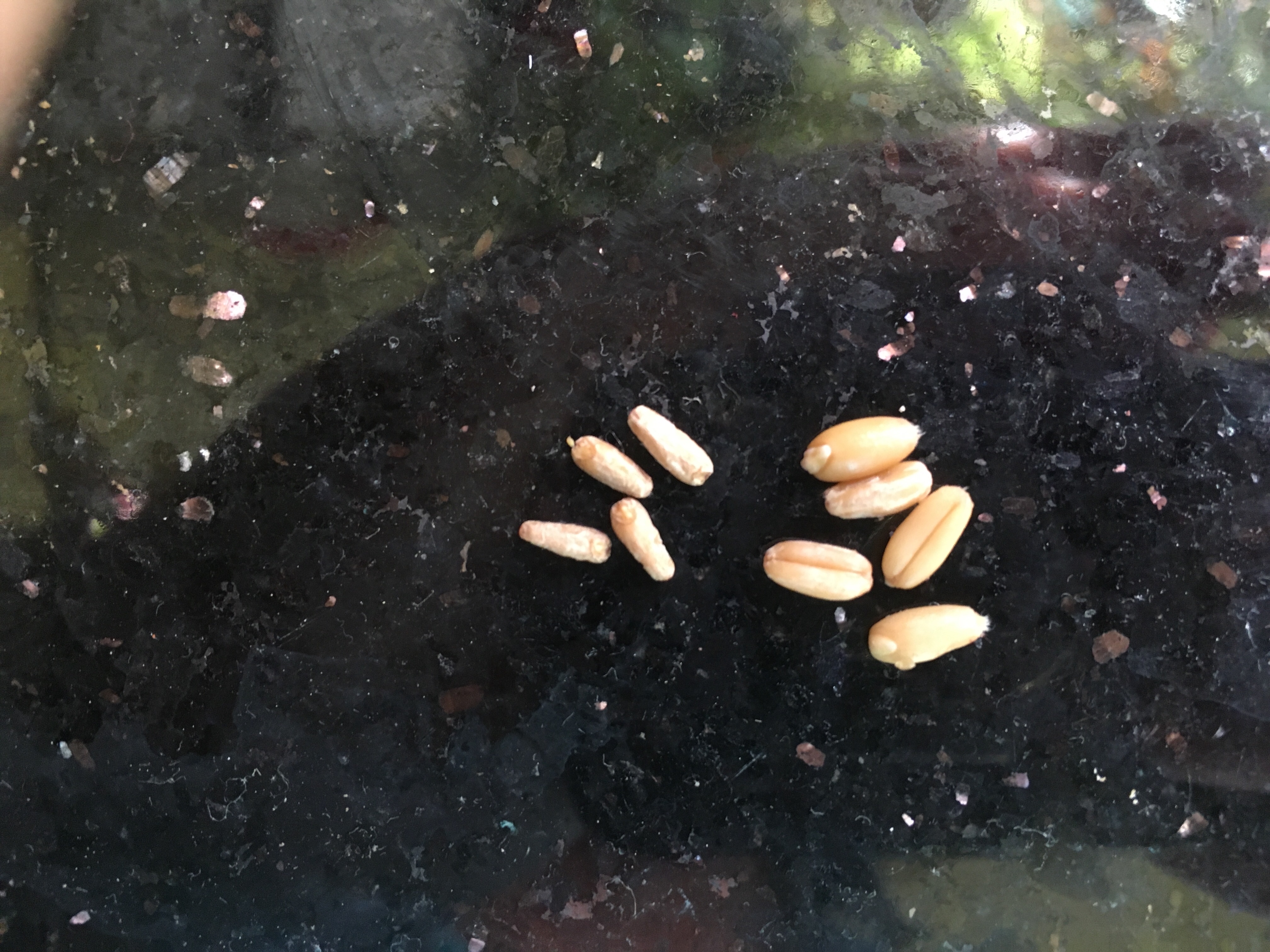
Compare: Left – after dehydrating, Right – before dehydrating.
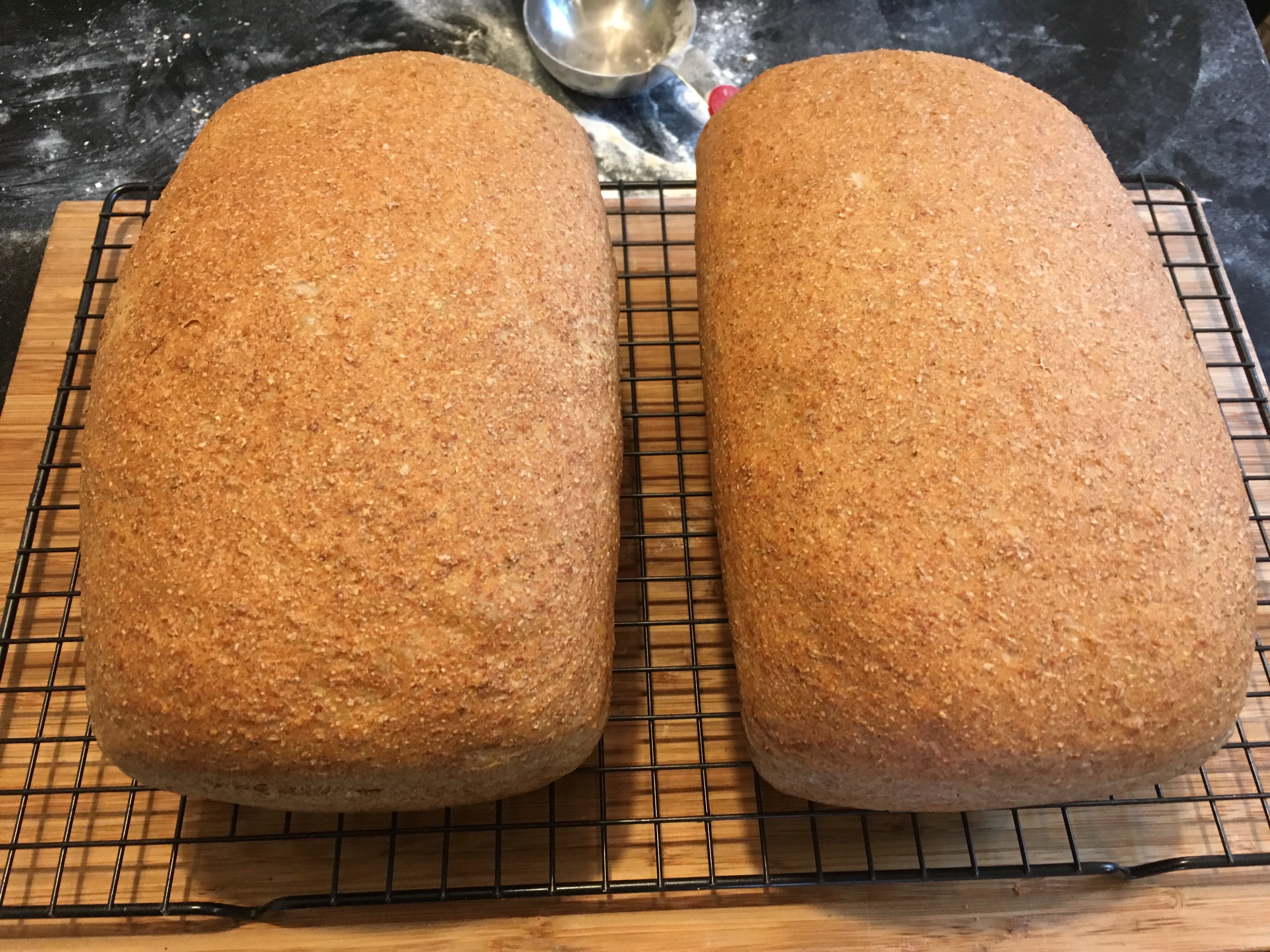 I’ve been honing my bread making skills this last year. Follow my bread making journey by reading the latest on the Baking Day page.
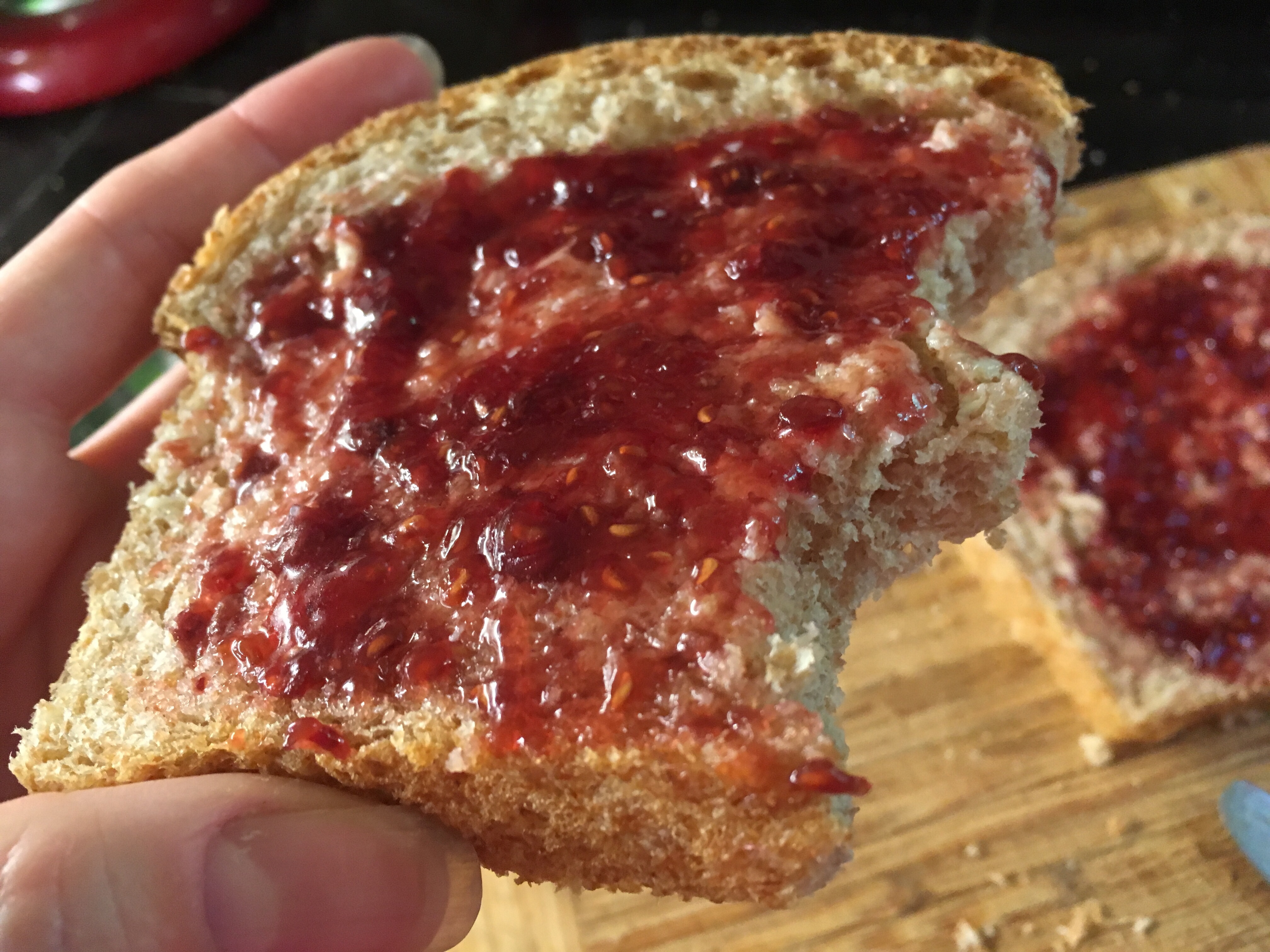
Just can’t beat freshly baked sprouted spelt bread and raspberry jam.

 Remembering Maggie Lane