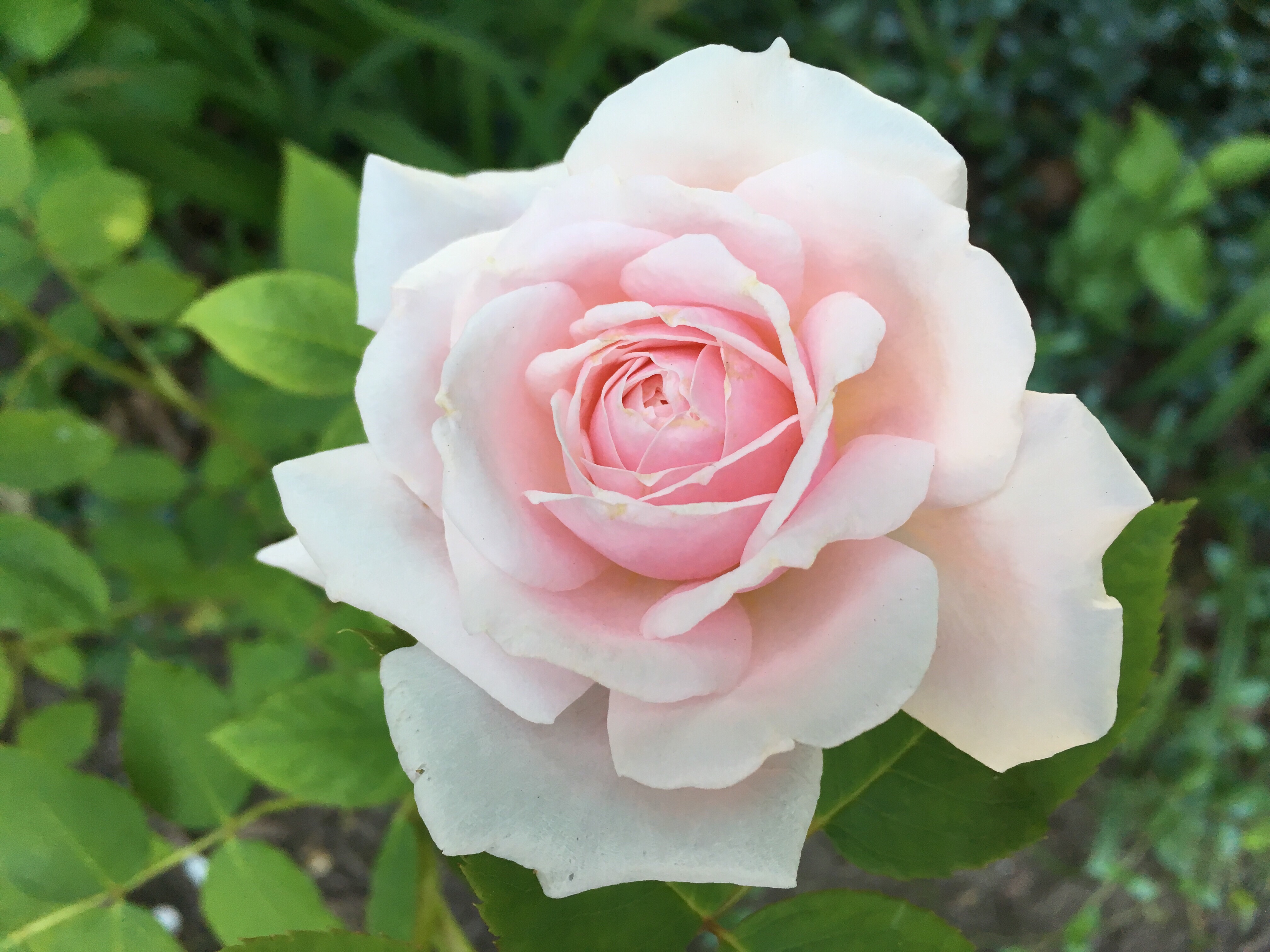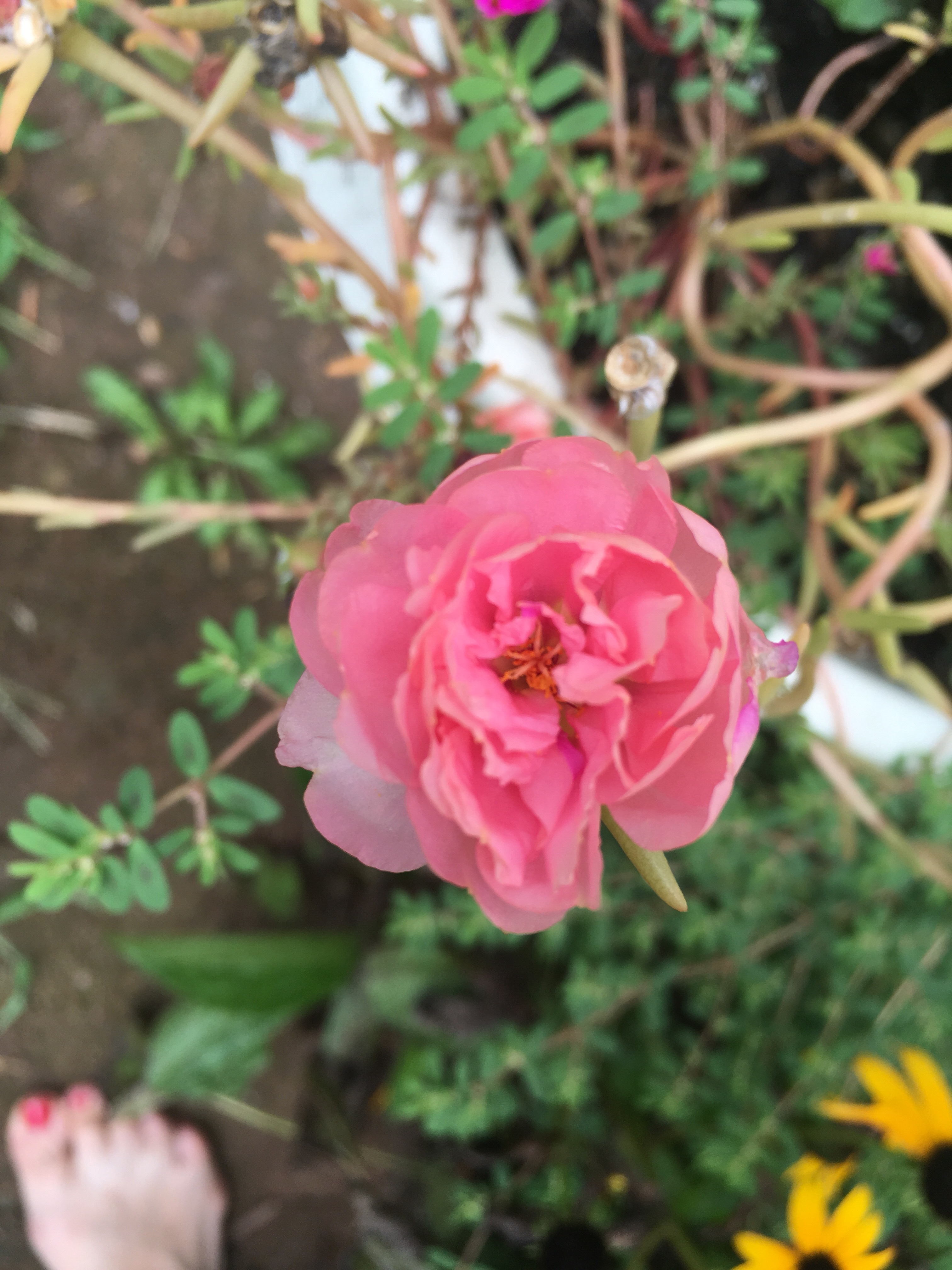
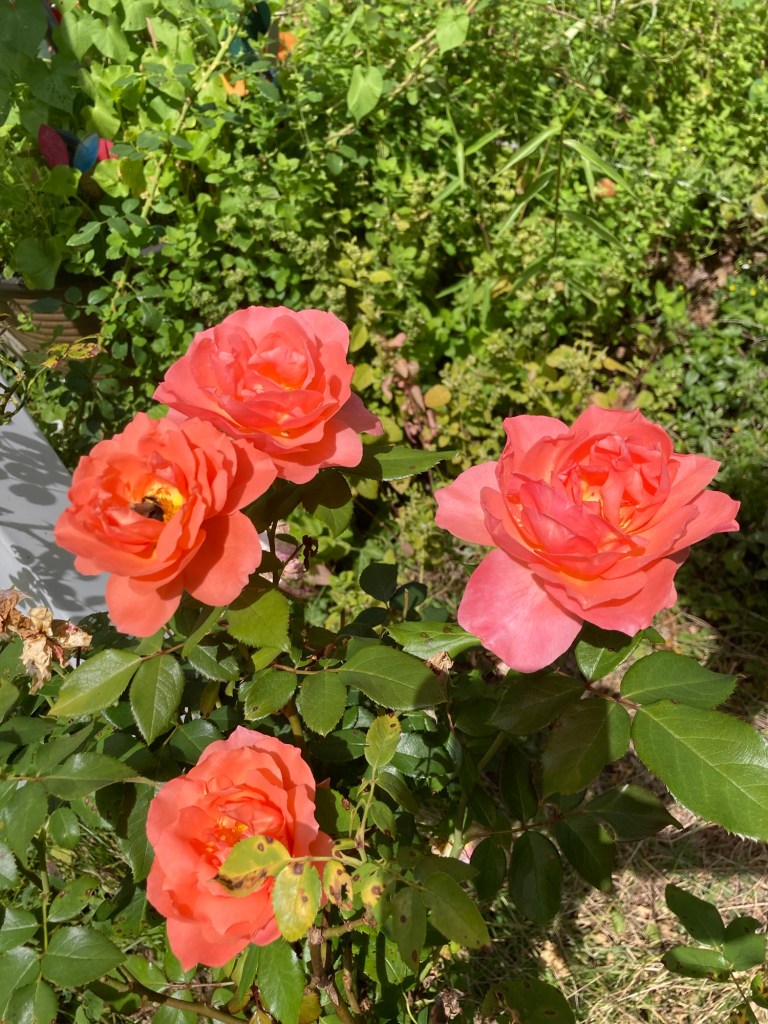
DIY Rose Oil ~ Make this oil from your own Rose 🥀Petals!

What do you make with your flowers? 🥀

This is infused Rose oil is one my favorite things to make. I use it on my face and hands daily. 🥀

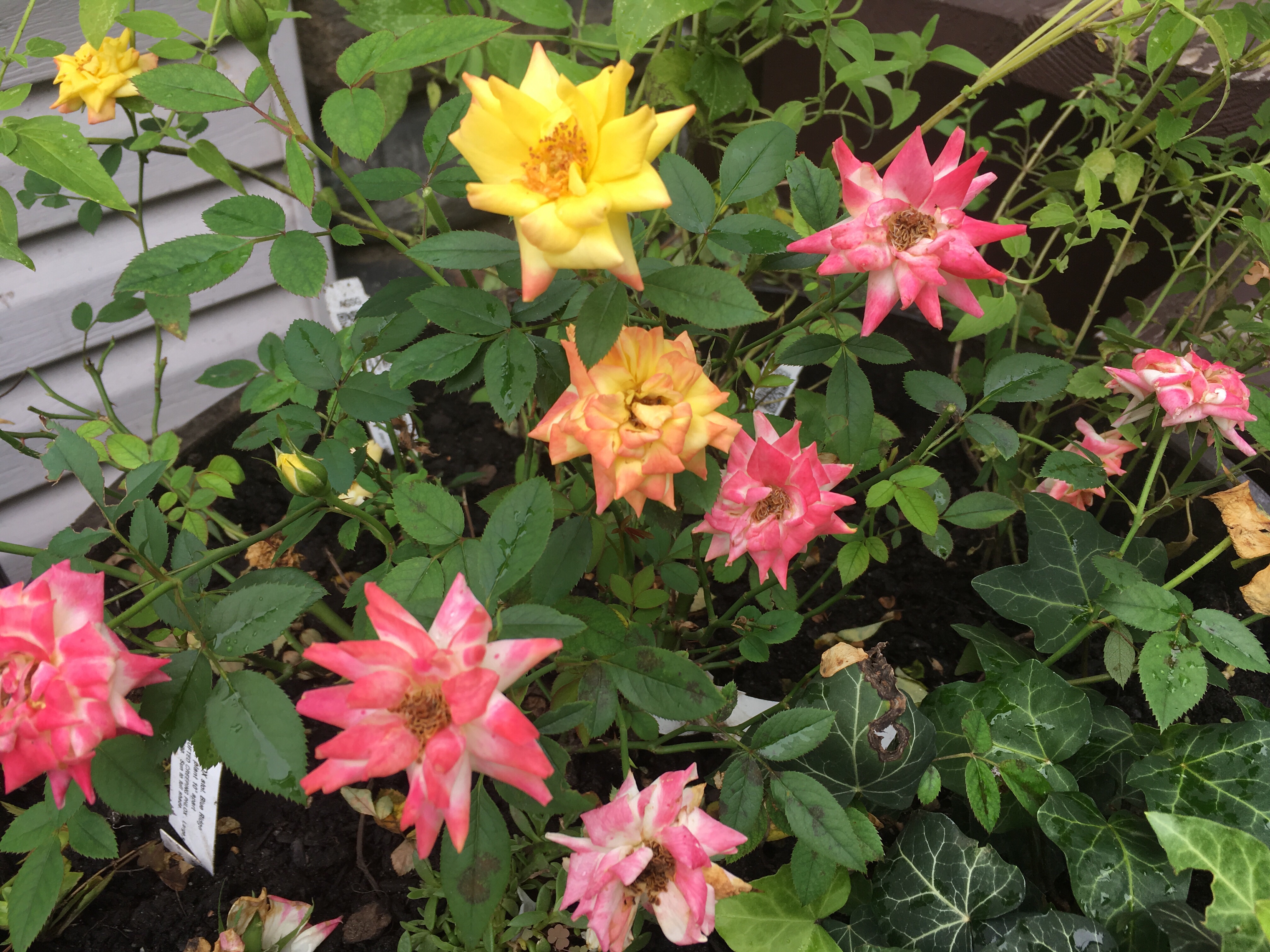
🥀 I harvest my rose petals, air dry them inside a pretty tea towel until crunchy, and store them in a clear glass jar in a dark cabinet where I can check back often to watch for condensation (a sign that they aren’t fully dry).

When I need to make more Rose oil I simply put some of my dried petals in a jar, cover them with my favorite oil (I use olive, but almond is lovely, or you can use any oil you would cook with that is liquid at room temperature), and then I sit the jar in a sunny window to add some gentle warmth. 

When I need more Rose 🥀 oil, I strain the petals and pour some into a 2 ounce spray bottle for easy application. 

Hint: You wouldn’t think it, but the 2 ounce travel bottles from Walmart work best. Then I can take my oil with me on the go. I have a bottle in my bag right now actually. 😊

Once strained, I store extra oil in glass jelly jars labeled with masking tape with the name and date. 
🥀 Who would have thought that something so lovely and useable would come out of such a simple flower? 

When my hands get dry this time of year I just take some out and squirt some into my palm. It sprays out in a nice, neat stream. Because Rose 🥀 Family plants are all astringent, Rose oil not only moisturizes, but tones my skin. And it smells as good as your Roses 🥀 do in your garden in the summer. There’s nothing like the aroma of Roses to lift your spirits when winter days are dreary.

It’s the simple ways you use your plants that make them that much more special. 🥀

Subscribe or follow on Facebook to learn how to recognize and use the plants that grow around you. 


Visit our sister site, http://www.botanyinanhour.com, to learn more about your botany basics, plant recognition, and how to put your knowledge to use so that you can garden better, forage safely, harvest more, preserve easily, heal locally, and teach your kids plant skills for life.

#botanyinanhour #botany 

#flowerfamilies #roses #roseoil #rosefamiky #gardenbetter #foragesafely #harvestmore #preserveeasily #heallocally 

Exciting News! I’ve launched a new website! Easy, quick, and stress-free plant identification at Botany in an Hour!

Botany in an Hour is where YOU become the plant ID expert!

If you’ve followed me for a while, many of you know that I love plants and I love teaching! So, teaching Botany for our local homeschool group has been one of my greatest joys.

I’m so excited to announce that I’ve taken my in-person plant ID workshops and turned it into an online class. My new website will allow me to just just teach students local to me plant identification, but now I can teach you all the plants too! My method is quick and it’s easy. In just one hour I can teach you what you need to know in order to identify over 40,000 plants by sight. Think I’m joking? I’m not. I teach this every summer to groups of homeschool students and their parents. I love this, because even my Pre-K students can do this! I can take a four-year-old, tell them what to look for, turn them loose in a garden, and they can find the plants and identify them accurately every time! Hop on over to Botany in an Hour and check it out!

At the very least take advantage of my free download – The Best Botany Resources, to find out which books are the best for learning plant identification quickly and easily and at the same time, you’ll get a special coupon code for the launch of my new course! I hope I’ll see you in Botany Class!

What people are saying about Botany in an Hour!

“This is way more fun than learning from a book.” ~ Sal Y.

“I highly recommend this class. It was a great way to learn about the amazing world of botany!
My son said, “I never knew Botany could be so much fun!”.” ~ Lisa VH

“My family loved this class! The children and I learned so much – we love going on
nature walks and try to identify and classify the plants and trees.” ~ Giovanna D.

Making the Most of your Herbal Home Remedies

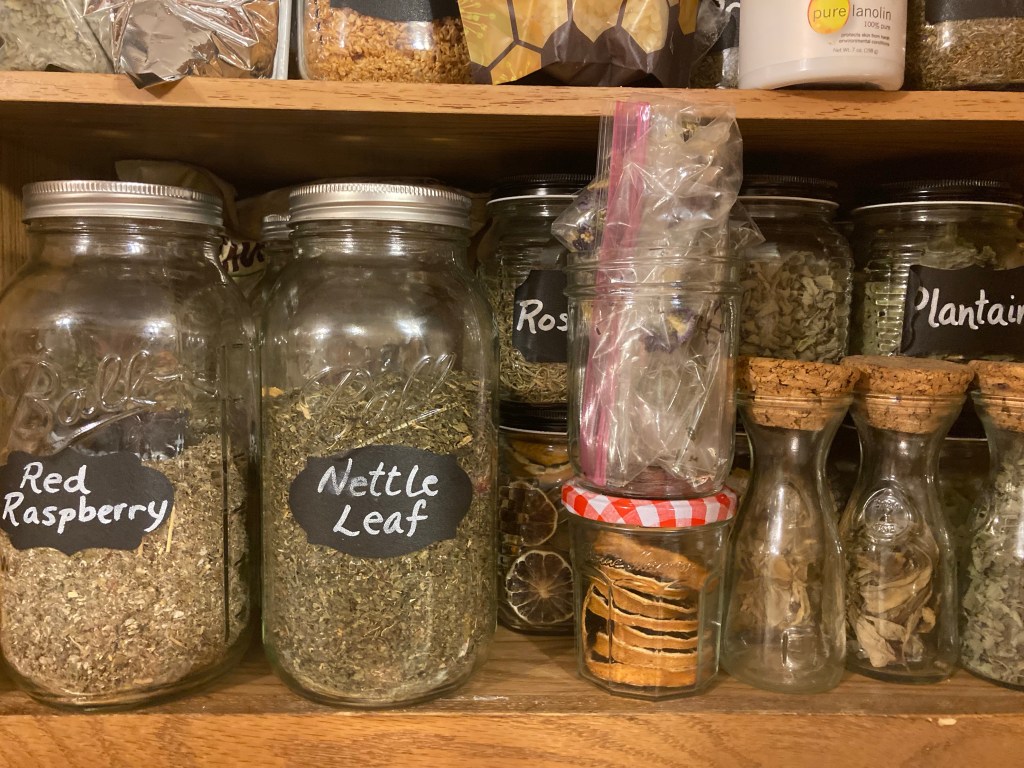
My herb shelf

There’s something satisfying about having all you brews, infusions, and concoctions ready and within arms reach when you need them.

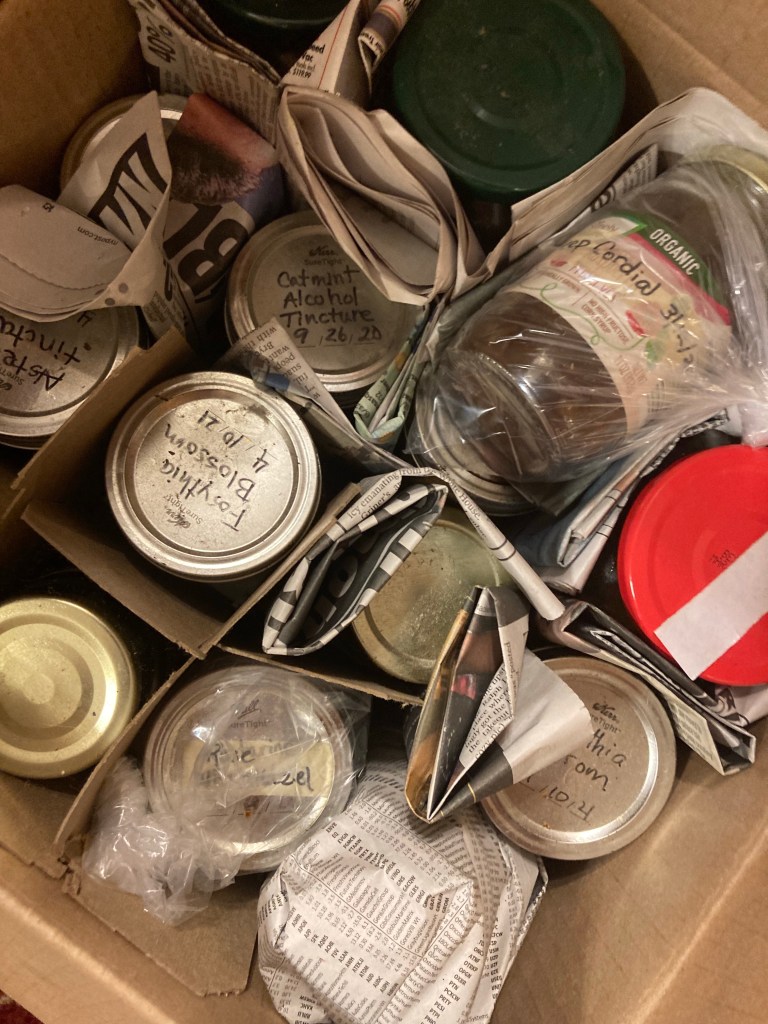
We moved to a new house this summer. I finally got around to opening up my box of herbal remedies this week. I hope to unpack it soon and get it all nicely arranged on the shelves with my other herbs.

I haven’t made anything new this year except a new batch of mullein oil from last year’s leaves. I need to re-establish all my medicinal plants here at the new house so I don’t have much to harvest yet. And there is no mullein growing here if you can believe that. I was so jealous on the way to PA this summer as it was growing all over the roadsides. It was all I could do to keep from asking my husband to pull over so I could jump out of the car to grab some. I’m going to have to plant some I guess.

I also need to pull out my favorite local medical plant ID book and investigate what is actually growing here at the new place. There’s got to be some good stuff in the woods behind our house. So far I’ve found some plantain and yarrow in the front yard, but I haven’t investigated the woods yet. One thing at a time. Trying to get the inside of the house live-able and settled. The outside will have to wait for now.

Do plants have personalities?

Making your own remedies either from herbs you grow and harvest yourself or from dried herbs that you buy requires you to get to know the herbs. I like to think of them as friends who can help me when I’m in a time of need, but first I have to get to know their personality so that I know what they have to offer. Reading and studying about them is helpful, but rather than solely focusing on the medical conditions that an herb may help, I file my herbal friends away in my address book describing their characteristics. This way I get to know the “personality” of the herb.

This is a little address book that I’ve had for years. I use it to make notes on herbs or conditions that I’m reading and researching. Since the address book is organized alphabetically, I use the lines where you would typically write a person’s name and contact information instead to write the name of the herb or condition that I’m researching and then I use the extra lines to make notes of what I’m learning. That way I can always come back and remind myself of information that I may have forgotten when the need arises. I can’t tell you how many times I’ve referred to my little book over the years.

How to Further Your Herbal Studies:

If you’re interested in taking your herbal studies up a notch, consider Homesteading Family’s free herbal trainings. Join in and maybe I’ll see you in class. I’m one of the online moderators for that course and it would be fun to see you over there. 😊

And if you really want to dive deep into herbs I highly recommend the Homegrown School of Herbal Medicine. I’m a student, though albeit progressing slowly, but the school really gives you an excellent foundation into anatomy and physiology of the human body so that you can properly understand how different herbs are going to work on the different systems of the body. And Doc Jones is a funny teacher to boot! 😊
However you choose to study herbs, keep good notes, enjoy what you are learning, get to know herbs as friends, and most importantly use the things you make.

From L to R: Rose Petal Sugar Scrub, Dried Rose Petals, and dried Forsythia blossoms.

Note: This post contains affiliate links.

Medicinal Plant books by Region – add these to your library!

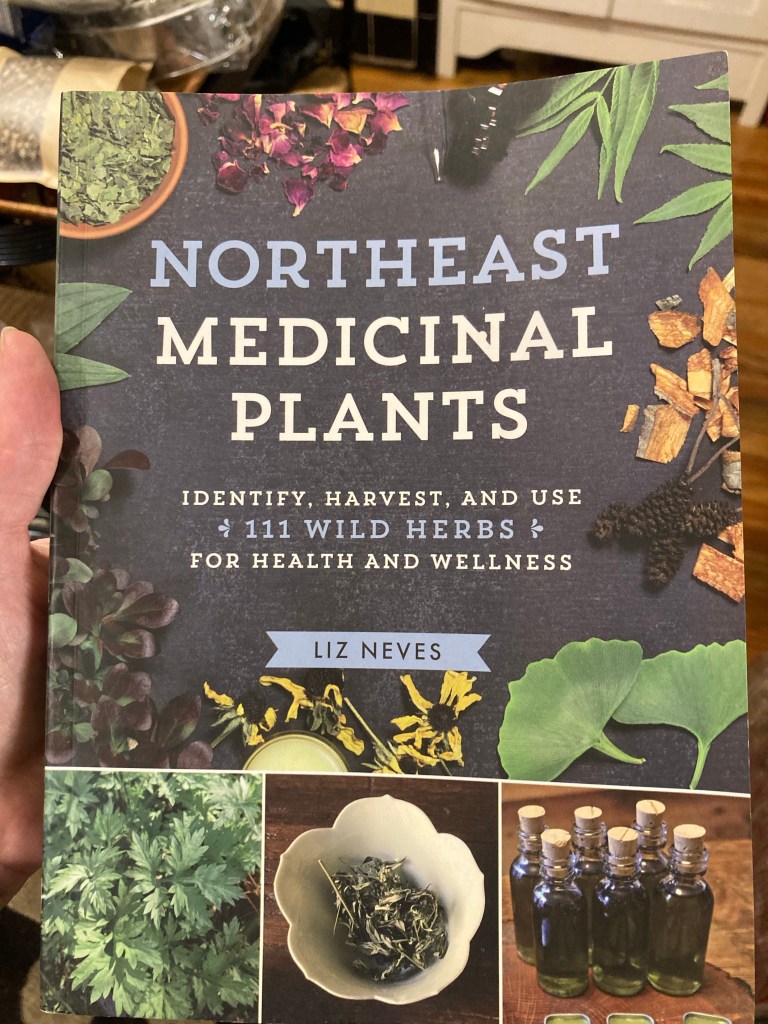
I just got it in the mail today and after just one flip through I think it is going to become one of my most used books.

It’s basic but thorough and covers basic botany, wildcrafting, making plant medicine, as well as individual plant profiles which include ID, harvesting, medicinal uses, cautions, how to harvest safely to ensure future harvests and/or how to propagate, and the best herbal preparations for each plant.

There is also a super helpful chart showing each plant and what time of year it actively growing for harvesting.

AND these are plants that actually grow where I live! So many of my books have plants that don’t grow here or don’t have plants that do grow here.

There are books for each region of the U.S. Affiliate links are below. I can’t wait to devour this one. I almost want to get one of each to compare how the plants overlap by region.

Northeast: https://amzn.to/3pDzEGd

Midwest: https://amzn.to/3AS26uv

Mountain States: https://amzn.to/3AFvt37

Southwest: https://amzn.to/3T6YeNj

Pacific Northwest: https://amzn.to/3R5d7h8

Southeast: https://amzn.to/3pAfn4z

Check them out. I think they are going to be super useful!

Want to learn more about making herbal remedies at home?

Homesteading Family offers a FREE herbal training. Check the out the current training!

Or check out their online Herbal Medicine Cabinet Course for a more in depth study.

Note: This post contains affiliate links.

Garden Tool Organization and Seed Saving Tips

Check out friend Michele’s tips for organizing your garden tools and saving seeds. You can follow her on FB and IG, or on her blog at Chocolate Box Cottage.

Save those SEEDS!

Do you have organic produce coming in? Fall is upon us. Don’t forget to save seeds from some of your produce for use next year. Squash, and tomatoes are great to save seeds from, and it’s pretty easy.

Here’s how….

Saving Seeds:

Scrape those seeds off the cutting board as you chop those tomatoes. They all tend to squirt out anyway. Be sure to slice different varieties separately from each other, so as not to mix seeds.

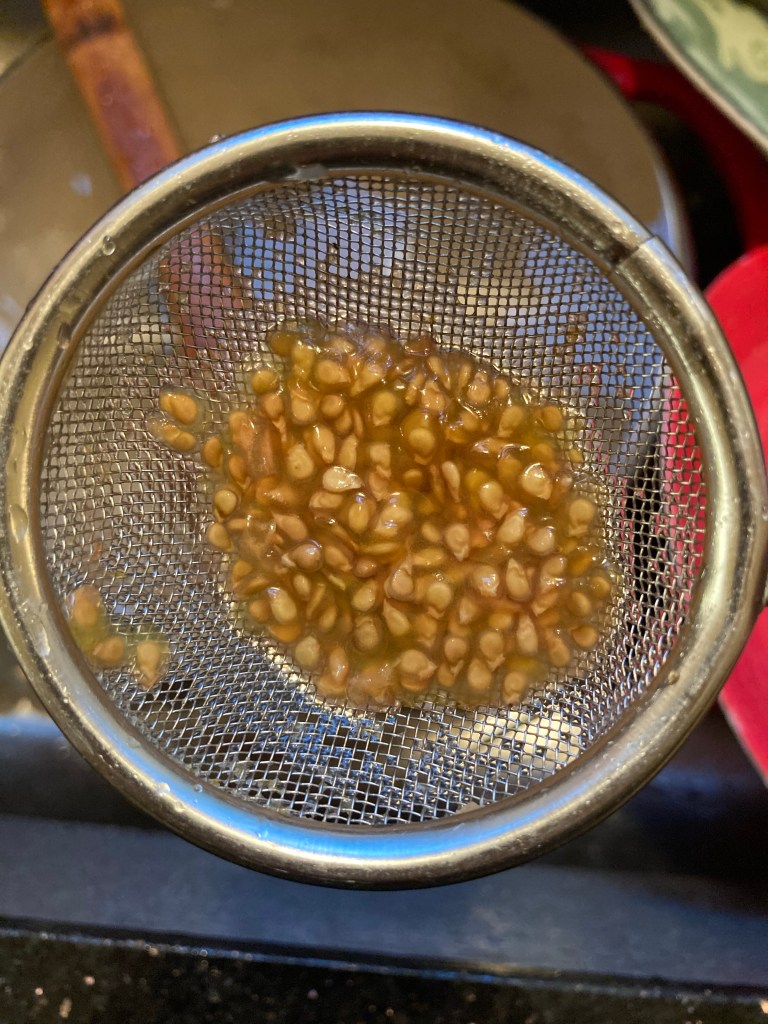
Scrape them all into a bowl and cover with a little bit of water.

Let them soak overnight to help loosen some of the gel around them.

Then rinse well with water straining them through a sieve.

Spread out on the back of a paper plate labeled with the name of the plant. Set it in a warm place to dry.

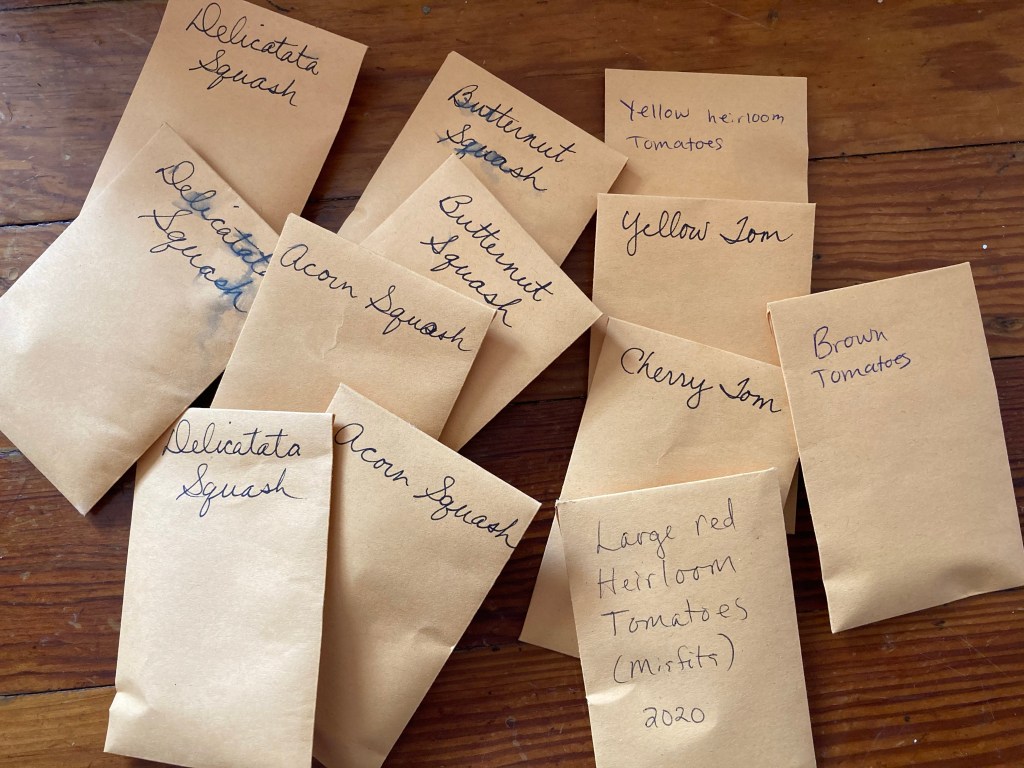
Once dry, store in a labeled (name and year), paper envelope for the next growing season.

Squash is a great plant for saving seeds too. Use the same steps outlined above.

Happy gardening! May your harvest be bountiful! ❤️

My Fall Harvest – Seeds!

Most people see fall as a time to rake the leaves and put the garden to bed. But, I’ve come to enjoy fall as one of the most exciting times in the garden. It’s when you’ll find me snipping dead flower heads off and sorting seeds. I save them for the following year if I need to fill in plants, or enjoy giving them away to friends. Don’t overlook this harvest. Just think of the yield you could have in the year ahead from one tomato seed. The multiplication values are amazing when you stop to consider the number of seeds can be produced my one simple seed in one growing season. Save your seeds and share them with friends!

Rose Campion seeds

These little brown paper envelopes are great for seed sorting and sharing.

The flower heads on Rose Campion produces a prolific amount of seeds.

Rose Campion flower head.

Crush between your finger and the seeds just pour out.

See the white little cone shaped things? Those are the seeds.

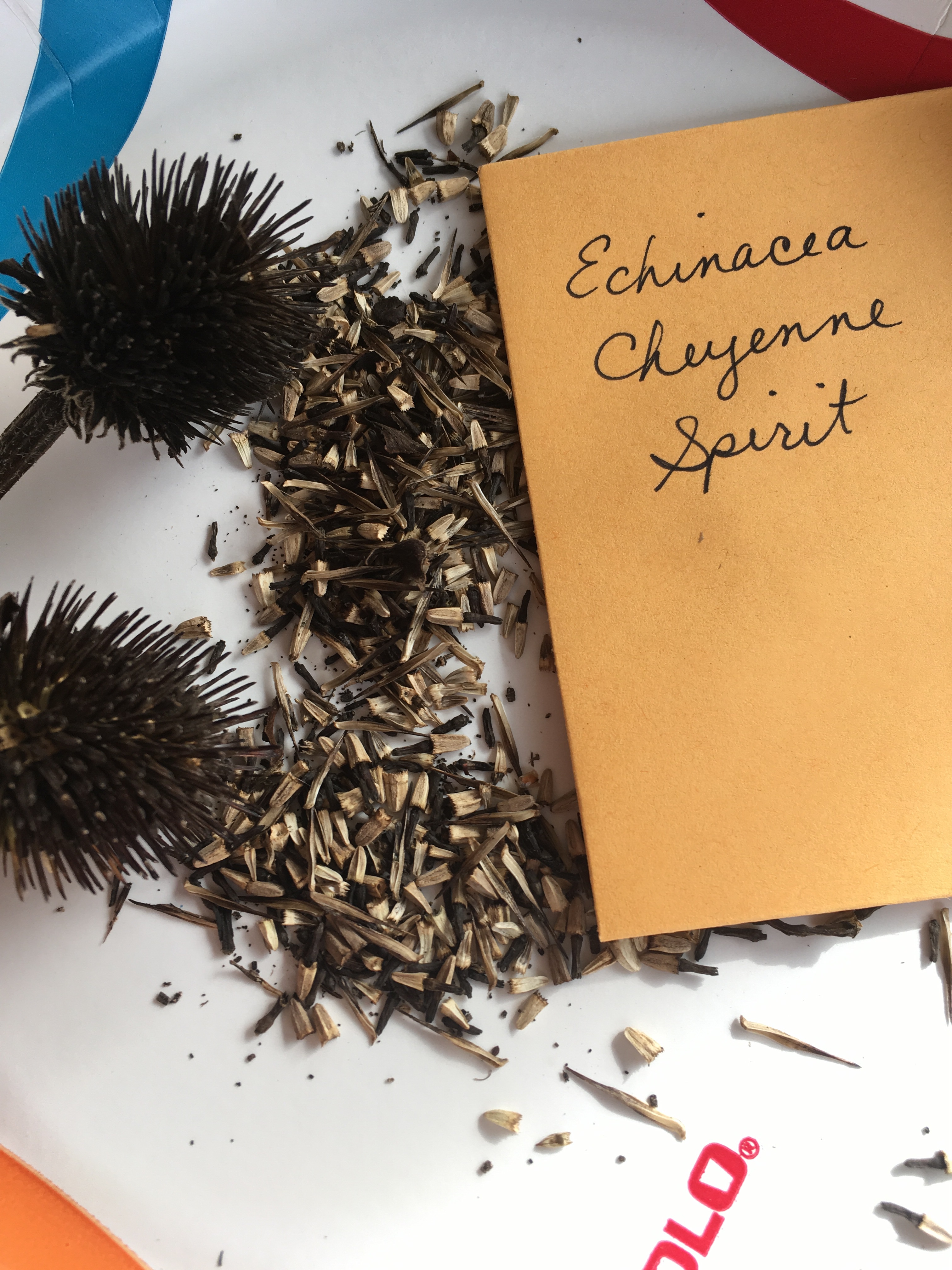
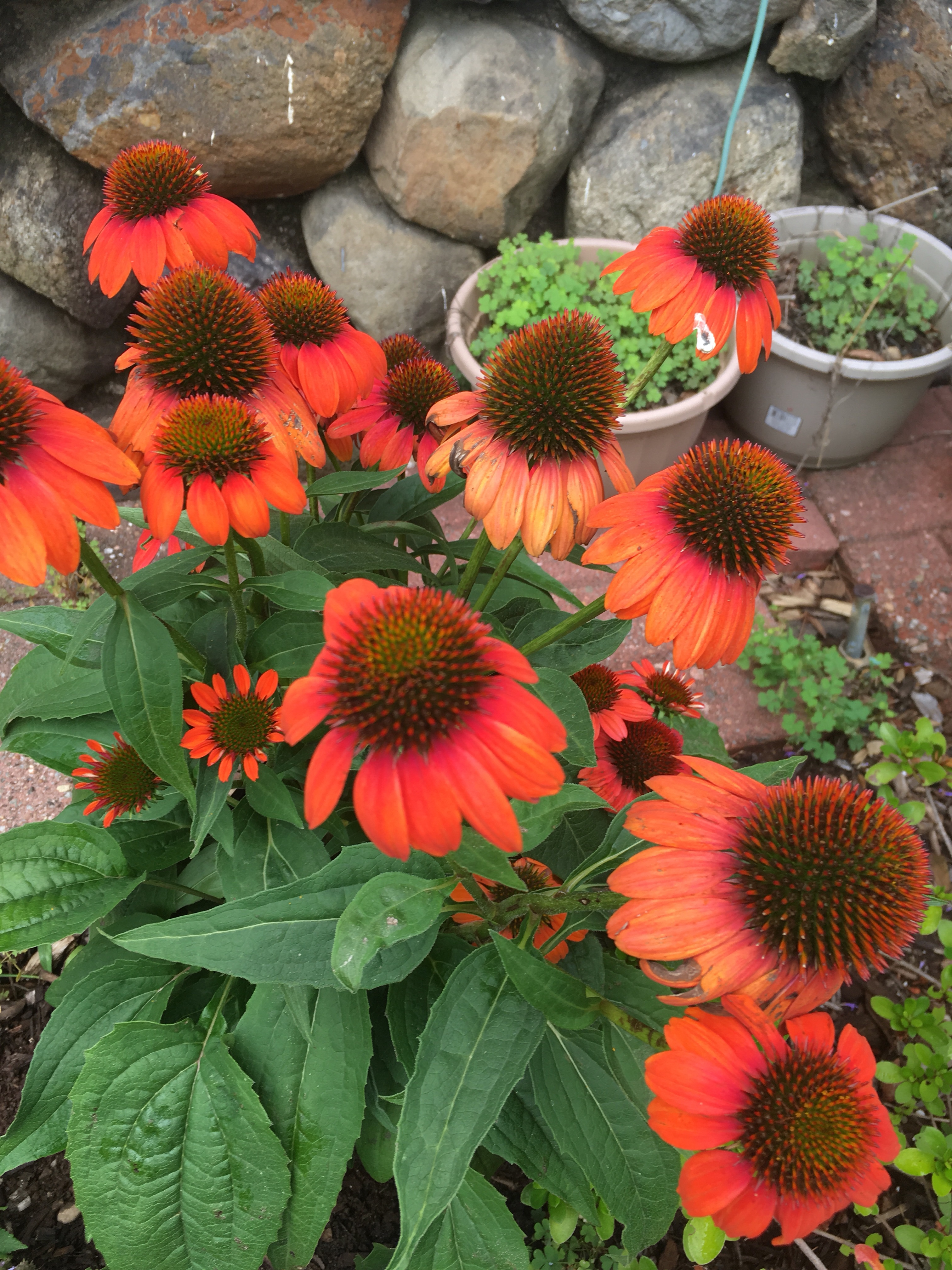
Echinacea hides her seeds among all these prickles.

You’re looking to save the white, not the black spiny parts.

Lavender

Crush the lavender flowers and the seeds just fall out.

My Garden – Late Summer 2019

Some of my best blooms this summer! Hope to do even better next year. I’ve already got my next years garden planned out and order with plants arriving for fall planting.

My Garden – Late May 2018

Here’s what has popped up in the last couple of weeks and what I’ve planted in the last few days. We’ve had a rainy week, so I took advantage of it to plant my annuals and the last of my perennials for the year.

For annuals this year, I chose mixed green begonias, lavender vinca, white alyssum, and mixed impatiens.

In the perennial category, I added a few chrysanthemums, gaillardia, daylilies, ajuga, more lamium, and my new recent favorite, several varieties of agastache.

New to bloom since I posted last are perennial geranium, iris, more azaleas, honeysuckle (which I forgot to take a picture of), and the peony is so close to blooming.

So, let’s get on with the pictures.

Red azalea – such a bright, beautiful color in the front flower bed. (Also pictured, tulip foliage, iris and chrysathemum daisy rose.)

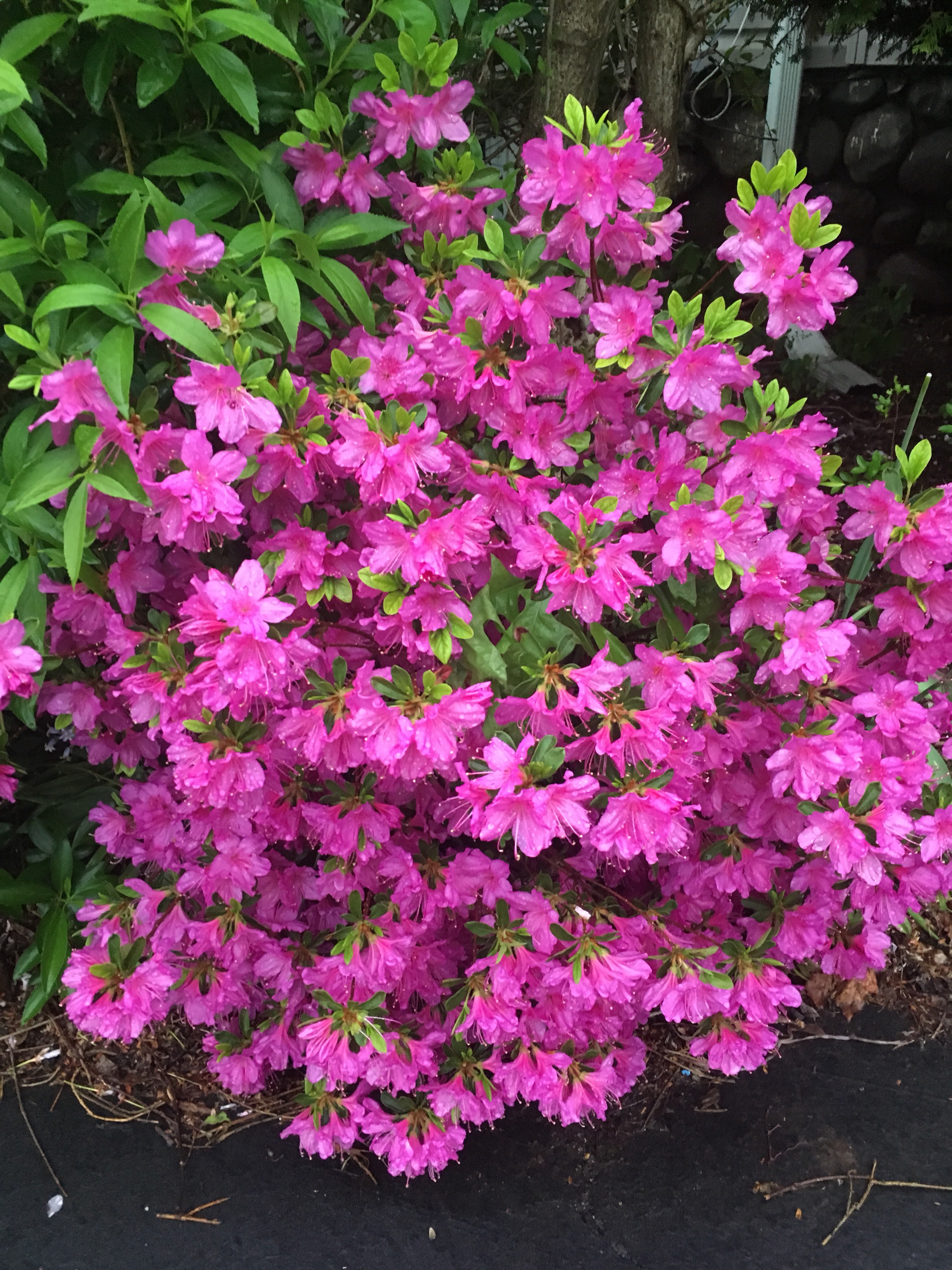
Shocking Pink Azalea – my favorite azalea color I think.

Purple azalea. My grandmother grew azaleas this color in her front yard.

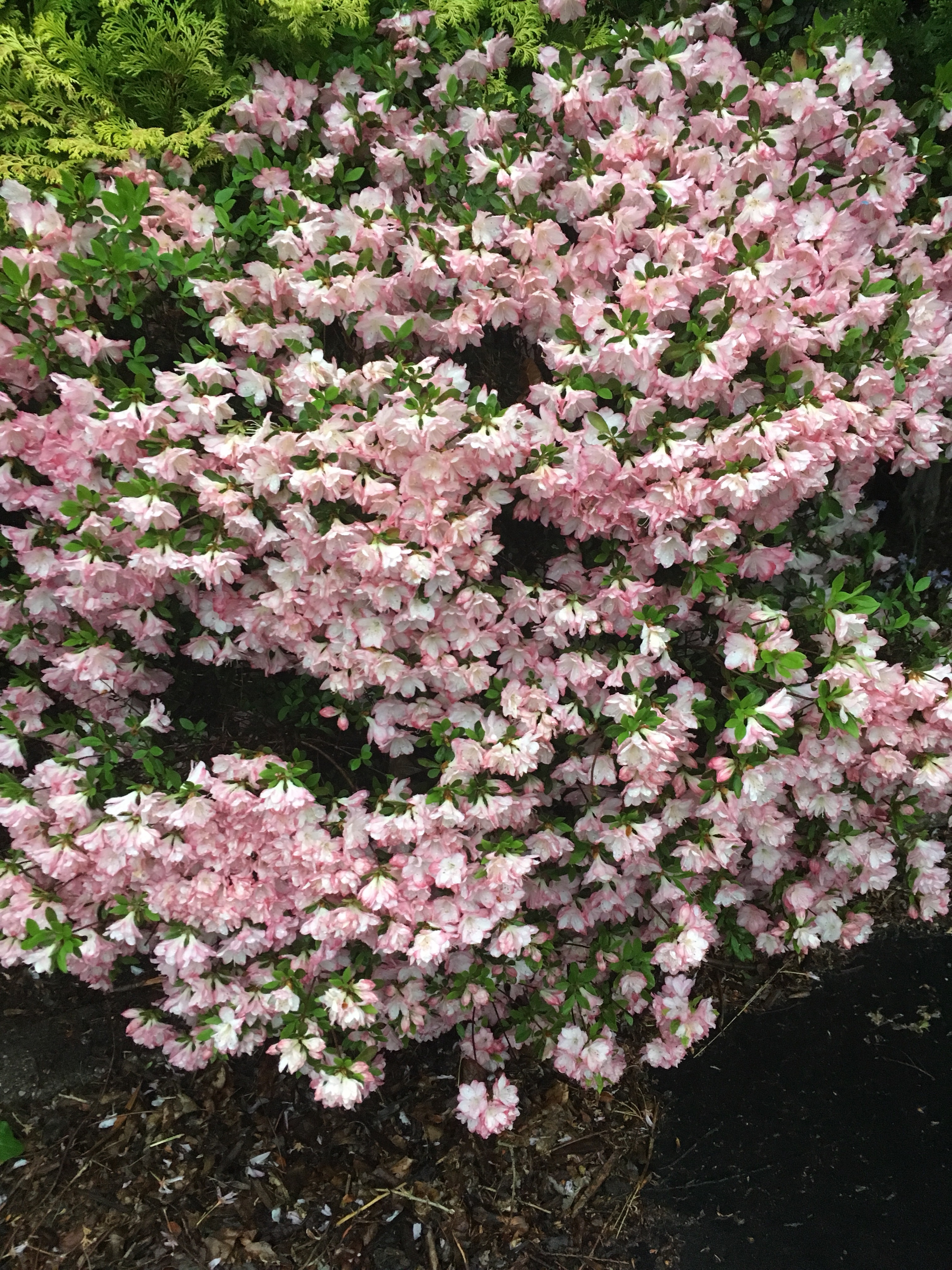
Light pink azalea.

A new baby azalea to match the large shocking pink on the other side of the flower bed.

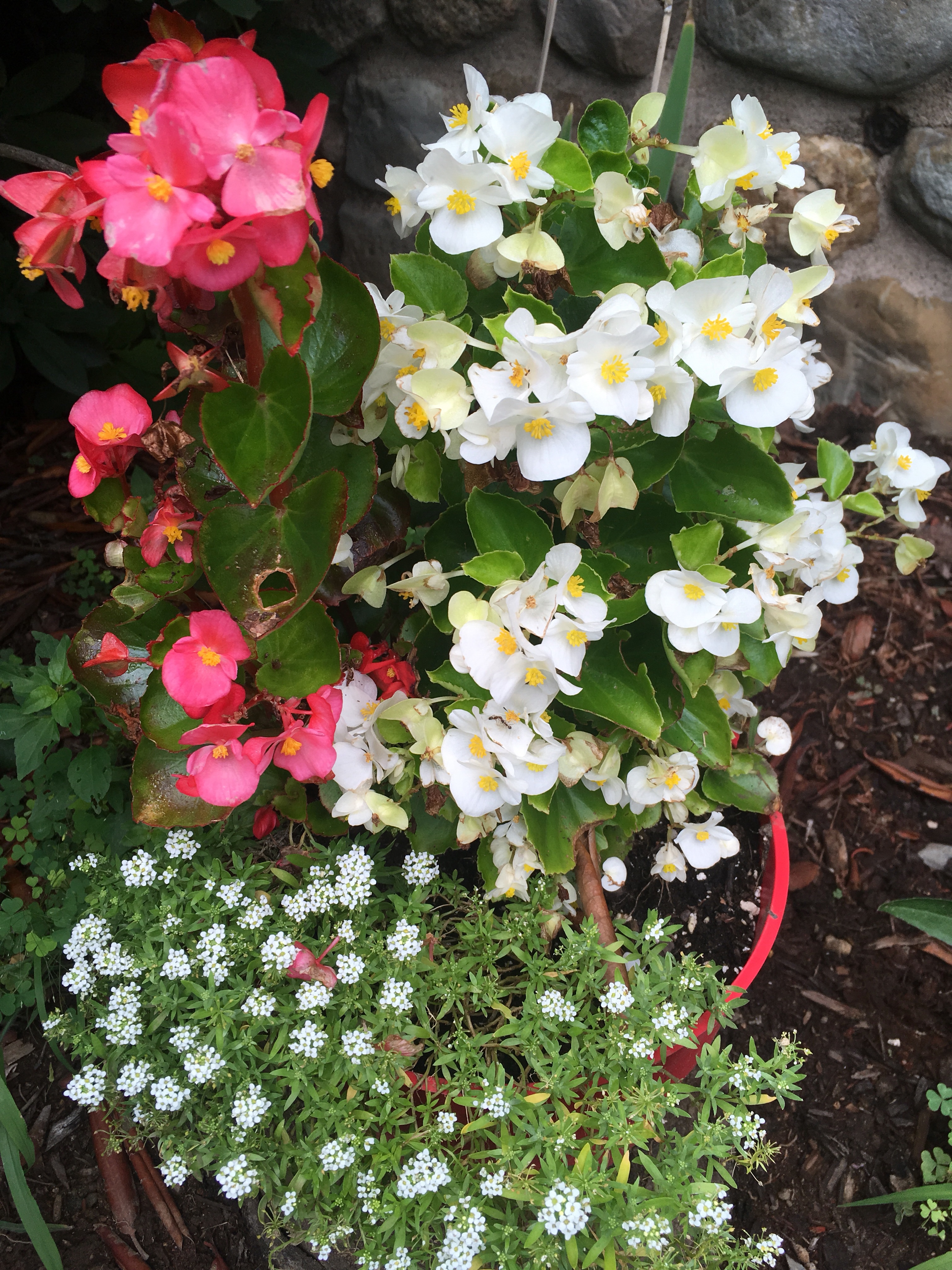
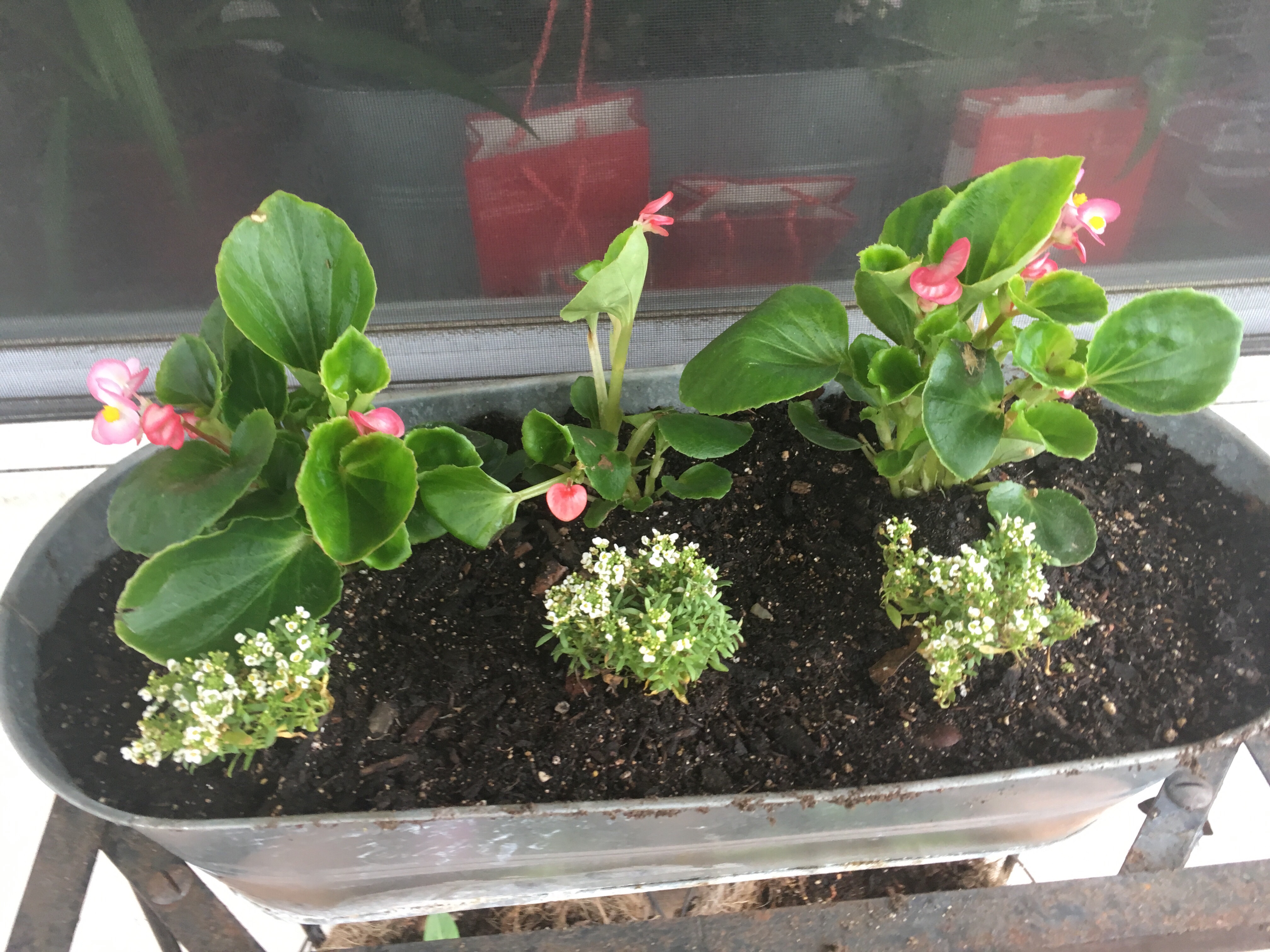
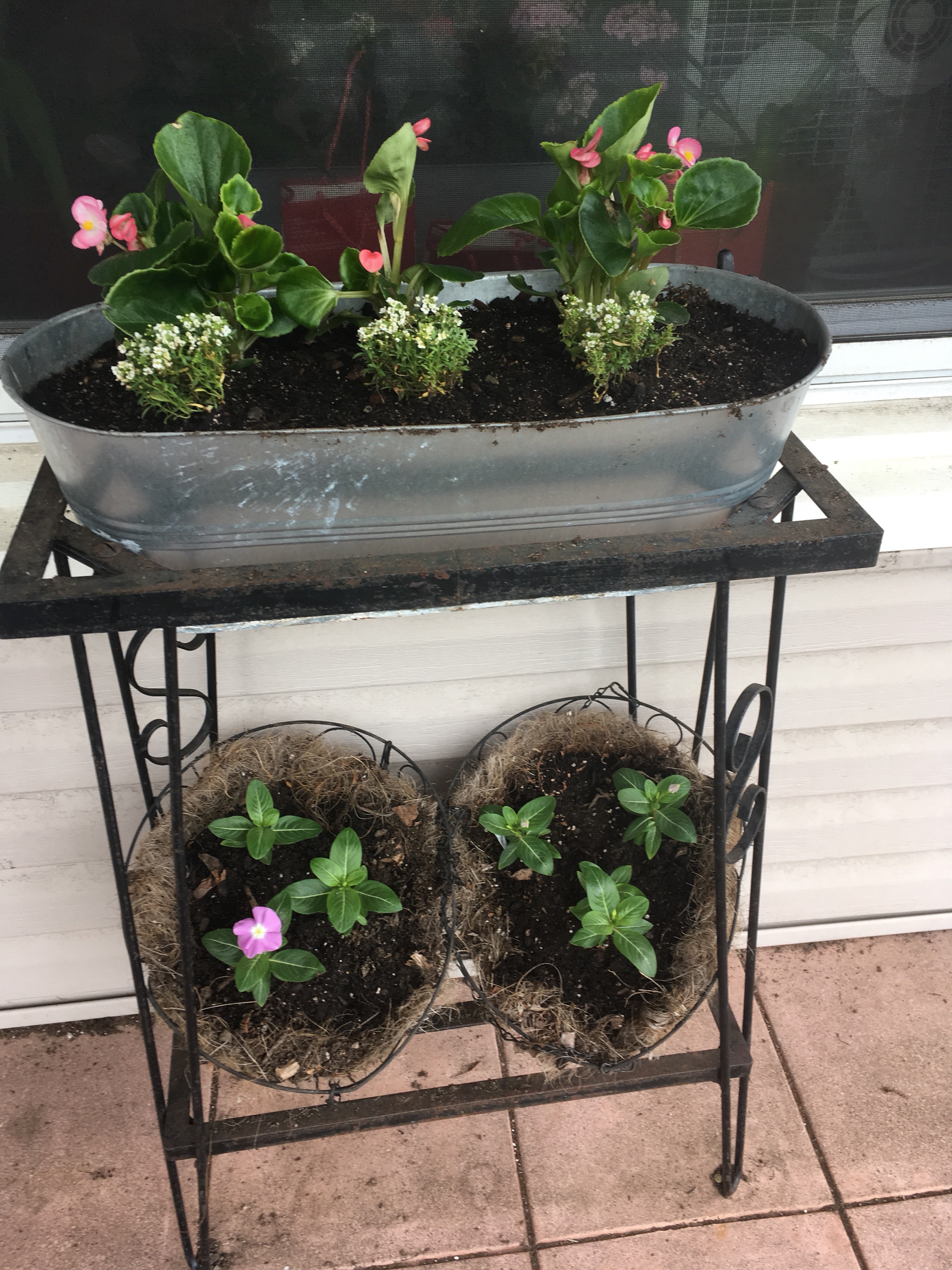
Flower box outside our front window. Pink begonias and white alyssum.

Pink begonias, white alyssum, lavender vinca on the bottom.

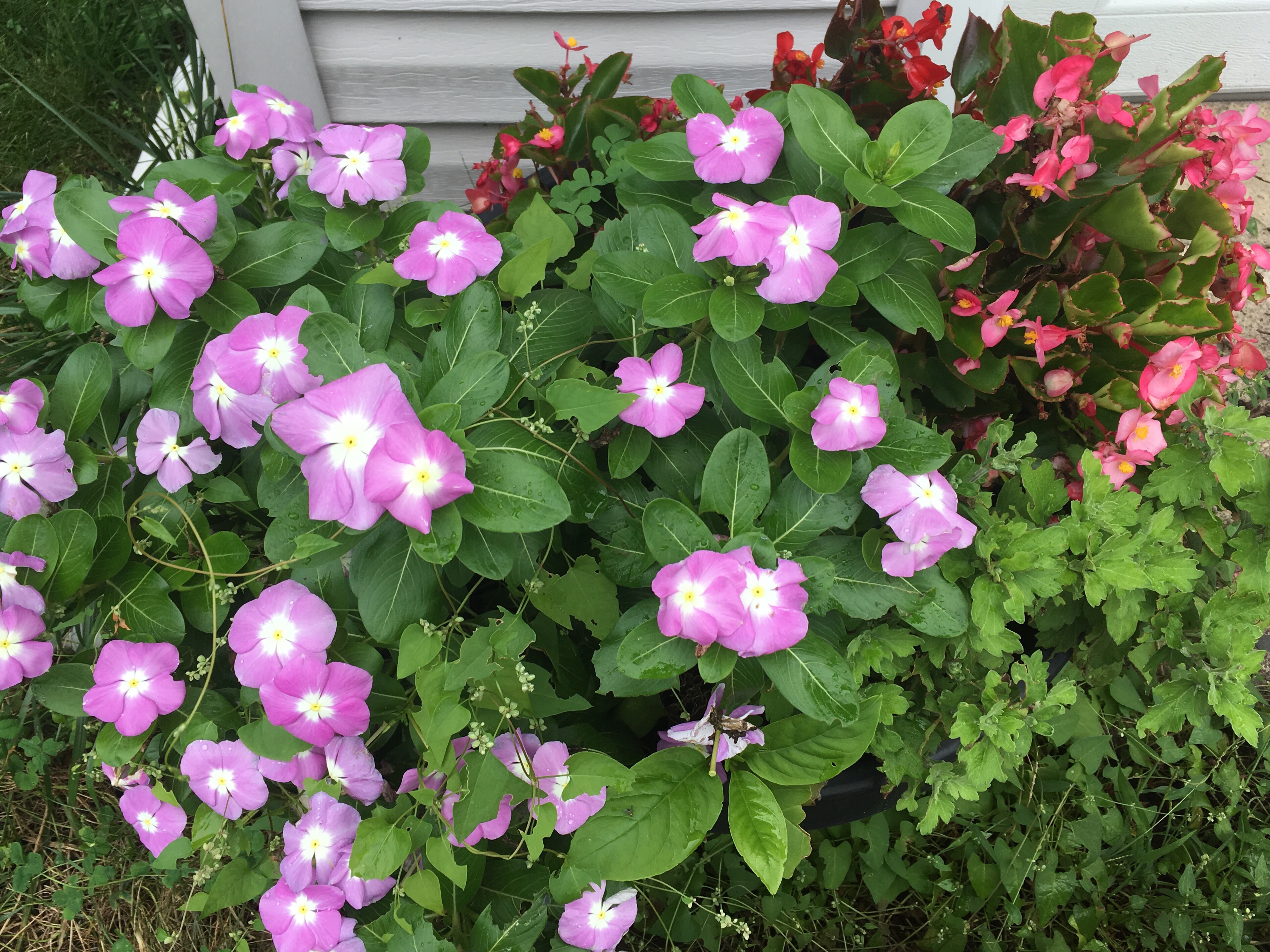
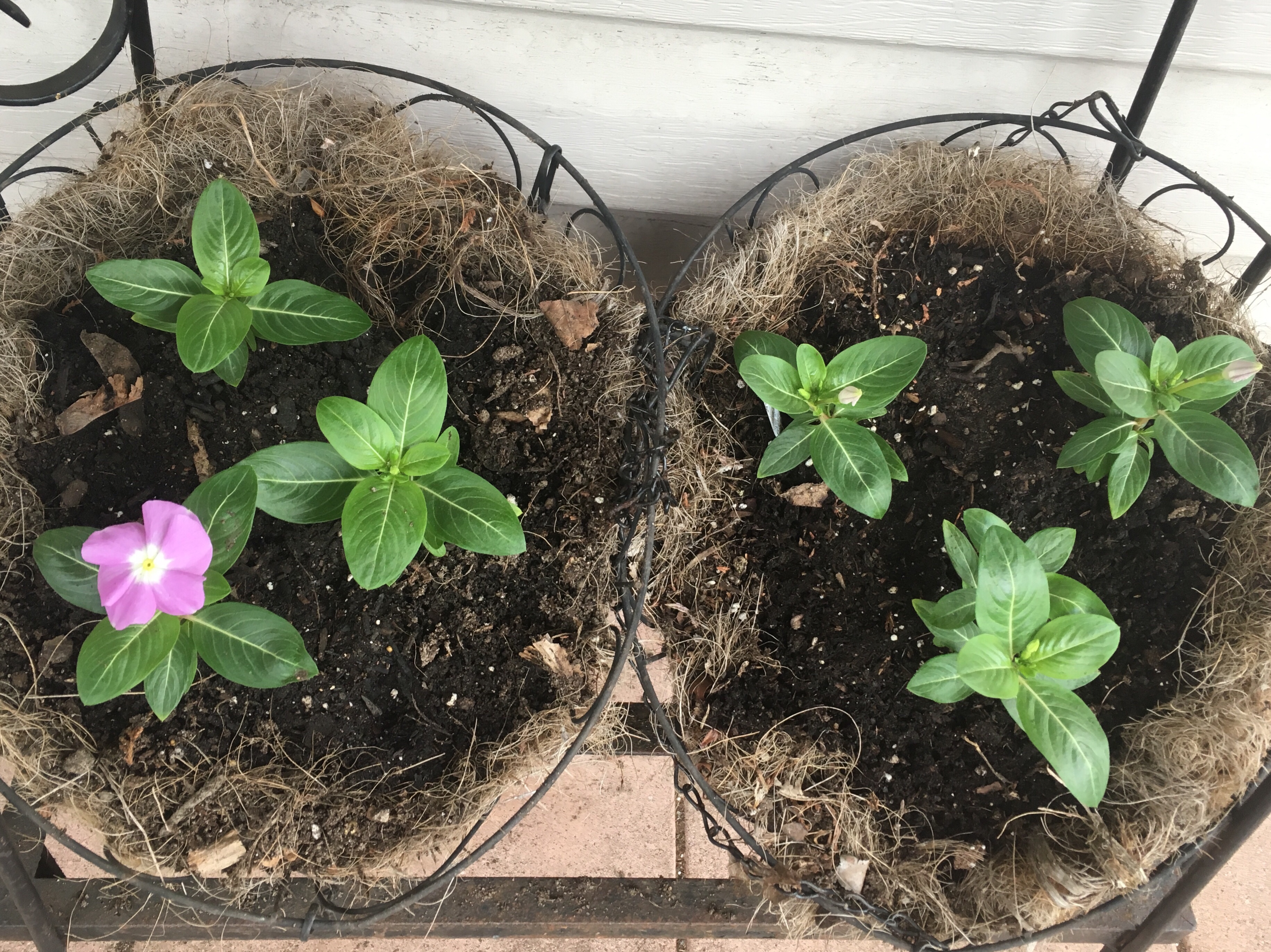
Annual lavender vinca.

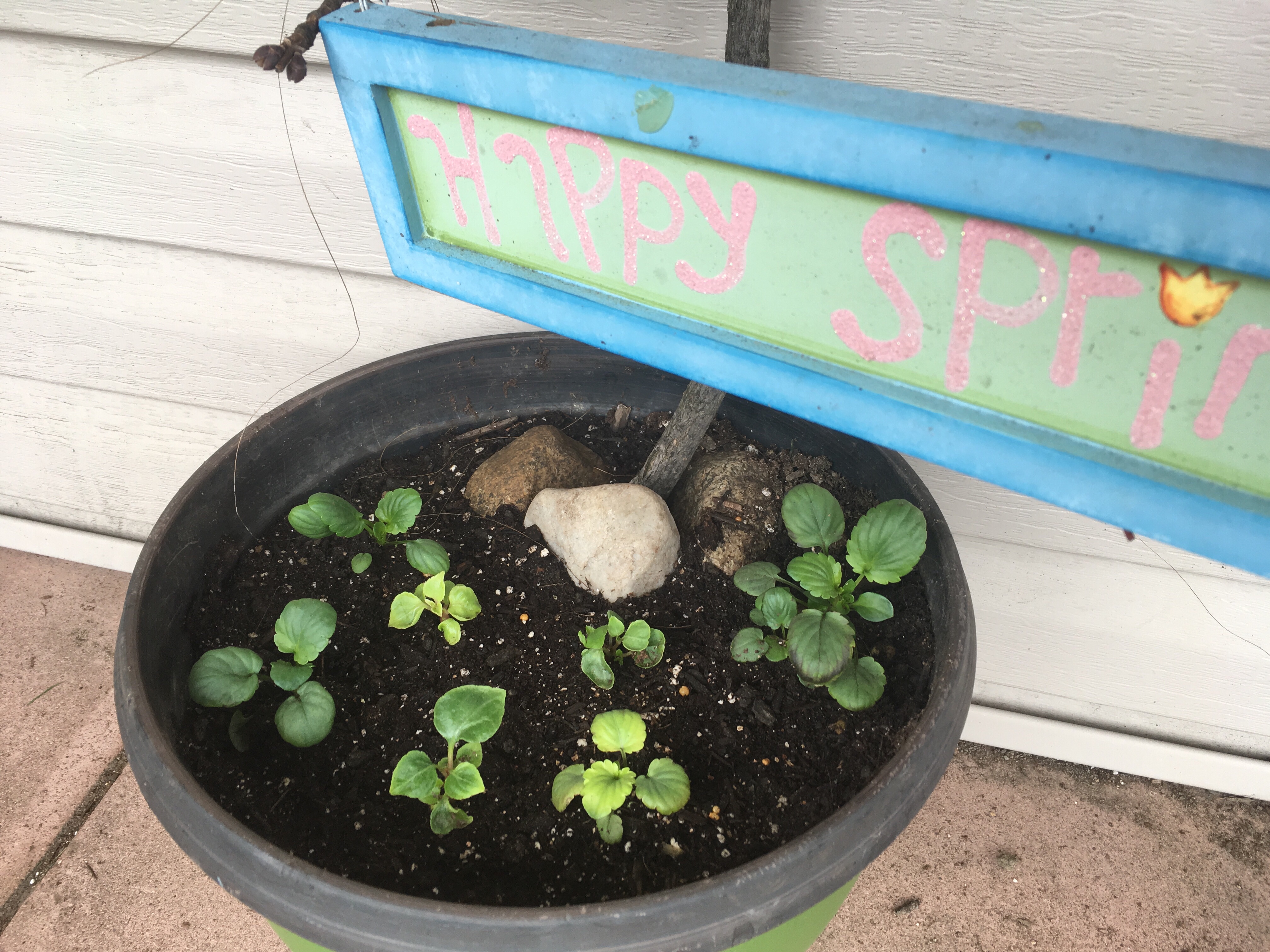
Our pansies and orange impatiens grown from seed. They were hard to start so I’m pretty proud that they grew.

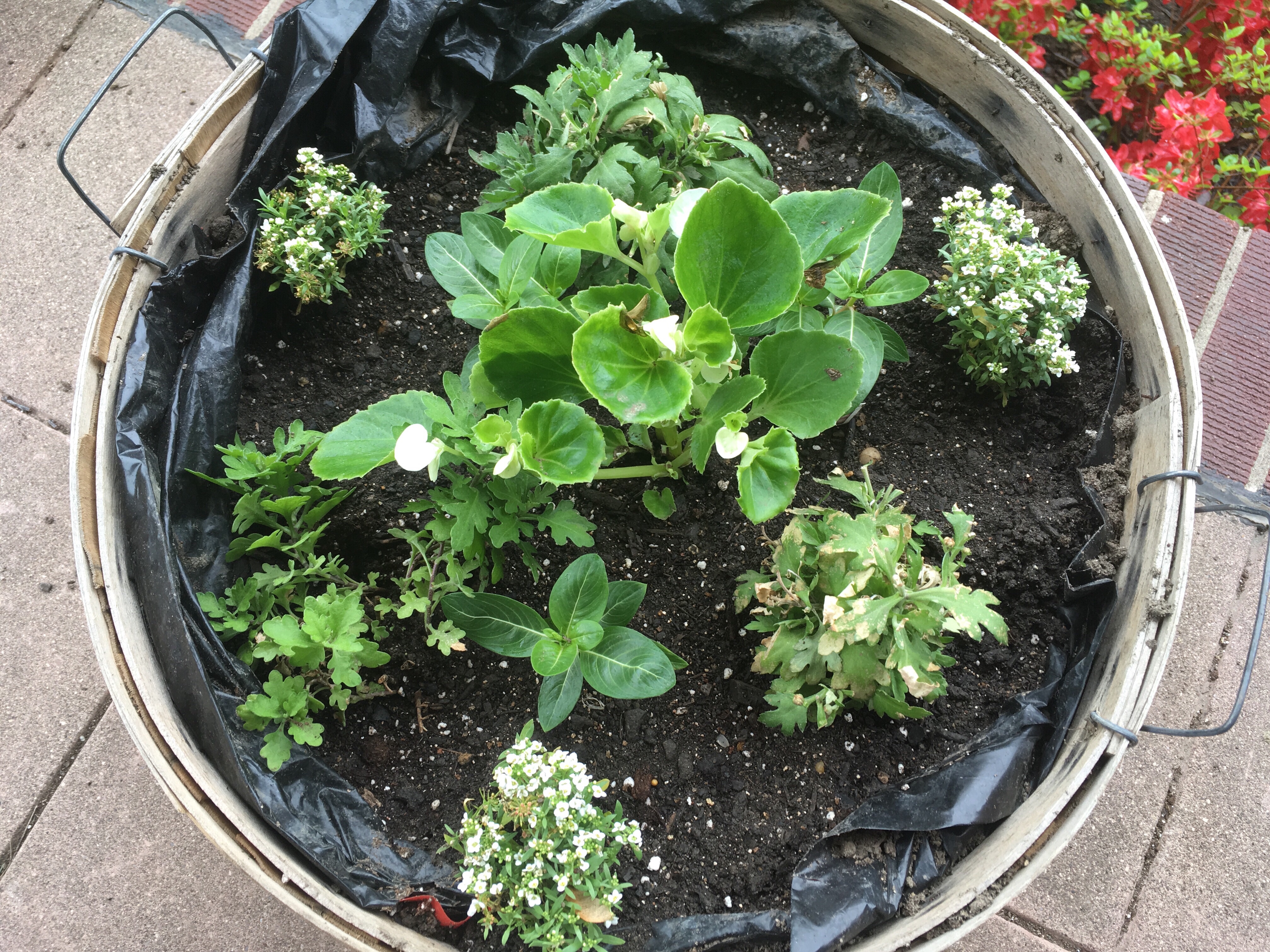
Bushel basket filled with a white begonia, white alyssum, and three mini chyrsanthemums from Trader Joe’s, one which we overwintered.

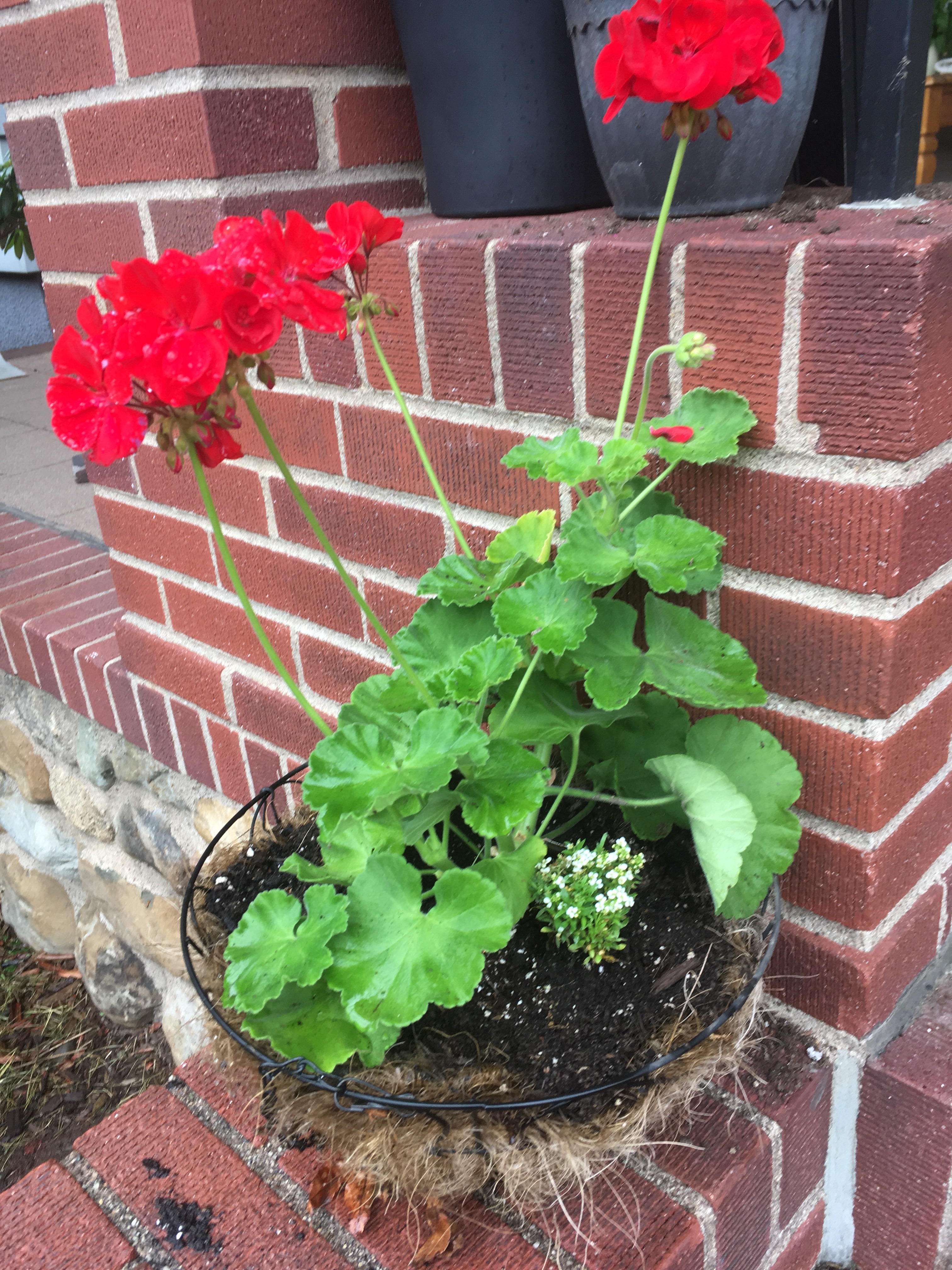
Red geraniums and white alyssum.

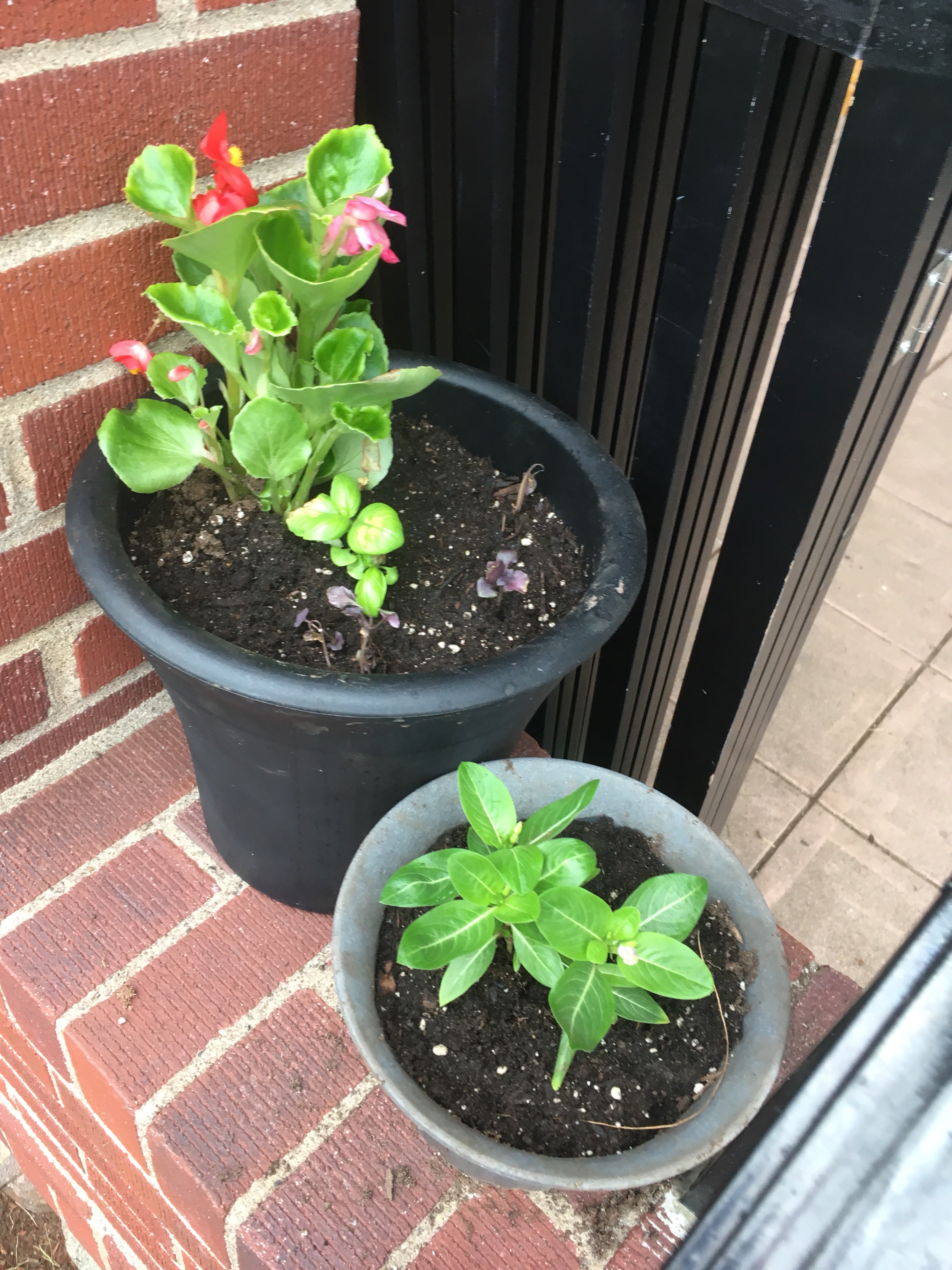
Begonias green basil, and purple basil in the large pot. Two lavender vincas in the little one.

Annuals – red begonias, white alyssum. Perennial – aster coming up in the center of the pot. I transplanted the aster out of the flower bed last fall.

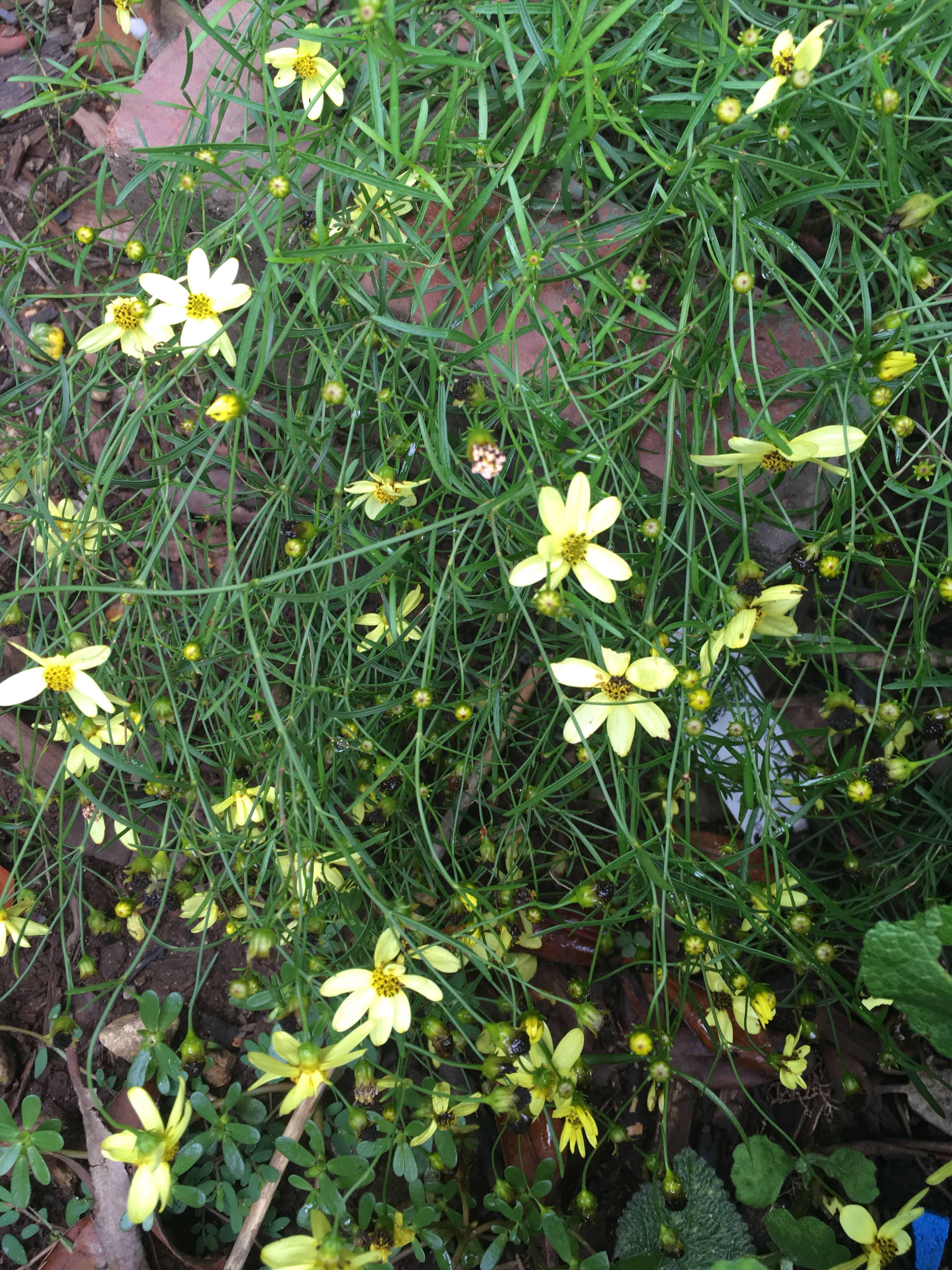
Red pot includes annual begonia and white alyssum. Perennials pictured from behind the red pot moving clockwise are iris, Echinacea Tomato Soup, Agastache Summer Glow, salvia, fading muscari, lamb’s ears, Daylily Holiday Song, Chrysanthemum Daisy Red. In the center of the bed are Coreopsis Moonbeam, Chrysanthemum Mickey, Agastache Rosie Posie.

Annuals – begonias and white alyssum.

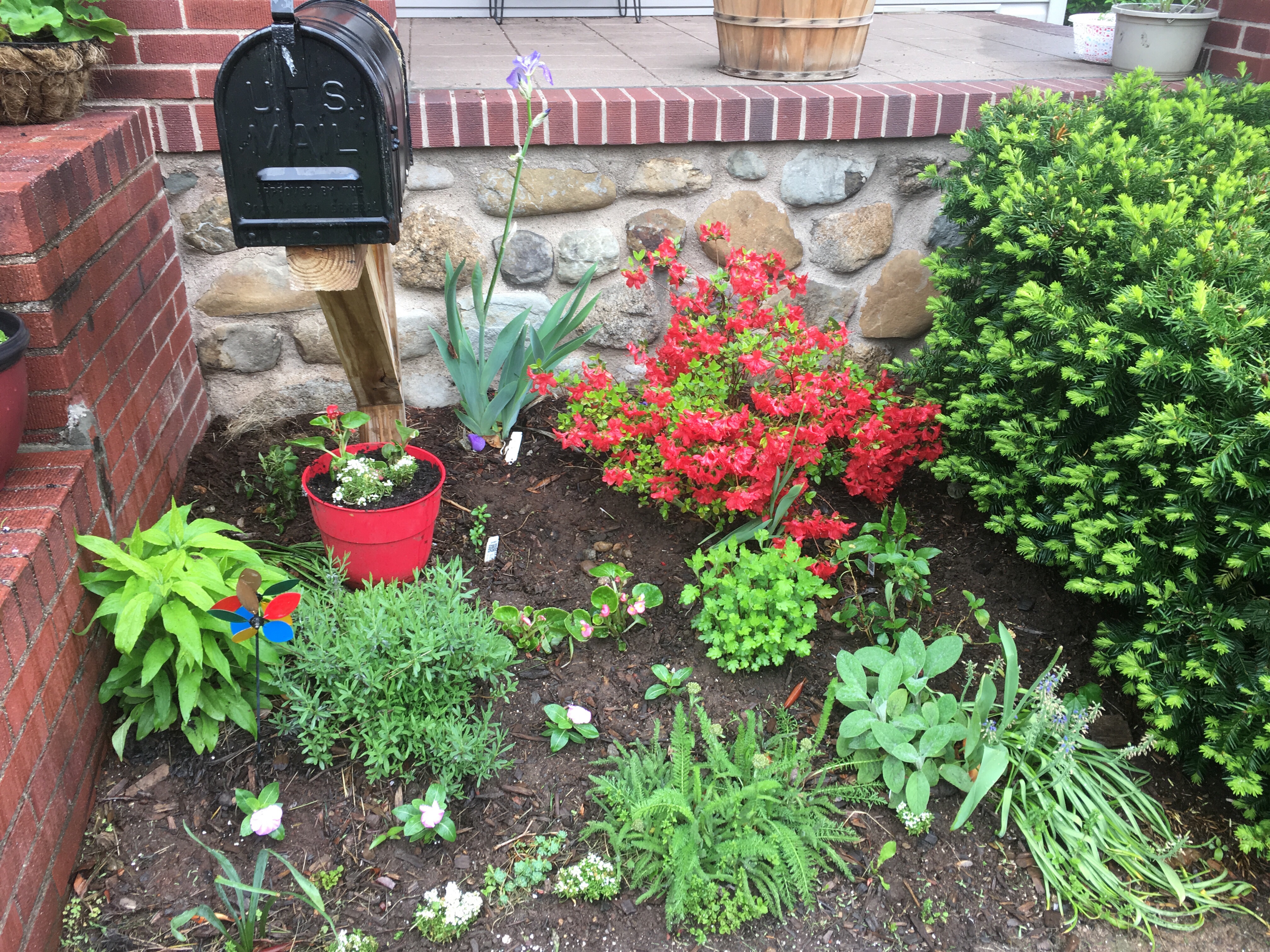
Pictured clockwise from the mailbox are iris, red azalea, Echinacea Pow-wow, lantana, fading muscari, lamb’s ears, wooly yarrow, Sedum Pachyclados, white alyssum, lavender vinca, lavender, rudibeckia, Agastache Champange. In the pot are begonias and white alyssum. In the center of the bed are red perennial salvia, begonias, chrysanthemum daisy pink, and annual lavender vinca.

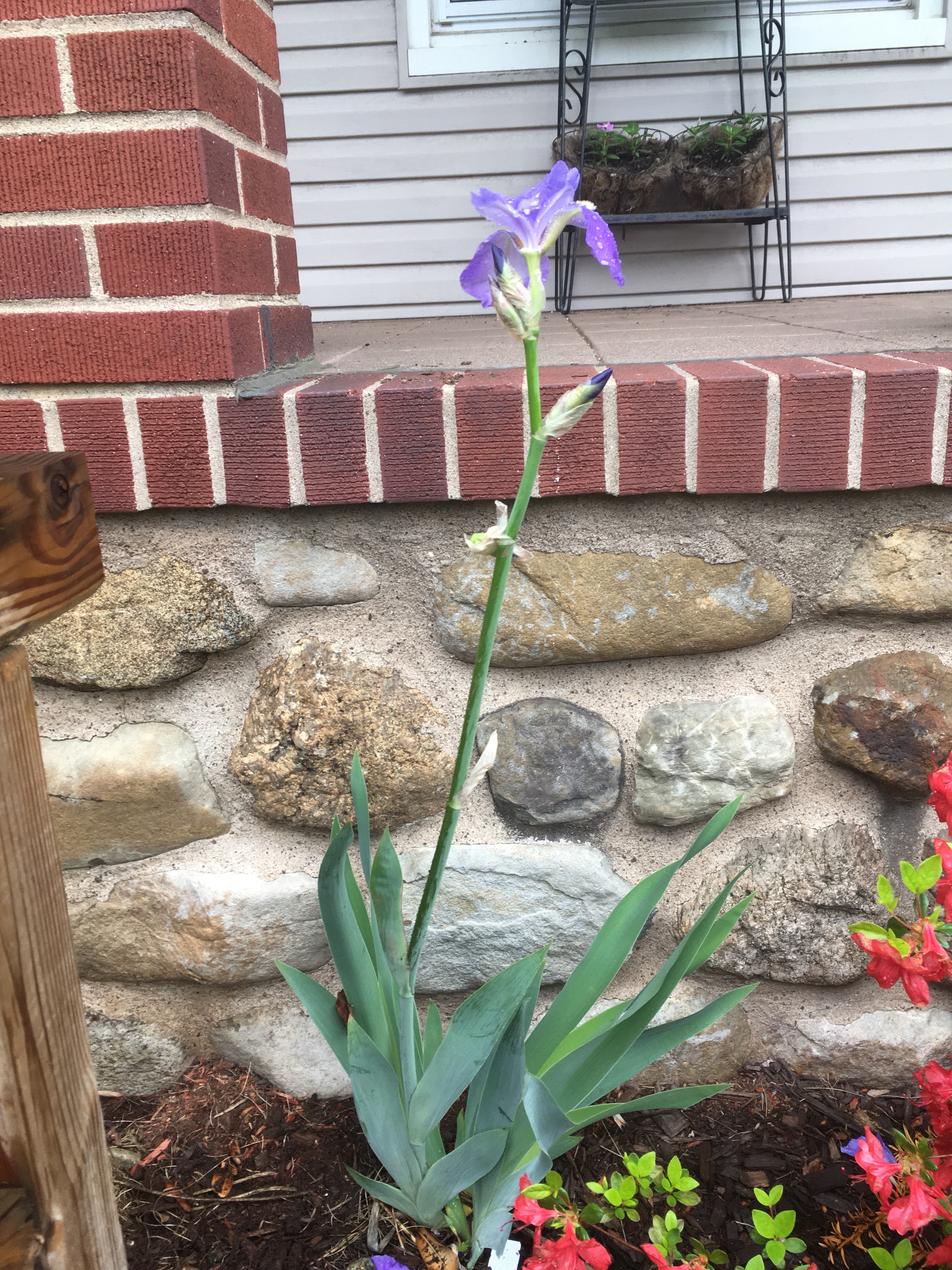
Iris.

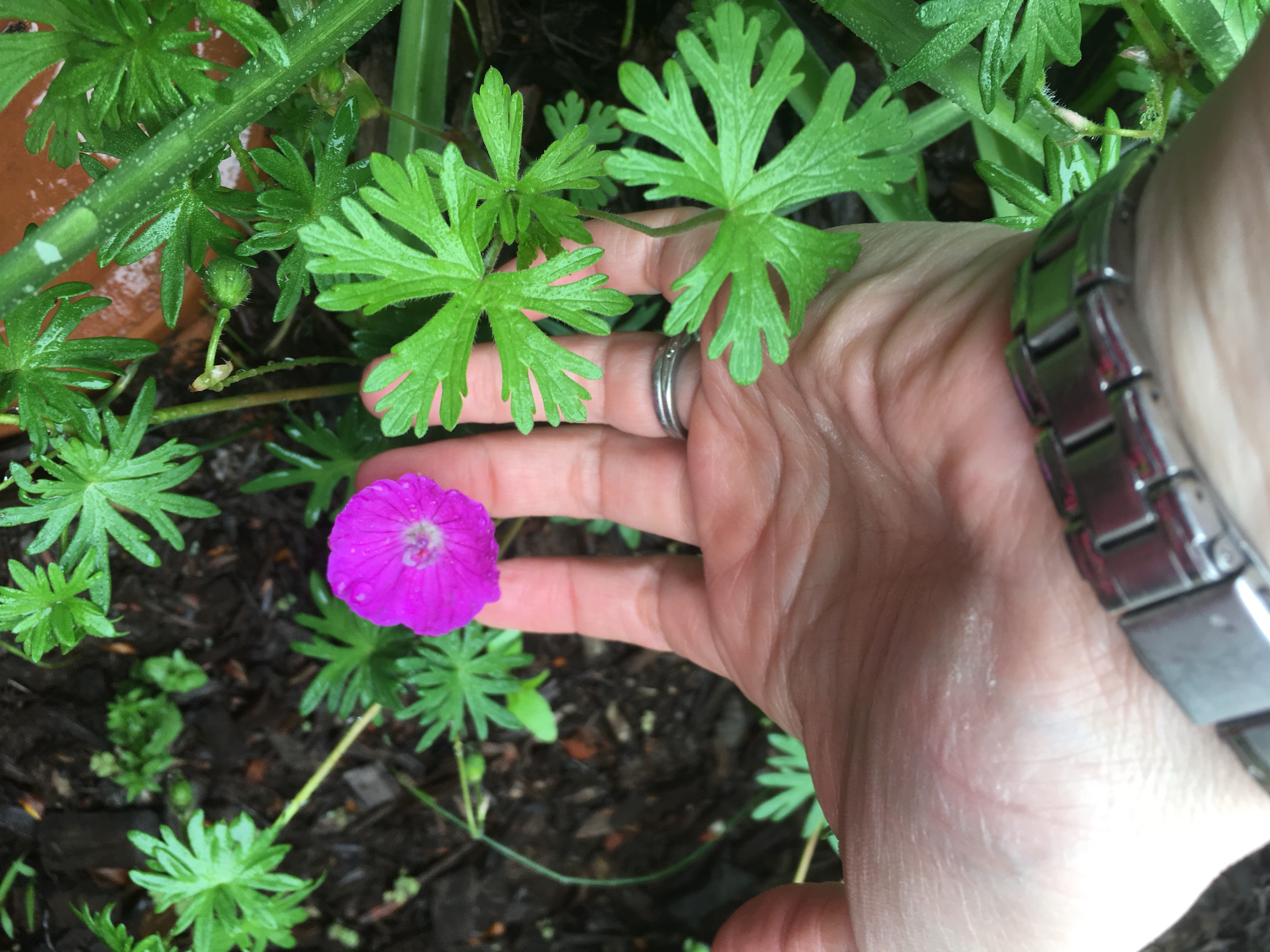
Perennial geranium.

The peony is so close to bloom.

Clockwise from top: Echinacea Mama Mia, Agastache Rosie Posie, Liatris, Gaillidaria Arizona Sun, Chrysanthemum Daisy Red. Pictured on the left side are the edges of the peony leaves.

The big clump is Black-Eyed Susan, peas and tomatoes along the side, and minature roses in the front.

Begonias, lavender vinca, white alyssum, and on the far right a sprig of transplanted Chrysanthemum Rose Grenadine.

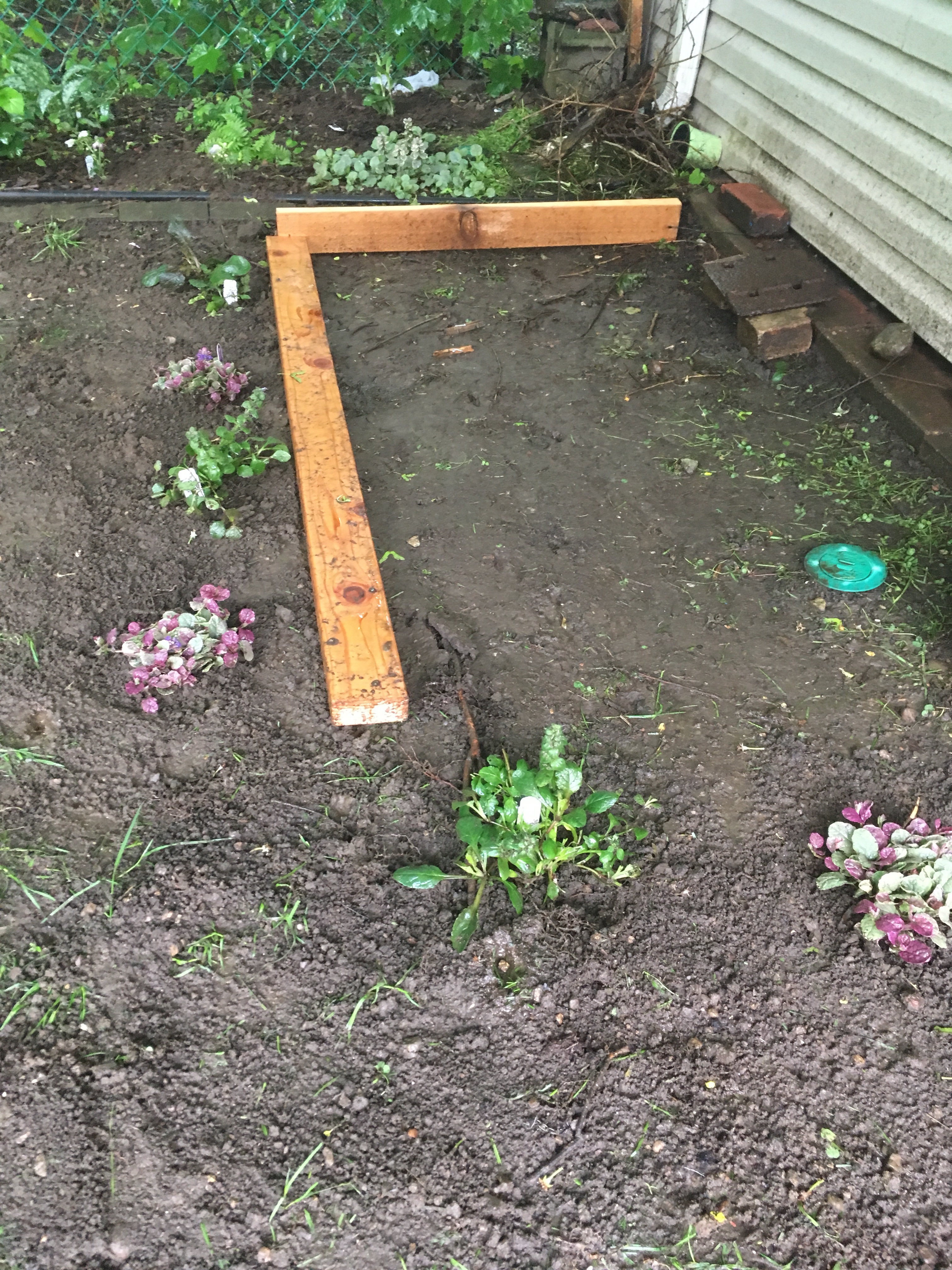
Excuse the mess, we’re preparing to build a sandbox for the kids. Along the edges I’ve planted Ajuga Burgundy Glow and Ajuga Bronze Beauty as a ground cover to fill in the dirt under this shade tree.

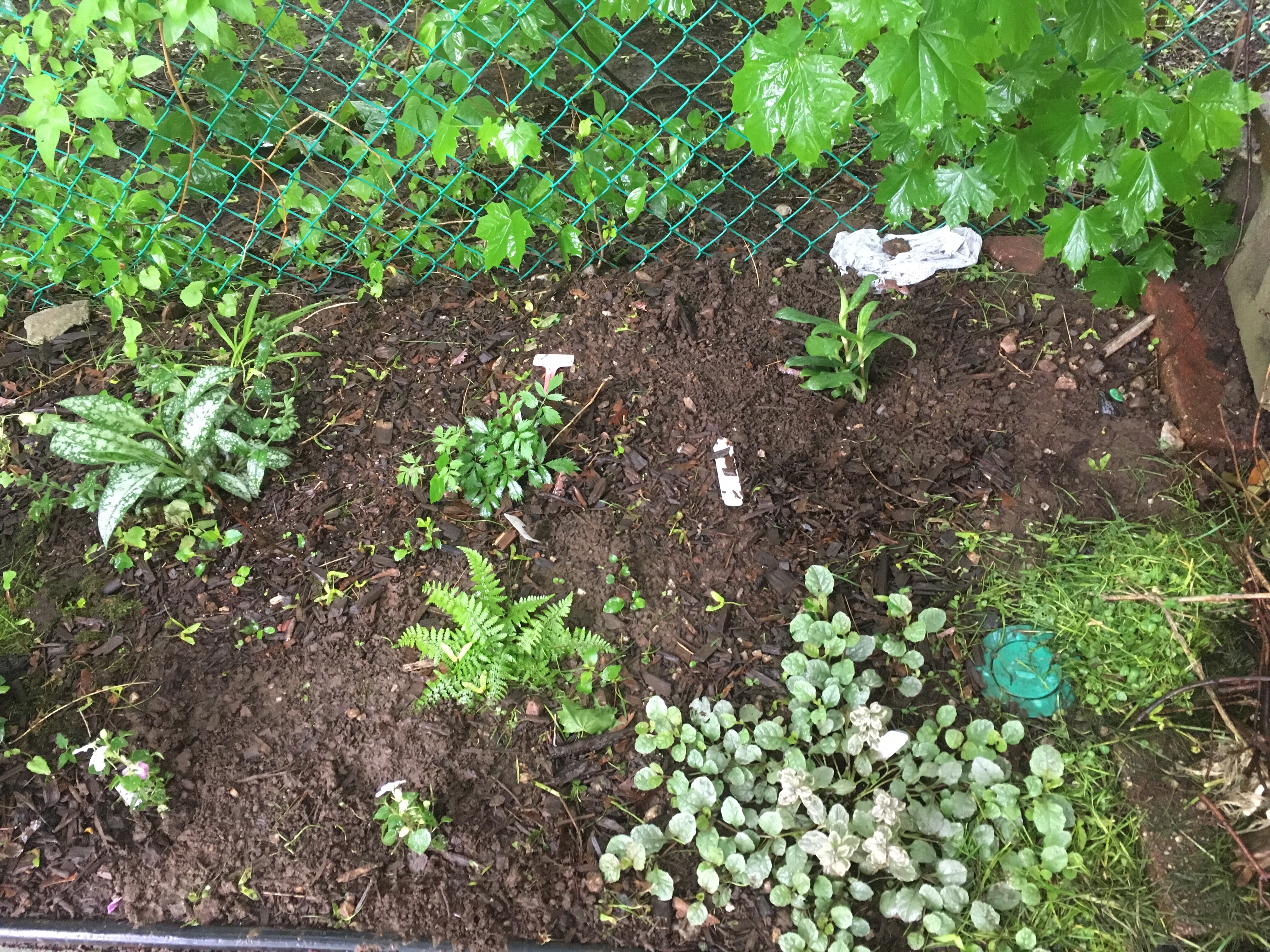
Clockwise from top left: Pulmonaria Dark Vader, Astible Plumila, Tricyrtis Tojen, Ajuga Burgundy Glow (bottom right), Impatiens, and Fern (center of bed). Two other ferns and cyclamen are planted in this bed too but haven’t woken up yet.

From right to left: Daffodil foliage, Helleborous Pink Frost, Lamium White Nancy and Hostas across the front mixed with annual Impatiens. Far right is Lamium Orchid Frost. In the back are Spanish Bluebells and Bleeding Heart.

Hosta, Lamium and Impatiens.

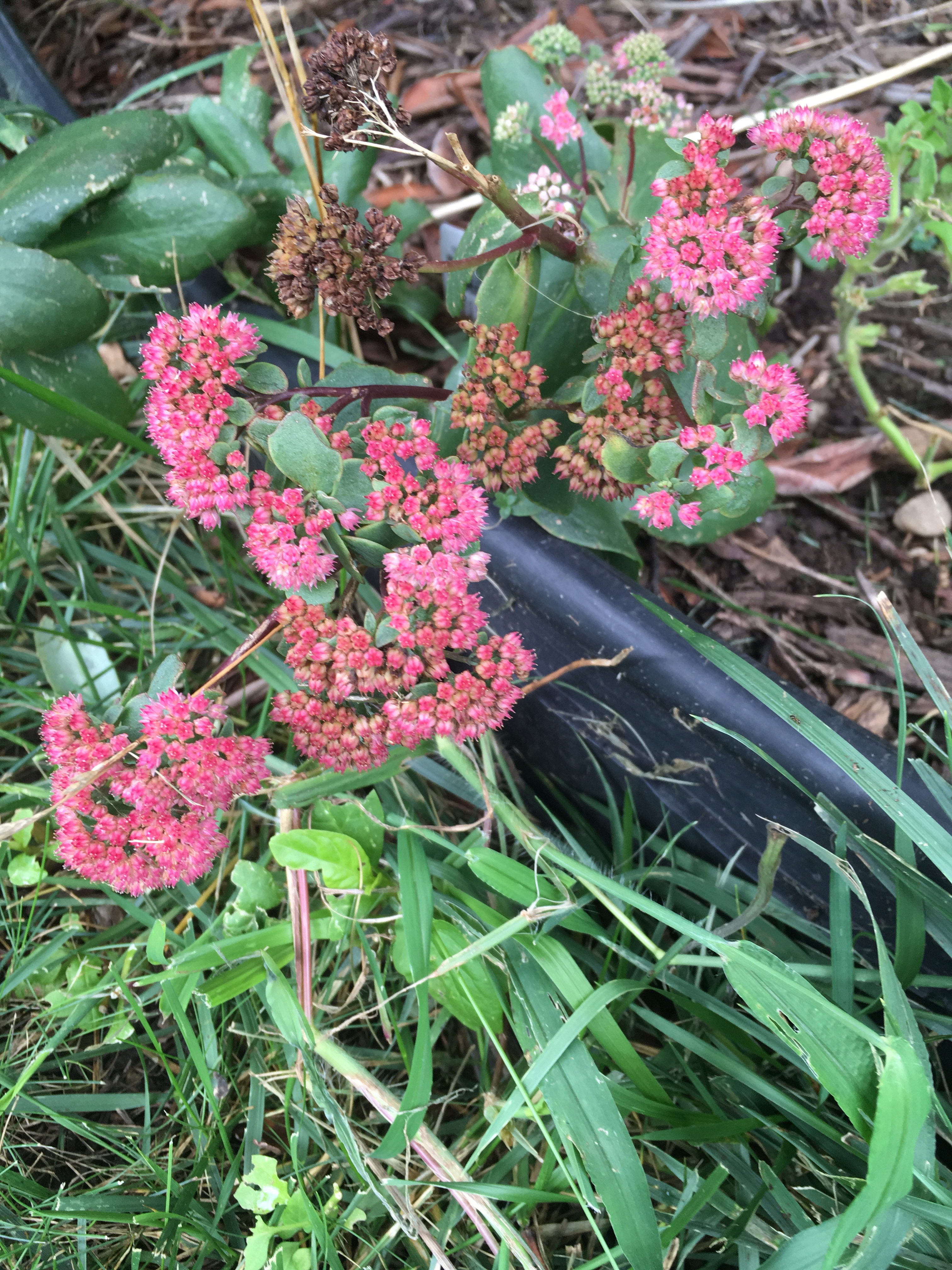
Clockwise from bottom left: Phlox Amazing Grace, Rose Quietness, Cosmos and Carnation seedlings, Sweet William Cherry Jolt, Yellow Sedum, Lavender Vinca. Center: Sedum Firecracker, Sedum Autumn Joy.

Annual basket I received as a gift full of petunias and verbena.

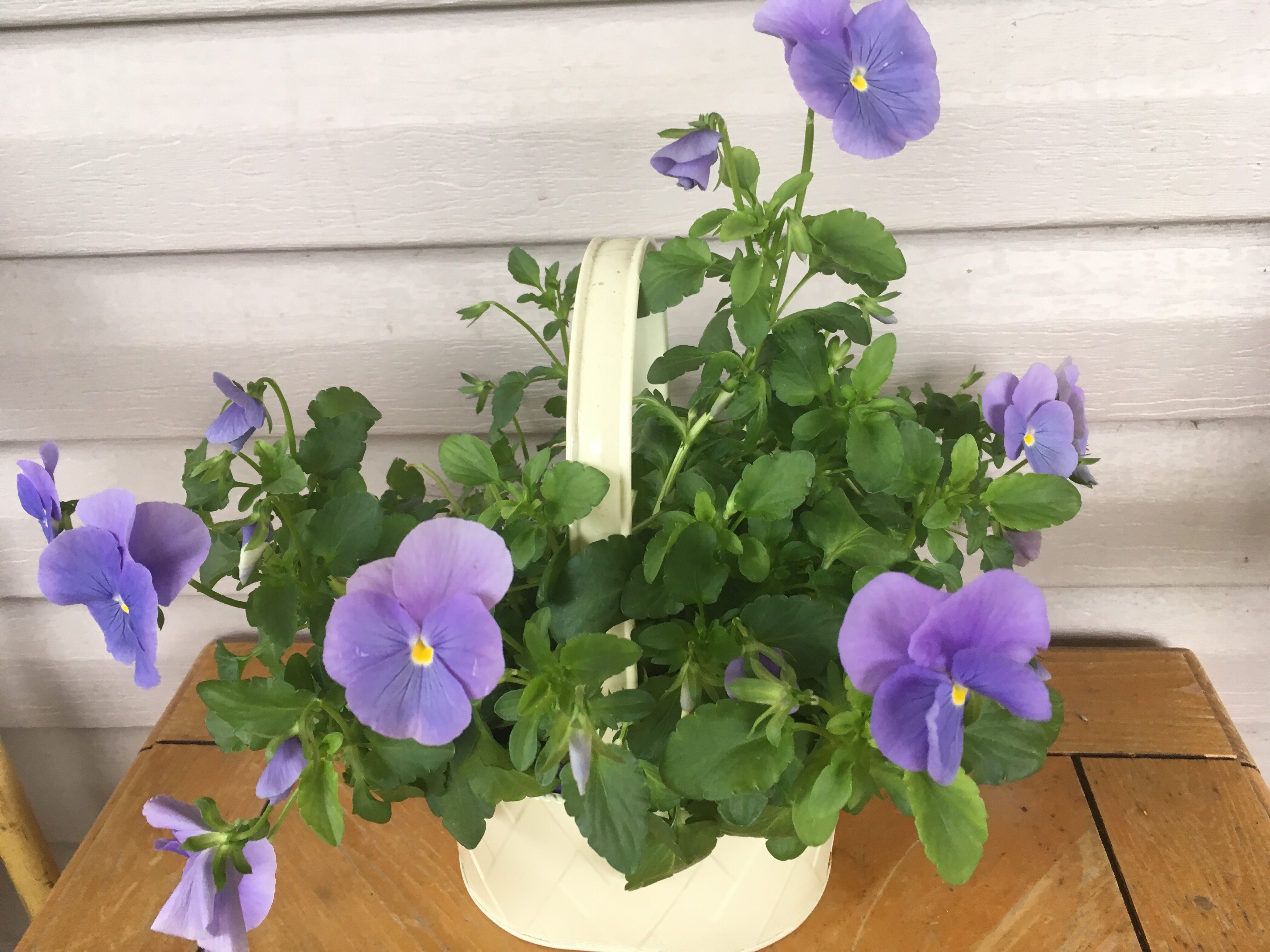
Purple pansies.

Our pansy and orange impatiens seedlings with our little spring bird decoration and a sweet little girl for cuteness.

My Garden – Early May 2018

Our new House has a few flower beds, so I’ve spent the last couple of years reading, experimenting, and learning about gardening. I hope to compose a few upcoming blog posts highlighting some of the things I’ve learned, mistakes I’ve made, what’s worked and what hasn’t, etc. But until then here’s some pictures of what’s growing in my garden (zone 6b) so far for Spring 2018.

Lamb’s Ears

Daffodils.

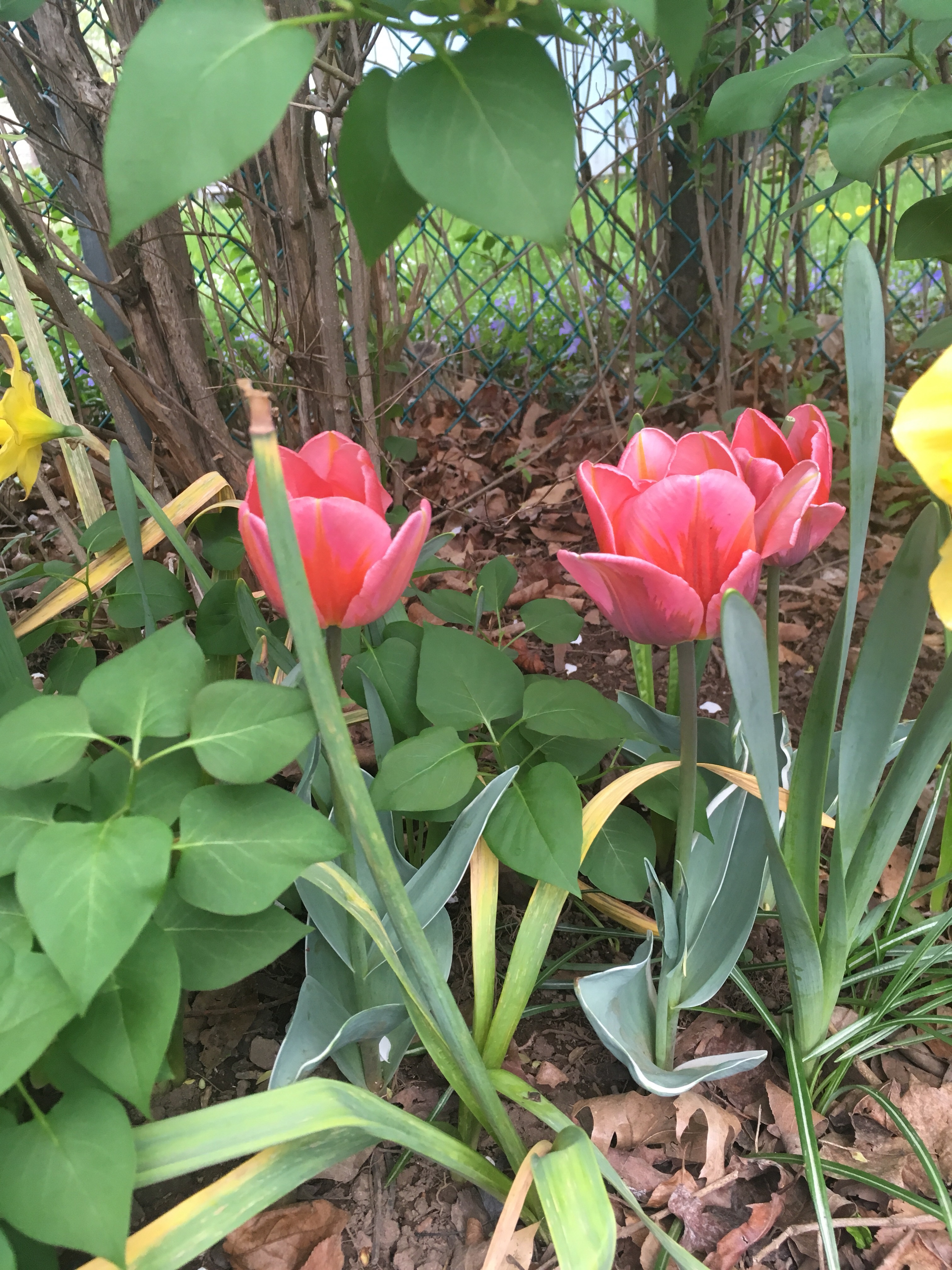
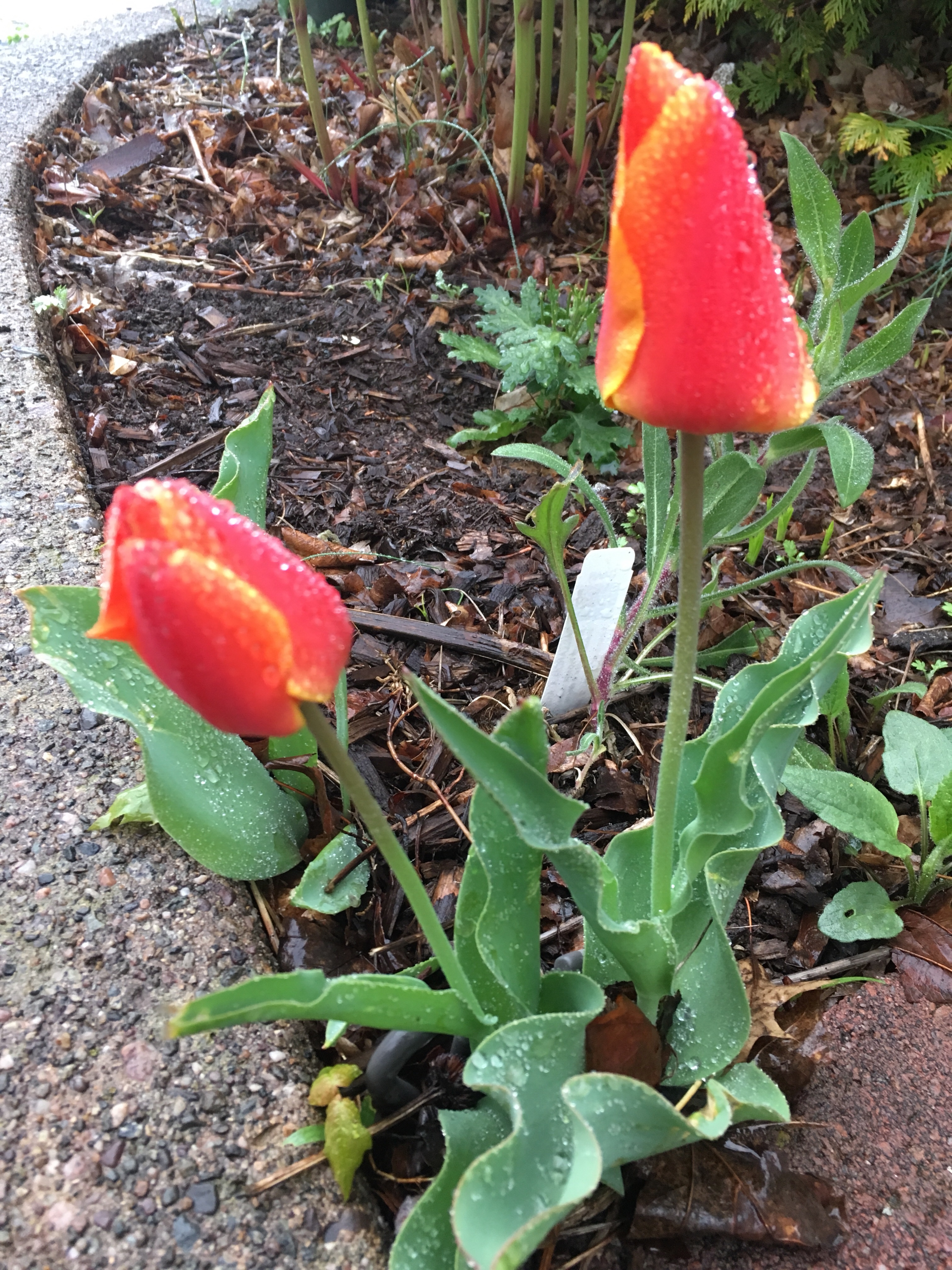
Tulips.

Hellebore Pink Frost.

Ajuga Burgundy Glow.

Plumonaria Dark Vader.

Rose Wild Ginger.

Forsythia.

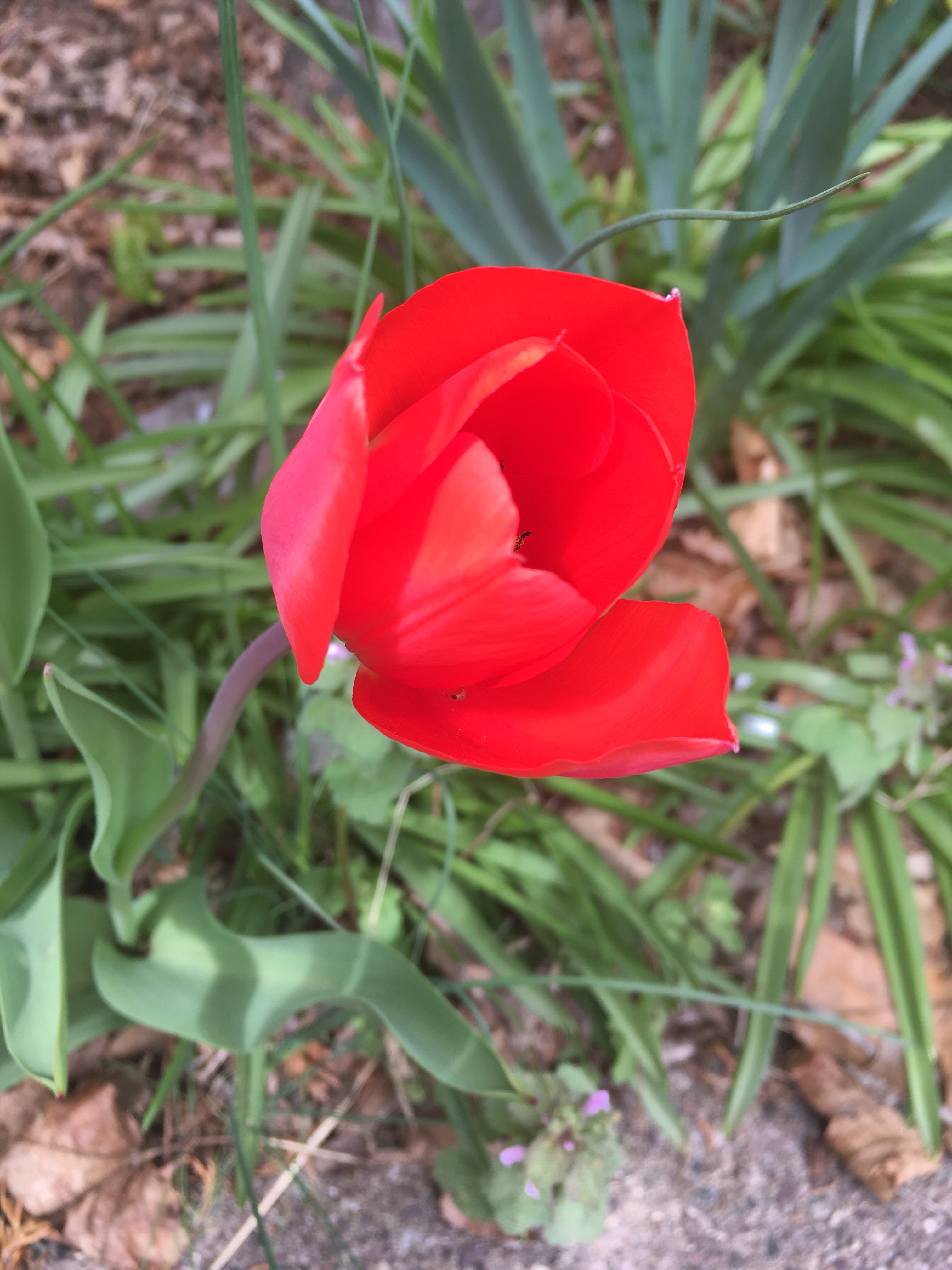
Red Tulip.

Red Tulips and Peony srouts in the background.

Vinca Minor. Evergreen perennial Periwinkle.

More Periwinkle.

Overwintered red Geranium.

Overwintered pink Geranium.

Red Tulip and Muscari or Grape Hyacyinth.

Mixed Tulips with perennials coming up around them.

Phlox Blue.

Purple Tulips with an Azalea that is about to burst.

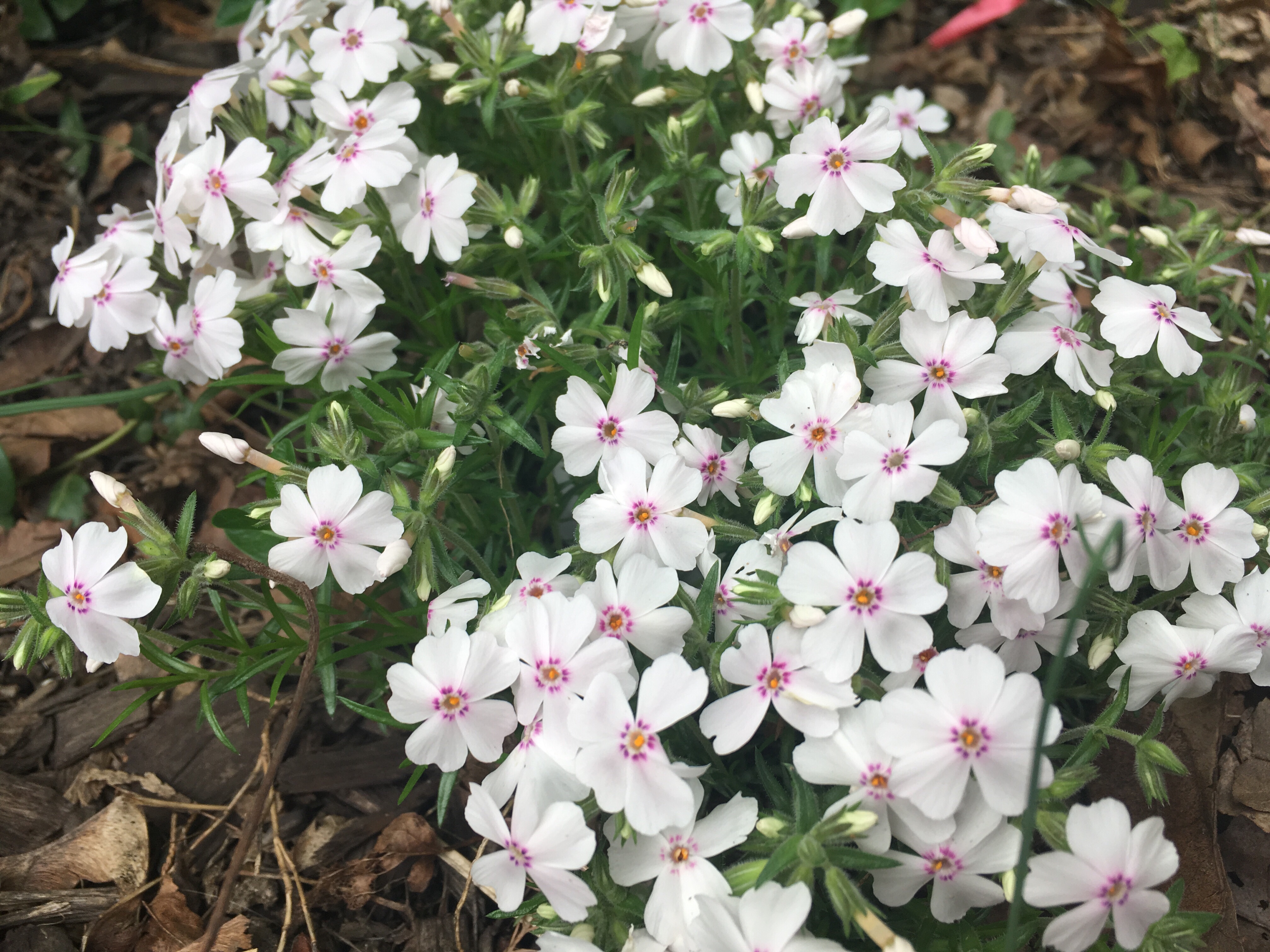
Phlox Amazing Grace.

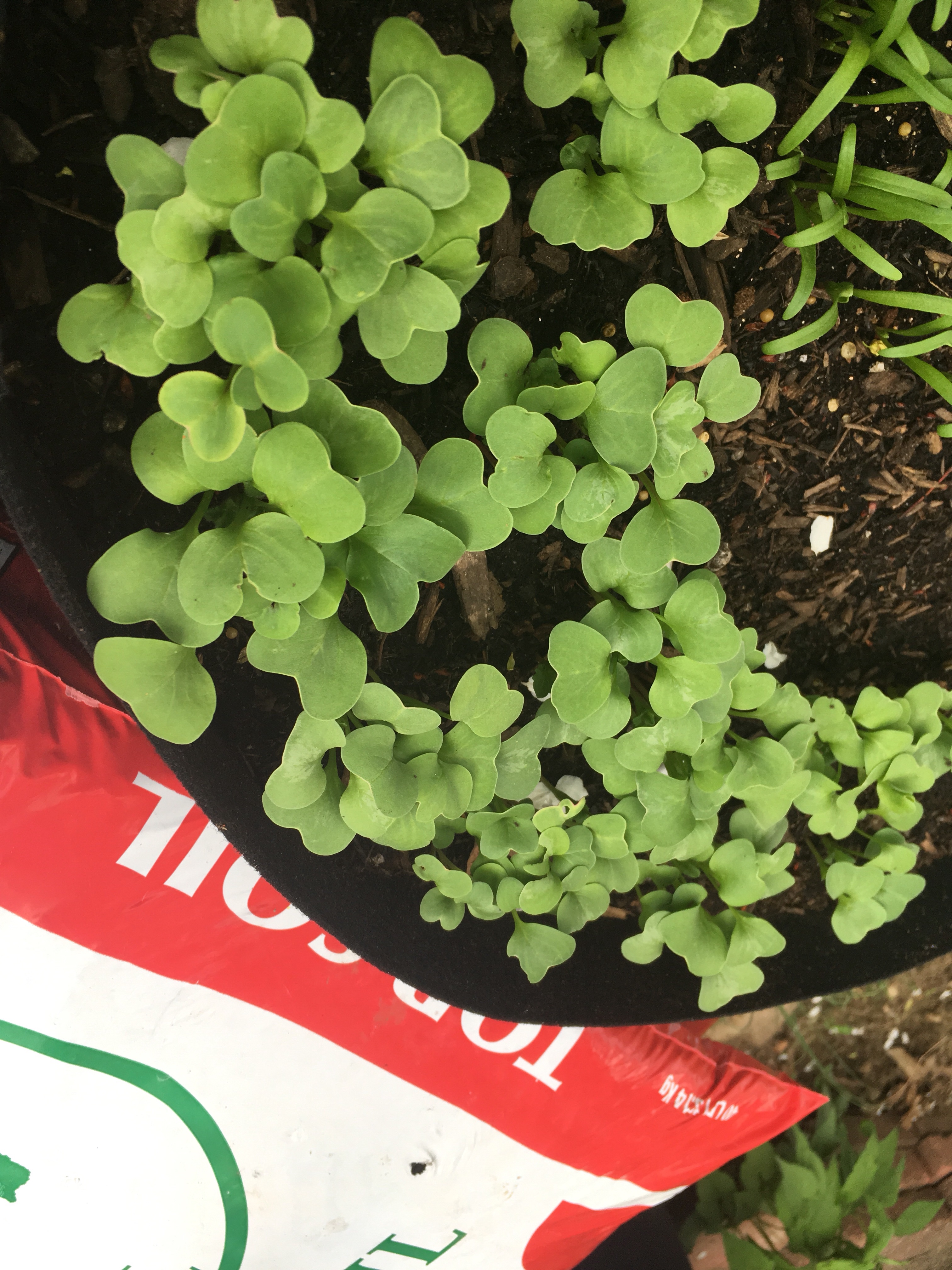
Lettuce.

Radishes and spinach seedlings.

Tulip Pretty Princess.

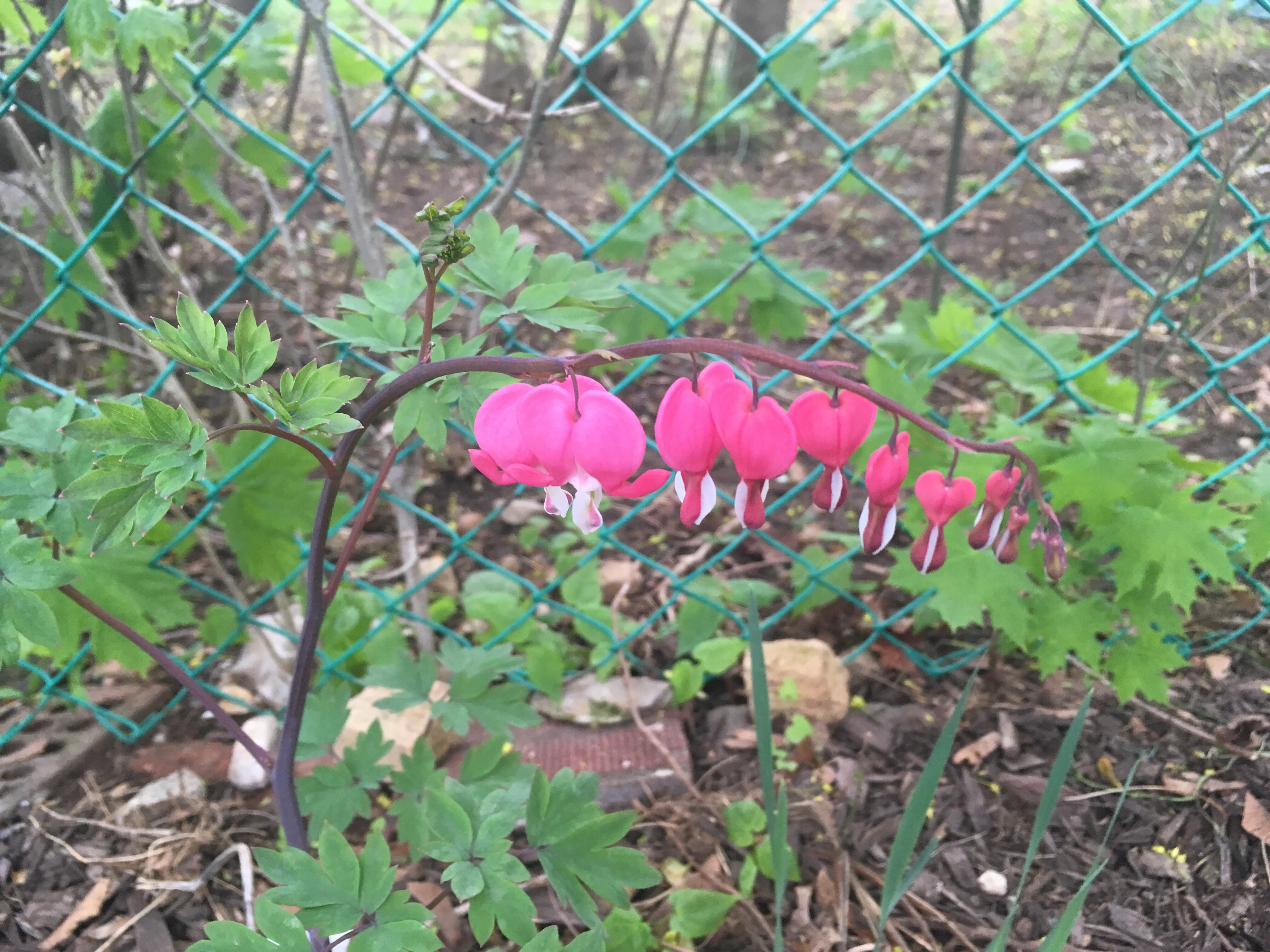
Bleeding Heart.

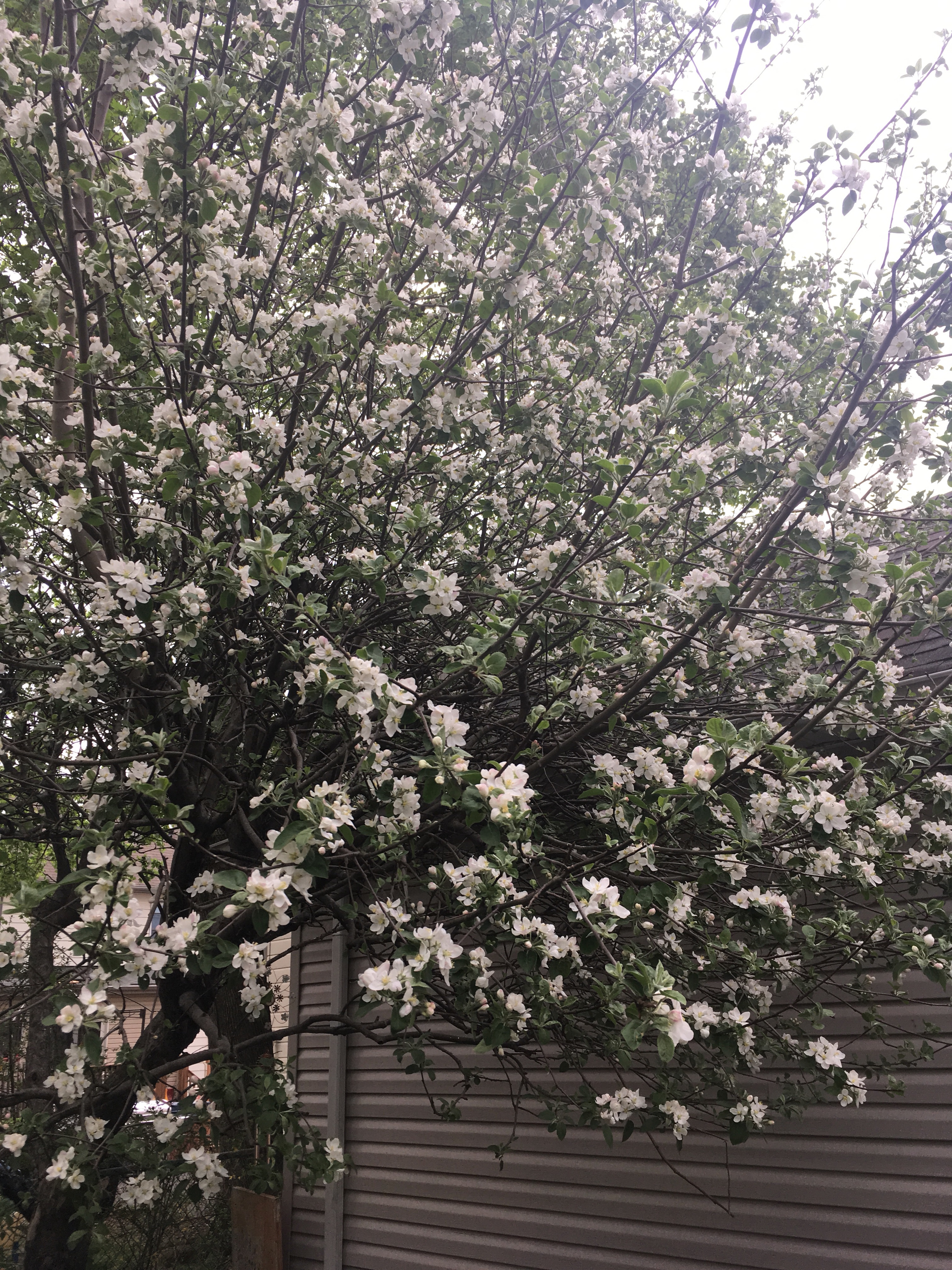
Crabapple.

Yellow and red Tulips.

Cherry blossoms!

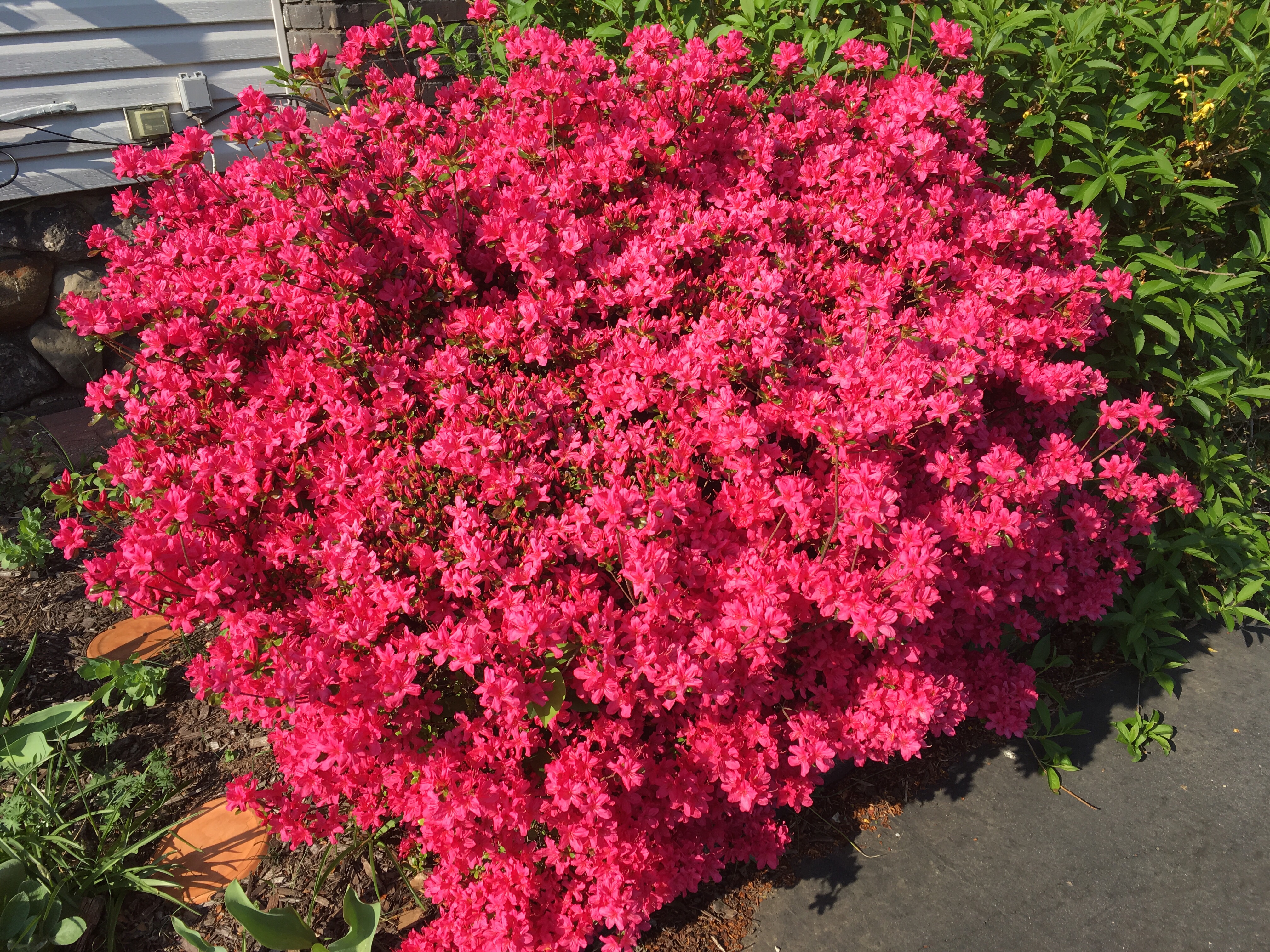
Bright pink Azalea.


How to keep happy houseplants

I’ve always had houseplants. But I’m pleased to say that I now have houseplants that are happy. I’ve never had good light for them any of the places we’ve lived. So I’m thankful that I have plenty of windows with good light.

Scroll through the photos below to see what make some of my current favorites happy.

My Tulips and Muscari started popping up in January so I brought them in for some winter blooms.
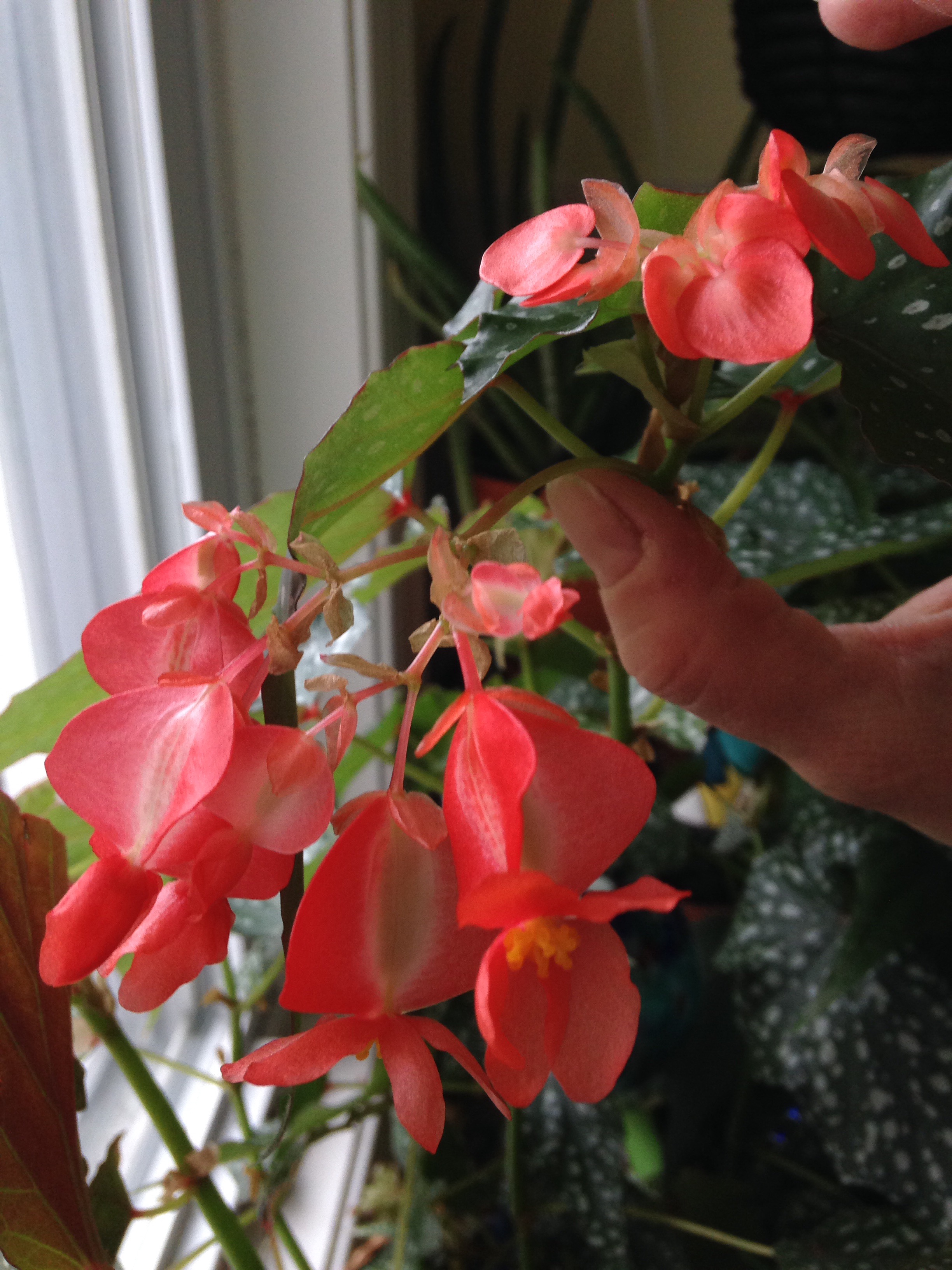
This was my Grandmother’s Angel Wing Begonia. I’ve had it for at least 12 years and it’s never bloomed once. Imagine my excitement when it bloomed this year. I’m so glad that it’s happy in this east window with the early morning light.

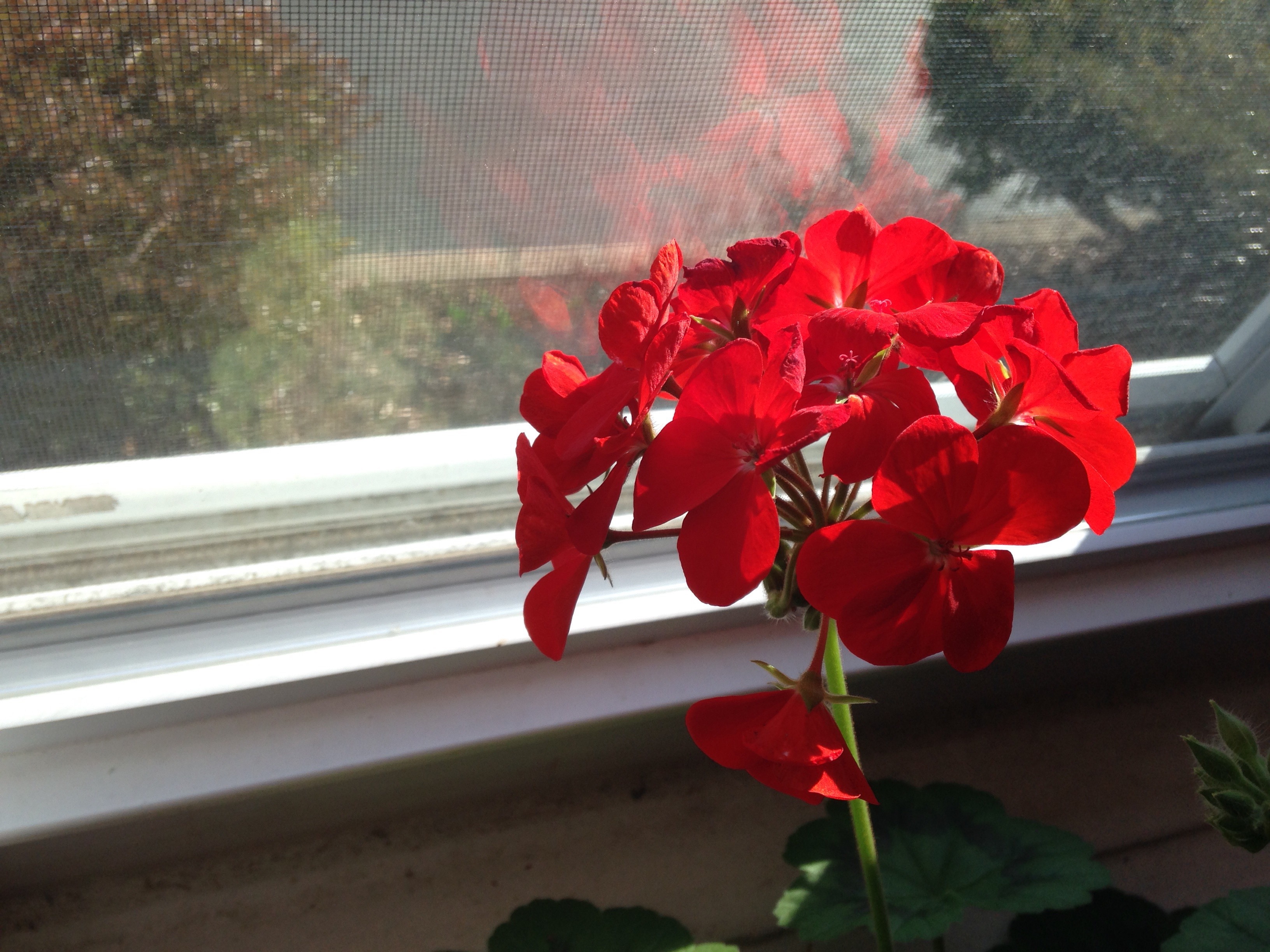
These are my beautiful geraniums that I brought in for the winter. Their blooms are so cheerful. I’m wintering the rest in the chilly attic until it’s warm enough to put them back outside.
This is one of my newest plants. I love the variegated foliage. I need to learn more about it. I can’t wait to get to know it better.
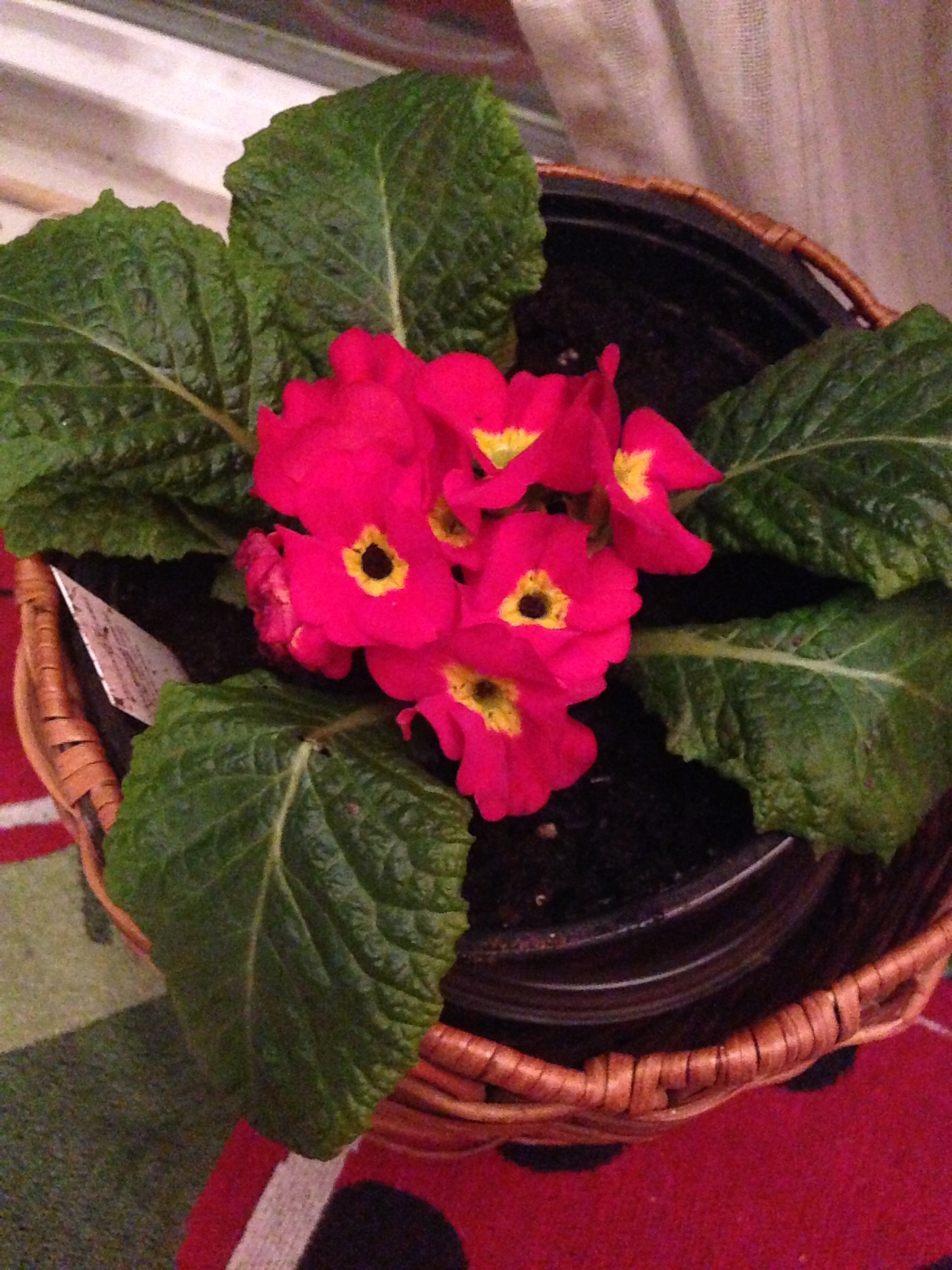
I love these primroses paired with the variegated leaves. I added my baby spider plants in the center for vertical interest. I think this basket turned out so cute. I can’t wait to put it outside when it gets warmer and see how it does.
Pretty primroses. I tried these last year and they all died. I think I waited too long to set them out. Hoping for better results this year.

These are my orchids. My sister gave me most of these. I’ve found they like this shaded south facing window best.
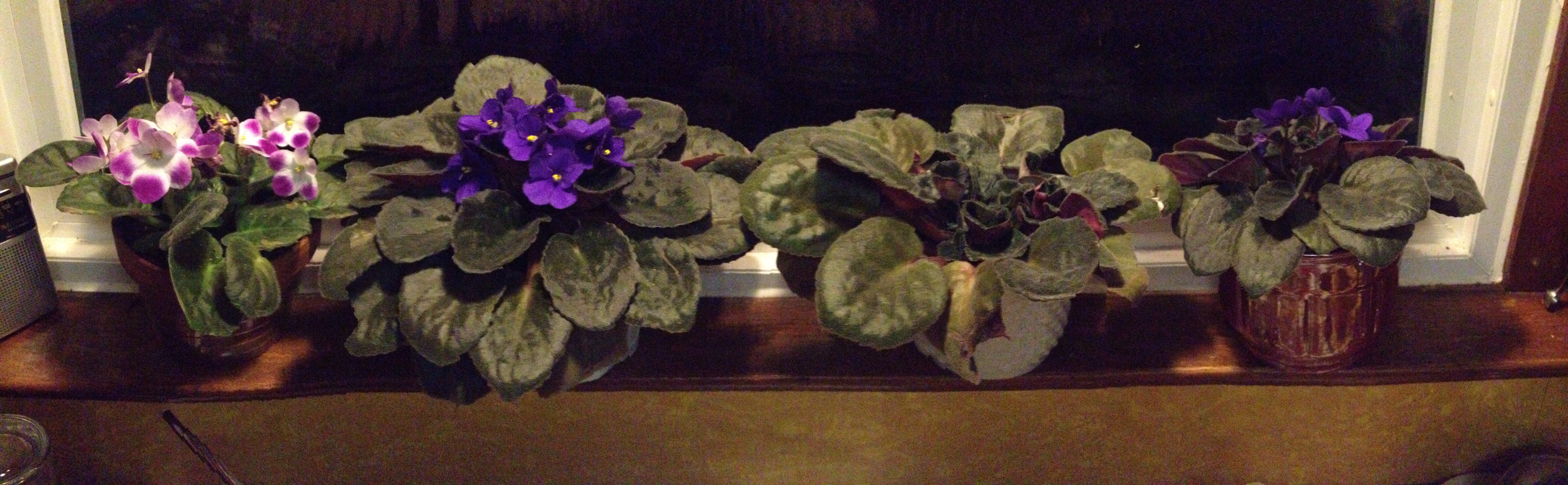
My violets. My grandmother gave me my first violet. These are my favorite plants and the easiest ones to care for. All they want is steady diffused light and not to have wet roots. Mine are blooming happily in this north facing window. I’m so glad they love this spot. They are so nice to look at in my kitchen window while I’m doing dishes.
Such beautiful blooms.

My Plants: The Silent Storytellers

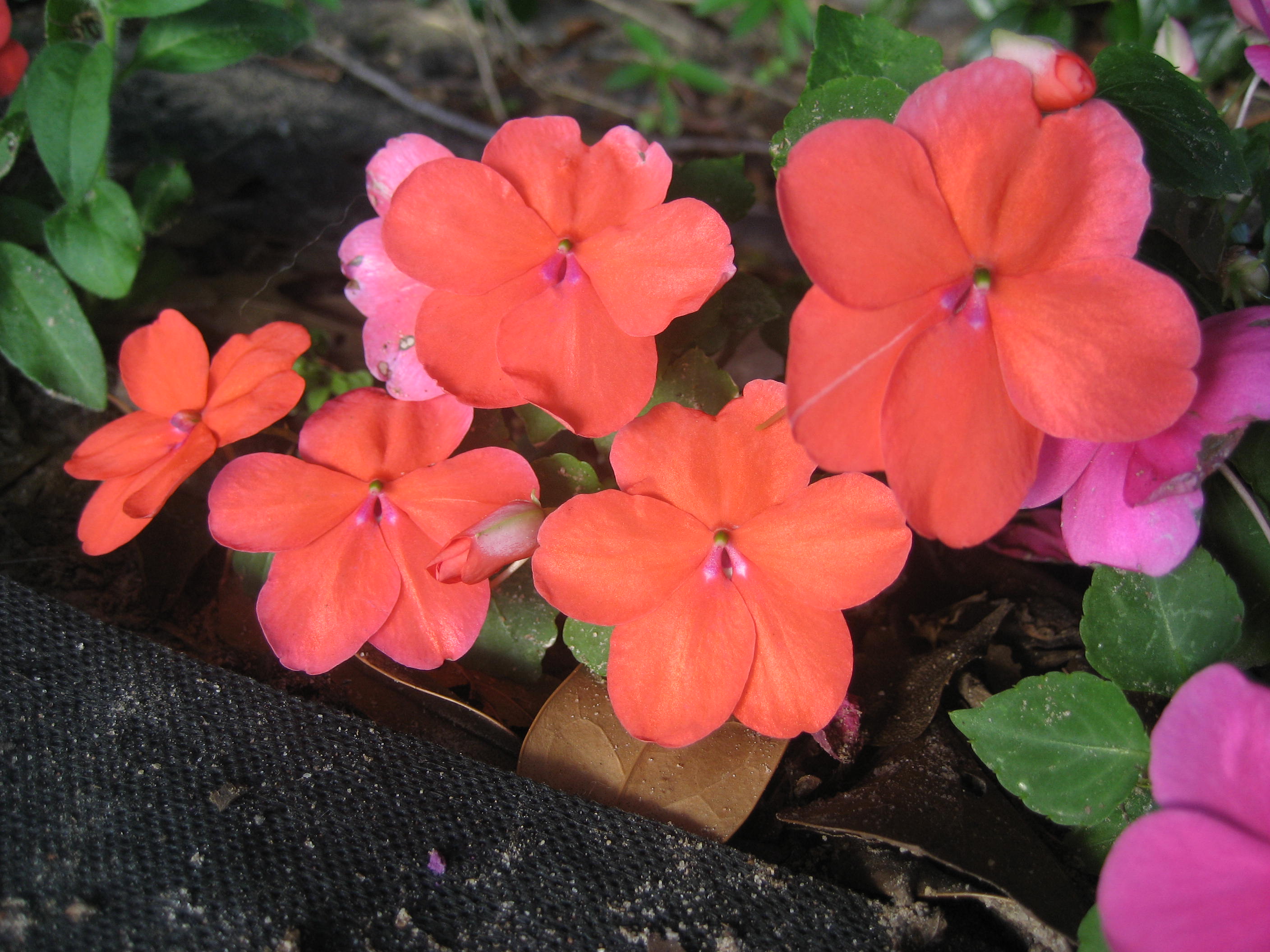
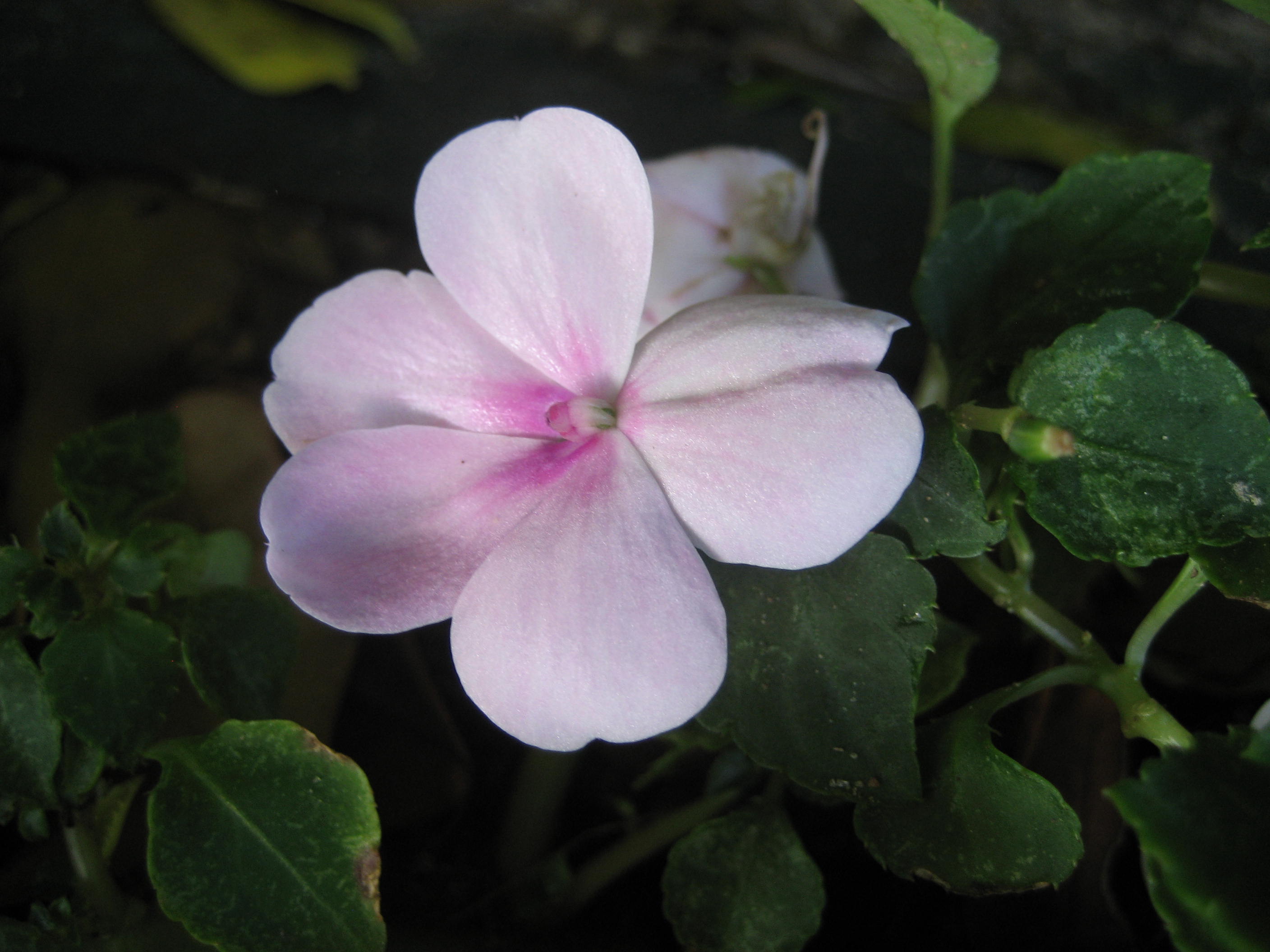
Impatiens - on of my grandmother's favorite flowers. Impatiens – one of my grandmother’s favorite flowers.

It’s New York City. I don’t have a sprawling farm along the Missouri countryside like Maggie did. Or even a small farm in Texas like my parents do. I have a 3rd floor apartment in NYC with no outdoor space. In our new apartment, I can’t even put in window boxes. Thankfully I have some windows that get good light so my plants are actually doing fairly well. But it’s been a challenge when I’ve gotten new plants or when I’ve needed to re-pot anything because I have nowhere outdoors to do that kind of thing.

So, creativity ensues. I pull out a large, flat sheet and all my potting supplies and turn my living room into a gardening work space. It’s messy work, no doubt. There’s always bits of potting soil that scatters. And the kids like to help so there are 30 dirty little fingernails to clean afterwards, but it’s lots of fun to see the new things we’ve worked on grow bigger.

I remember my grandmother teaching me how she cared for her plants. I would help her water them and re-pot them. At one time she had two large shelving units filled with violets. And she always had a planter outside her front steps filled with impatiens. She would always take her Christmas cactus to the back room where it was cool and dark in the fall and it would always be full of bright fuschia blooms in the winter. And she had a fern that belonged to Maggie. It was over 100 years old. She had it in the back bedroom of her house when was in the hospital before she died. None of us knew that it was back there to water it and so it died. We were all so sad to discover that it had been neglected when we cleaning out her house after she died. We would have all loved to have a cutting from it. I can’t say that I always take as good of care of my plants as my Nanny did. Some days I do well just to keep the kids alive. But, I’m thankful for those times with her and that she taught me what she knew. She gave me a love for violets that will last my whole life through. No matter where I’ve been in life, I’ve always had a violet.

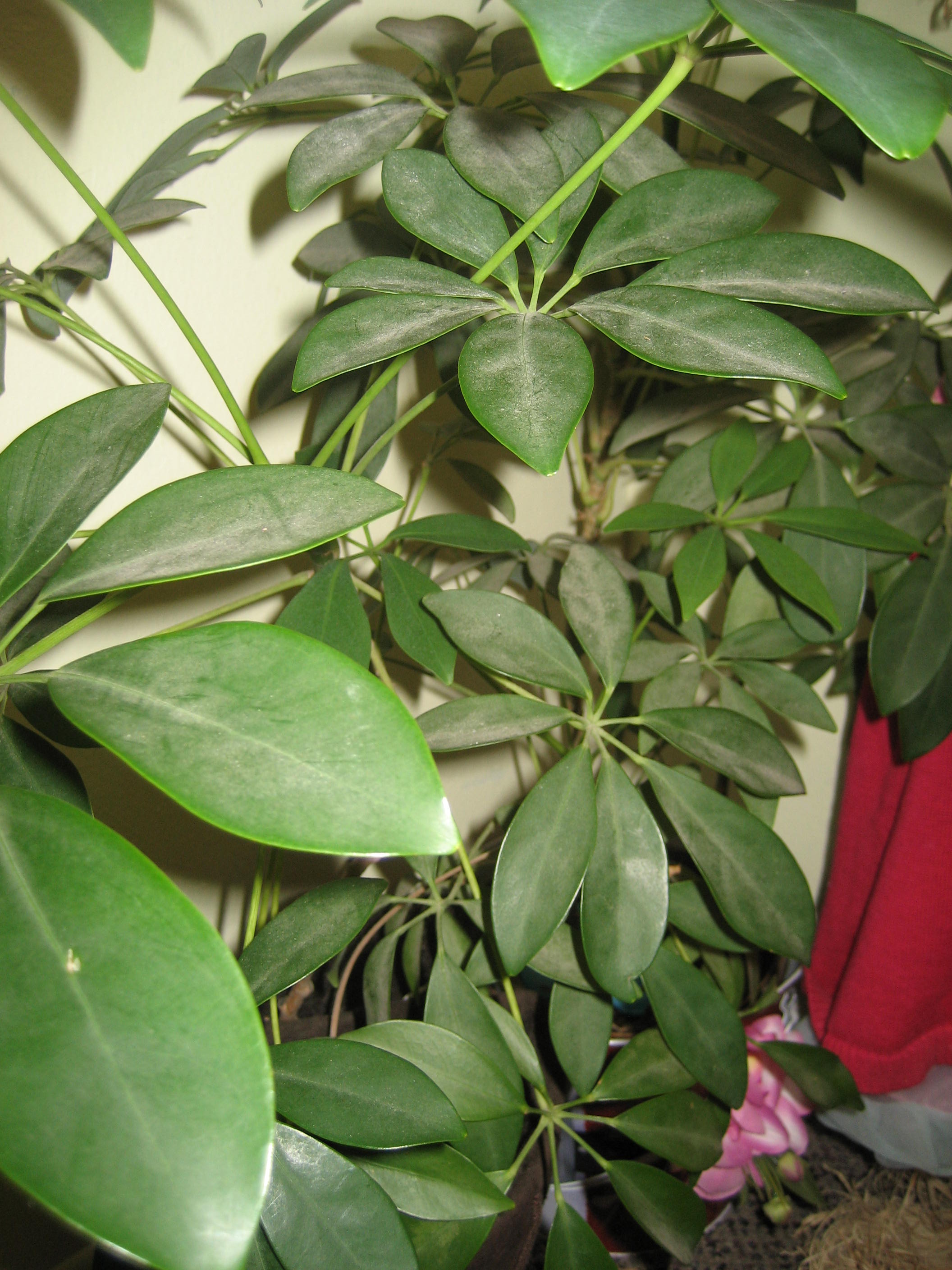
I like the memories that I have associated with my plants. Who gave me the plant. Where I got it from. It’s good to remember those things when I look at them throughout the day. All my plants have a story.  My five philodendron plants came from one sprout that I got from my grandmother. Her angel wing begonia that she gave me the year before she died went through a difficult beginning with me, but now has turned into several more plants. My larger begonia was given to me by an old friend in Colorado and my umbrella plant by other dear Colorado friends upon my grandmother’s death.

Today we just made a new plant memory. Today we saved a plant that was going to be thrown out from the building down the street. We divided it up between several friends. When we see it we’ll think of our friends, and the times we’ve spent with them. We also potted some new little succulents that we got at the local street fair on Memorial Day. Each child has one that they picked out. We can look at them and remember that day and what we did and ate and the fun things that we did. Before we went to bed tonight, the 2-year-old went to say goodnight to all the “baby plants.” Even though it’s just beginning, she knows the stories of these little plants we potted today. My plants hold the stories of the good times and the difficult ones. And I like that they are part of life. They are a tie that helps me remember the threads of my past. It’s good to think on where you’ve been. Sometimes it gives you perspective and helps make where you are seem better.

Maybe you don’t have such strong memories associated with your plants. Just because I do, you don’t have to. But, I enjoy mine and what they help me remember. They are the silent storytellers in my house. But, I’m going to tell my children these stories. They need to know them. It’s part of my life and so it’s also part of theirs. Find a plant you like and bring it home. With time, you may end up with something good to remember by it.

Our new aloe. Our new aloe.


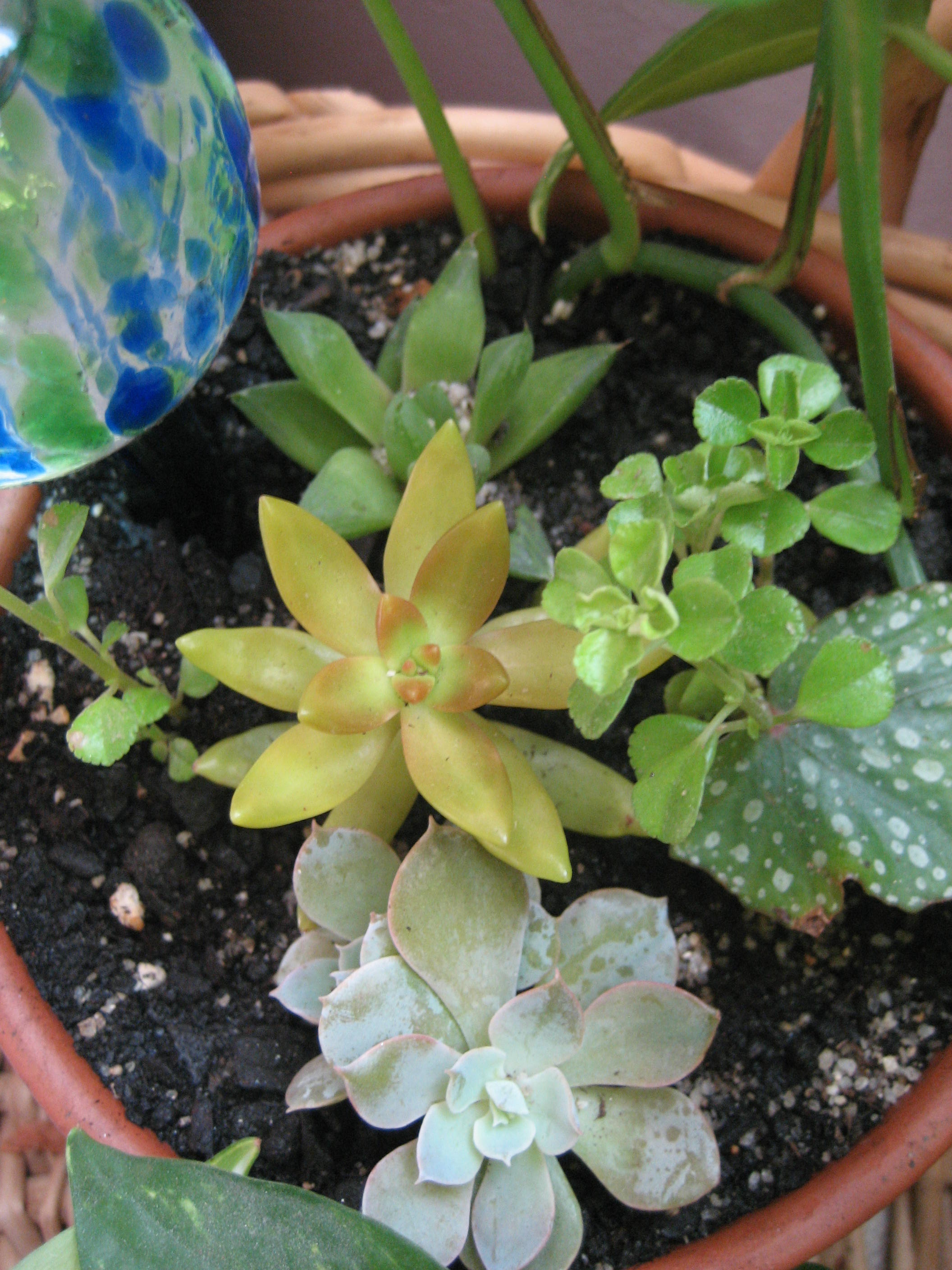
Our new little succulents that we bought at the street fair. Our new little succulents that we bought at the street fair.


My Nanny's angel wing begonia. My Nanny’s angel wing begonia.


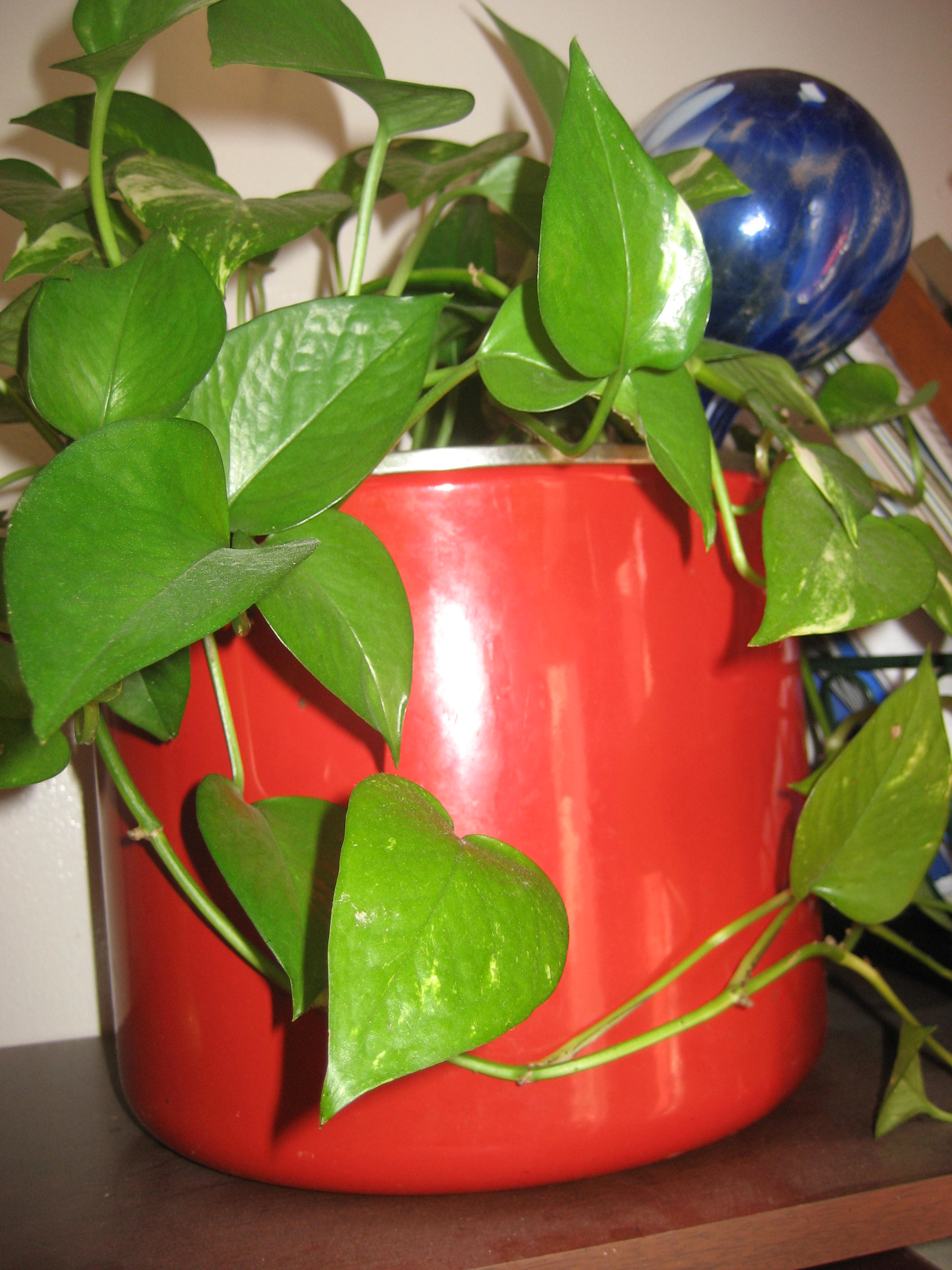
Nanny's philodendron in my Granddaddy's old enamel pot that I found on his farm. Nanny’s philodendron in my Granddaddy’s old enamel pot that I found on his farm.


More sprouts of the philodendron and angel wing begonia More sprouts of the philodendron and angel wing begonia.


More from the original philodendron plant. More from the original philodendron plant.


My only violet at the moment. I wish some of my Nanny's violets. Most of them were lost in a move. :( My only violet at the moment. I wish some of my Nanny’s violets. Most of them were lost in a move. 😦 I saved this one from little leaf, rooted it and look at it now! It sprouted all these little babies which made me so excited!


A Christmas cactus given me by a friend. I wish I had my grandmother's cactus. A Christmas cactus given me by a friend. I wish I had my grandmother’s cactus.


A money tree given me by the family of one of my husband's students. A money tree given me by the family of one of my husband’s students.


Umbrella tree given me when my grandmother died. Umbrella tree given me when my grandmother died.


Impatiens will always make me think of my grandmother. I always think of my grandmother when I see impatiens.