
Studying herbs. It’s a rabbit hole. You read, you reference, you study. Soon it all gets jumbled up in your head. How do keep it all straight.
My inexpensive, DIY solution was to use an old address book. It’s about 5×9” inches and perfect for this use, as who uses an address book for addresses anymore.
I used the alphabetized sections to record each herb and ailment in the lines where you would usually record peoples names and addresses. I take the herbs and ailments that I study, write them down in the section of the book with the letter associated when their name, and make notes about what I learn about them as I go. I don’t worry about alphabetizing my entries within each letter section. I just make sure that all the “A” herbs or health conditions are written on one of the pages of the “A” tab. I just looked and you can even still buy some old style address books. There are several spiral bound, pretty ones available on Amazon.
Another strategy that I use is that I highlight any family allergies to a particular herb in orange as a warning. I’ve told my husband, if I die, look in here to see what the kids are allergic to. We have some unusual plant allergies – yarrow, chamomile, chicory, clover, licorice.
I’ve found that it really helps to understand plants by their plant families in my studies of herbs due to all our allergies. That way if there is one herb that I know we respond to negatively, I can easily know what others I need to be careful of using medicinally because I know what plants are related to it.
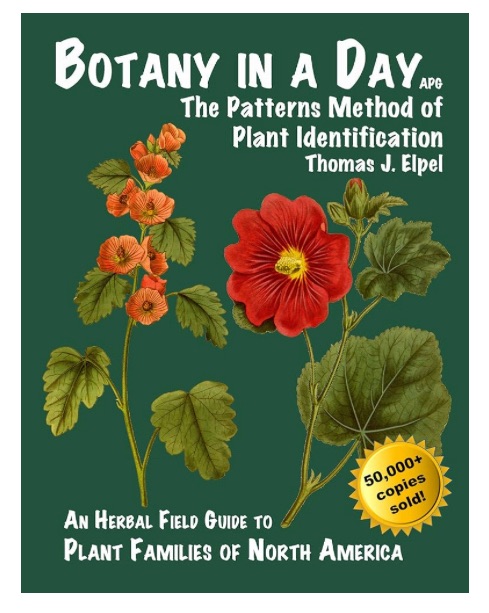
Botany in a Day by Thomas J. Elpel is the best book out there for learning plants by plant family. It teaches you to recognize plants by their family characteristics which helps you not only in learning to identify the plants but also in knowing their medicinal characteristics which is often consistent across plant families. Both can be extremely useful if you are learning to forage for your own plant material. For more info on identifying your local plants, check out my favorite regional medicinal plant books. And if you live in an urban area like we did when we lived in NYC, read my review on my favorite book on urban foraging here.
If you REALLY want to get a jumpstart on your herbal research though, look into the Herbal Monographs offered by Farmhouse Teas in their Herbal Studio. It is such a great herbal resource. They have compiled a set of nearly 100 monographs on different herbs that are just excellent! You get free access to them in their Herbal Studio. In my opinion, these monographs are unparalleled and I wish I could buy them as a book! Check them out. They are beautiful and totally worth having as a resource.
Note: This post contains affiliate links.
 Remembering Maggie Lane