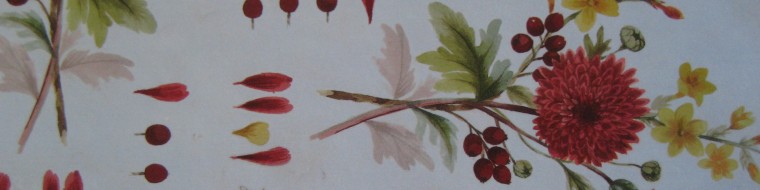
It’s rare that a piece of fabric has to be completely thrown out. Yes, those dish rags will eventually get too many holes and need to be replaced, but most of the time if something has a hole or tear, it can be repaired. Visible mending is a great skill to investigate. It’s a great way to get more use out of your linens and garments and you get to add your own personality and creativity to boot! Just search for #visiblemending on Instagram and you’ll come up with lots of creative images to get you going and inspired to mend your own items rather than throwing them away.
I often think of the Little House on the Prairie books. How many times in the books does Ma pull out the scrap bag and all those pieces and ends of fabrics are transformed into beautiful, useful, and personal gifts for Christmas. As a result of her economy and wise saving everyone at the table had a gift whereas their Christmas table would otherwise have been empty. I have a drawer at my house that is full of ribbon and fabric scraps and my girls know that they can rummage through the drawer any time to pull out what they need for creating childhood treasures.
Sadly, sewing and mending are quickly becoming a lost art. I think of Maggie and her girls sewing, quilting, and mending or remaking the items they had made by hand. Even my mom made her own clothes as a girl and a teenager. She even made her own wedding dress! I’ve never been quite adventurous or skilled enough to make my own clothes, but my mom and I did sew dresses for me at the beginning of each school year growing up. Those sewing sessions have given me enough skills to repair and sew things for my home and children. I especially enjoy taking those things that would otherwise be thrown away, and turning them into something new. Below is a gallery of a some of my projects….
Scrap Quilt – December 2010
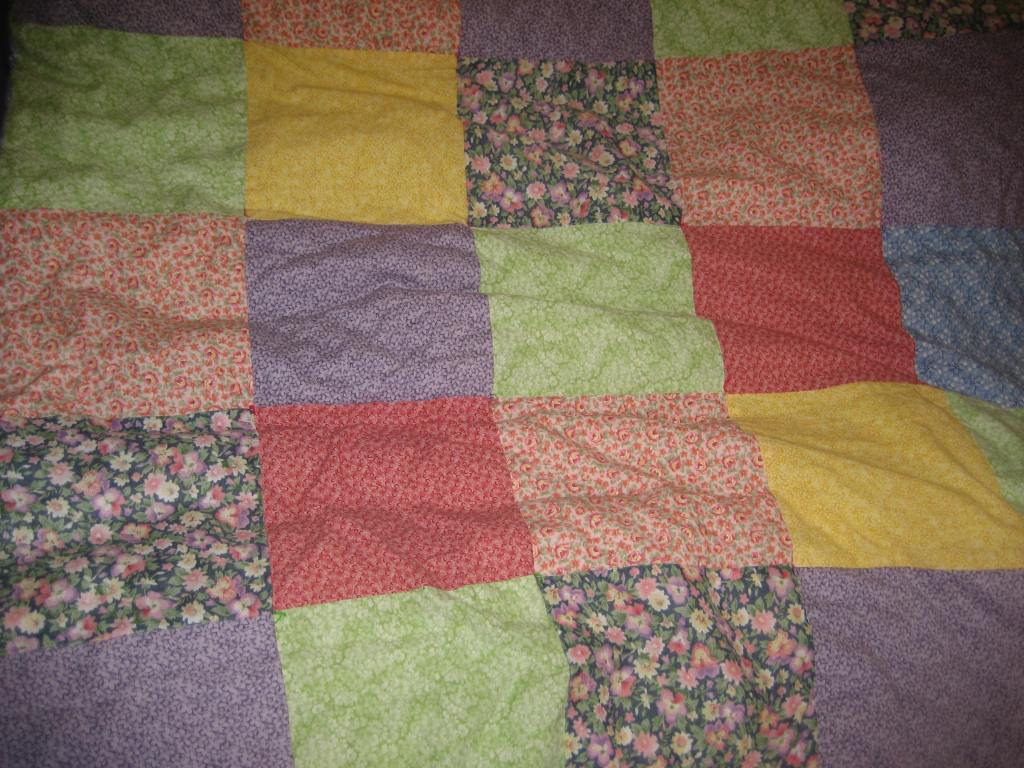
I made this for my oldest from cotton scraps. I love the colors. I’m sure if I tried again now I would do a better job. I’ve learned some things since that would make it sturdier and more durable. I’ve lost some stitches in the wash over the years, but I still love it.
Fleece Scrap Quilt:

I made this one for my son. It is super easy as you leave the edges raw and then snip them after you see the squares together for a frayed look.
Satchel/Messenger Bag – October 2011
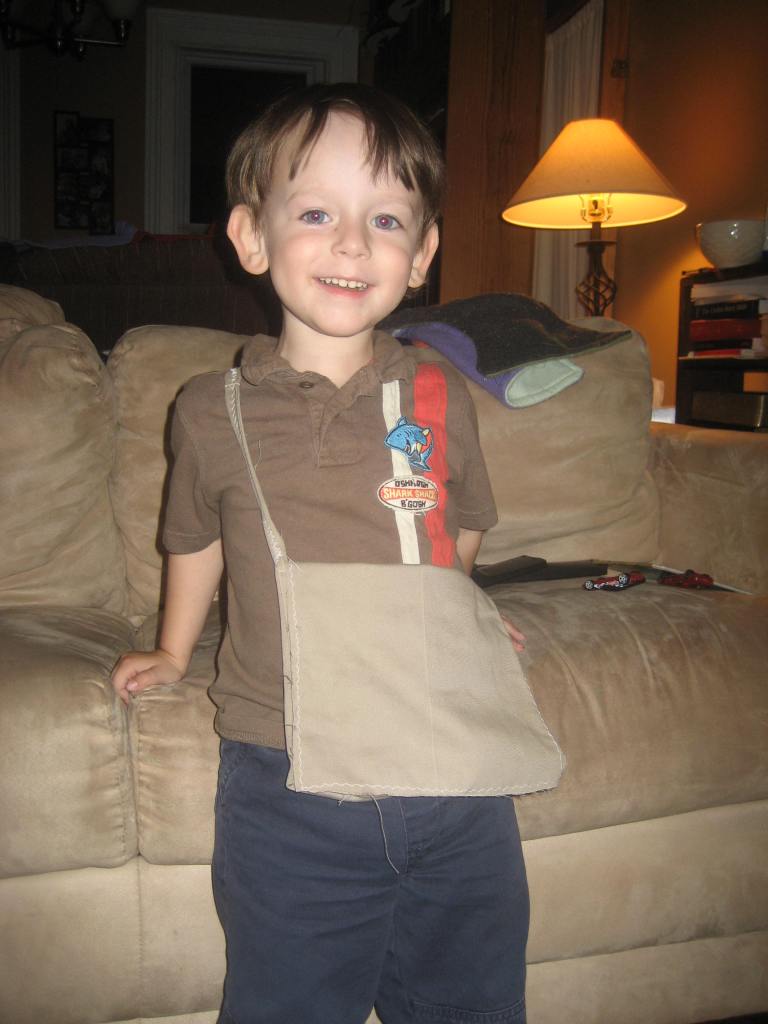
Here is my little man pretending to be Flynn Rider from the Disney movie Tangled. He wanted his own satchel so we made one up in about a half hour from pant leg of one of his daddy’s old pair of kakhi pants. If old clothes are too ratty and worn to give away and you have the space to save them it’s always fun to come up with new things to turn them into. It’s recycling before there was recycling. I’m sure that Maggie and her girls did that. There are several quilts that were made out of old dresses or baby clothes that are floating around our family closets. Look through your closet and see what you can repurpose. Completed 11/9/11.
Felted Wool Soaker/Diaper Cover – July 2012

I made this from a thrifted, felted sweater. Wool covers are the best if you do cloth diapers. The wool is naturally water repellant and antibacterial and they can just air dry unless they are soiled with solids. It’s worth picking up a sweater that would otherwise be thrown out and making your own. Felted sweaters work especially well, as no one is going to wear those, and the felting makes the wool thick and even more waterproof than it naturally is. I like this pattern from Scrimply Thrifty.
Mama Cloth – July 2013:
I have often thought of using cloth menstrual pads but never found or figured out a pattern that I liked…. until now. This pattern from The Eco Friendly Family is just what I was looking for. Most patterns that I had seen before used materials that I had to buy. This used things were waiting to be re-purposed into something else. And the pattern was free. What more could you ask?
I used old birdseye flat cloth diapers that were being retired for the soaker section and old cloth diaper fleece liners (cut out from cheap Wal-Mart fleece) that I wasn’t using for the liner.
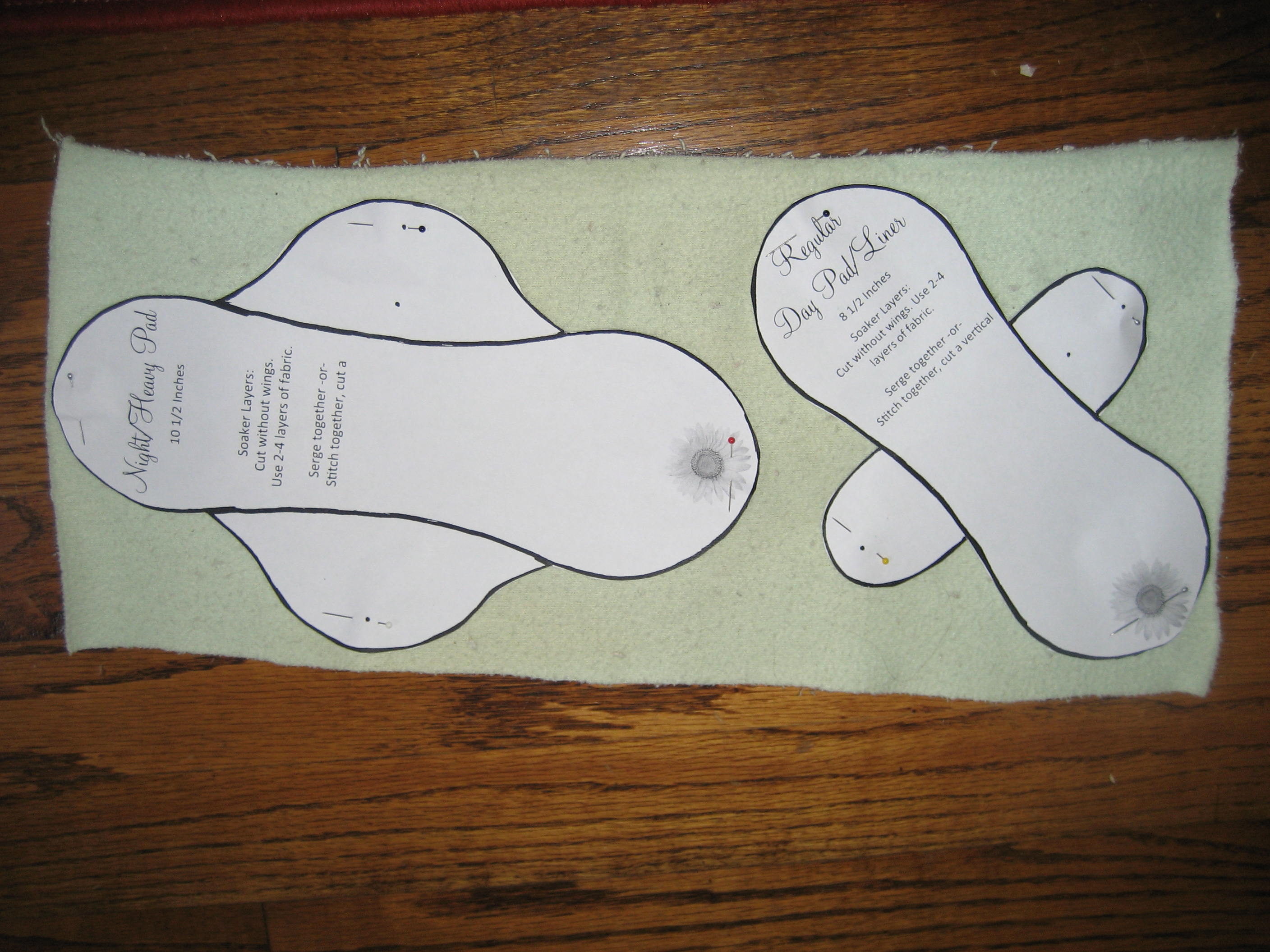


I stiched them up and then, I used leftover KAM snaps from making cloth diapers on the wings and I was done. If you don’t have snap plies you could sew on regular snaps from the craft store, stitch on some velcro or even safety pin the wings.

I was in a hurry when I made mine, so I didn’t take the time since to stitch and turn the soaker section so that the seams are inside out like the directions in the pattern instruct you to do. I just folded the flat diaper into either 4, 6 or 8 layers, cut to shape based on the pattern provided and then pinned and sewed it directly on to the fleece liner.
So you’ll notice on mine that the edges of the cloth are frayed from washing since I skipped that step. I kind of like it that way especially since it saved me time. I might have taken the trouble to make them prettier if I was making them for someone else. But, I was just making them for me so I figured that they don’t need to be that pretty, especially given their use. These were quick to make and they work very well.

Repurposed Babwearing Tablecloth – March 2014

I repurposed this beautiful woven tablecloth into a baby carrier. It’s the same size as a short woven wrap and is one of my favorites. You can read more about it on my Babywearing page.
Turn Your Old Jeans into Cute Bags – March 2014

I took my husband’s old blue jeans and cute them up. The result are these cute bags. One for each kid.

Update October 2023: My son who was five or six when I made these bags still uses his (pictured above). We’ve repaired the strap once in that time and it may need some TLC again. But he refuses to stop using it and it just speaks to the durability of some fabrics and why it is worth saving them. It saves you money and think of the memories that will come along with your handmade item.
Linen Scrap Aprons – August 2022
I got inspired to make some aprons. I’ve had these scraps that I got off eBay sitting around for a couple of years. I tend to sew in spurts. I’ll not make anything for years and then get in the mood and sew up a storm. Here’s the output of this weekend’s work.
Linen Bib Apron:
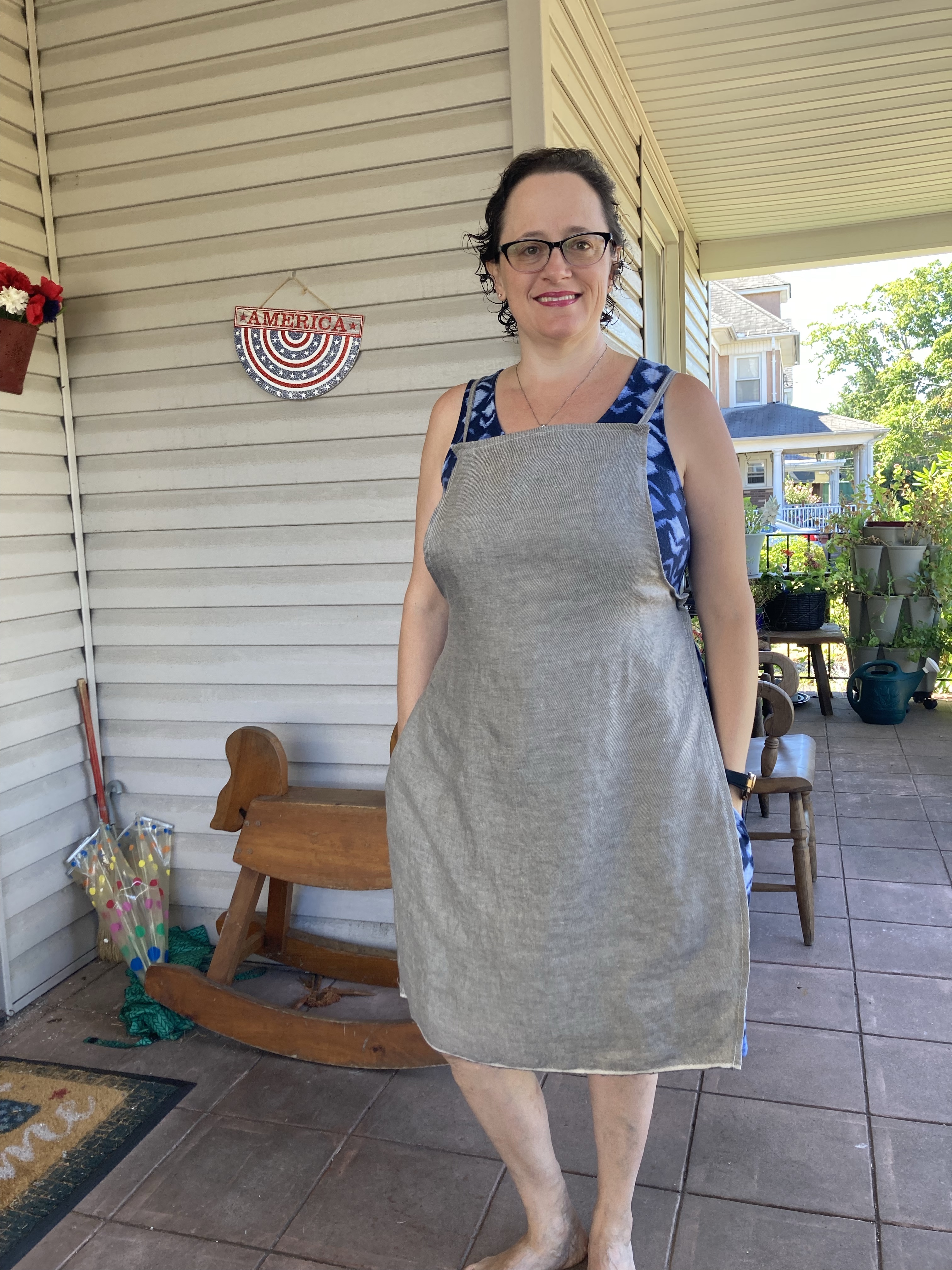
This apron I made from a scrap of linen. I modeled it after the vintage apron show below. It’s all one piece and was super easy to sew up. Basically just cut, iron down the edges, and sew up the seams.

It has long strings that attach at the shoulders, cross at the back and hook through loops at the waist.
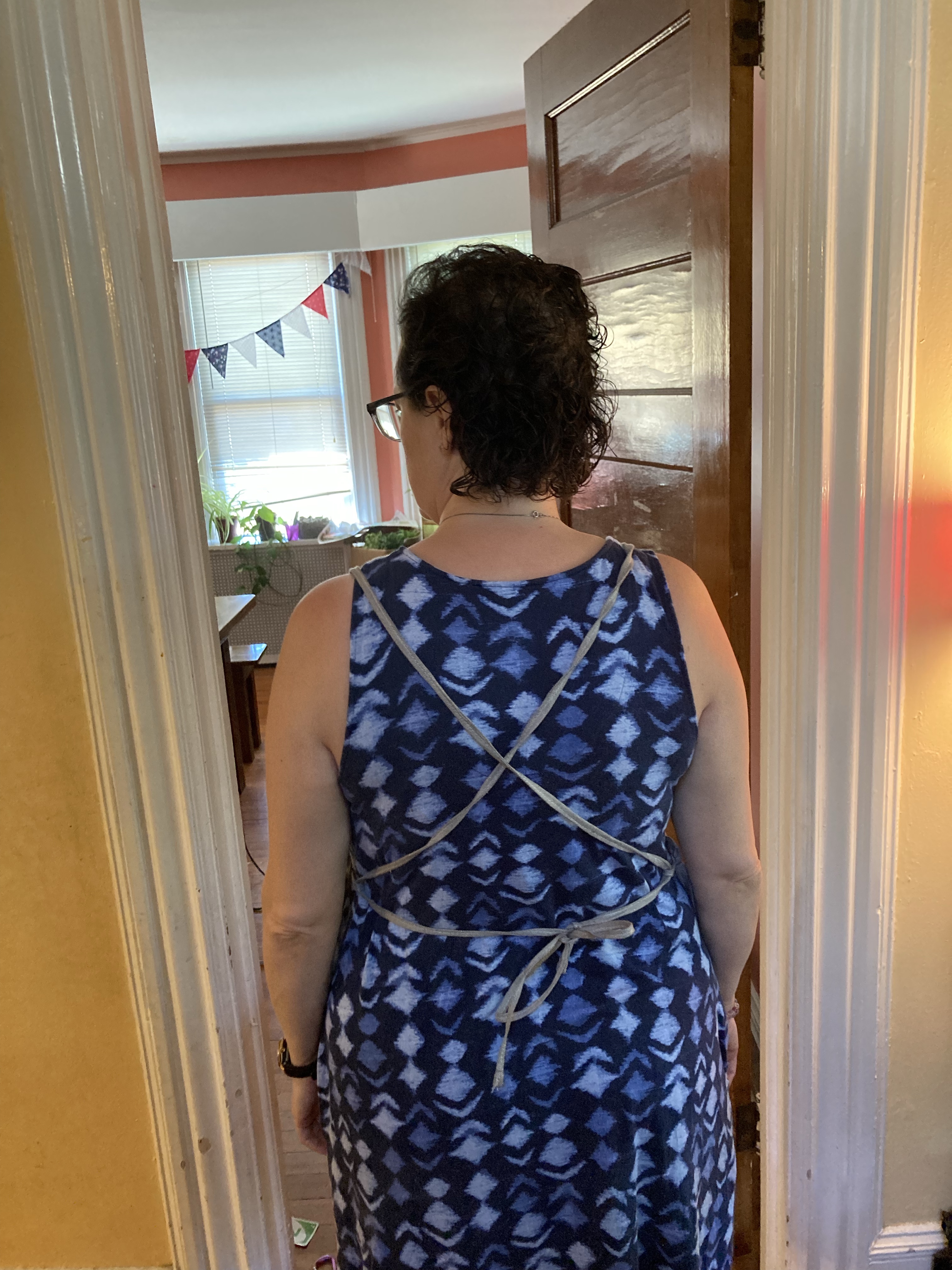
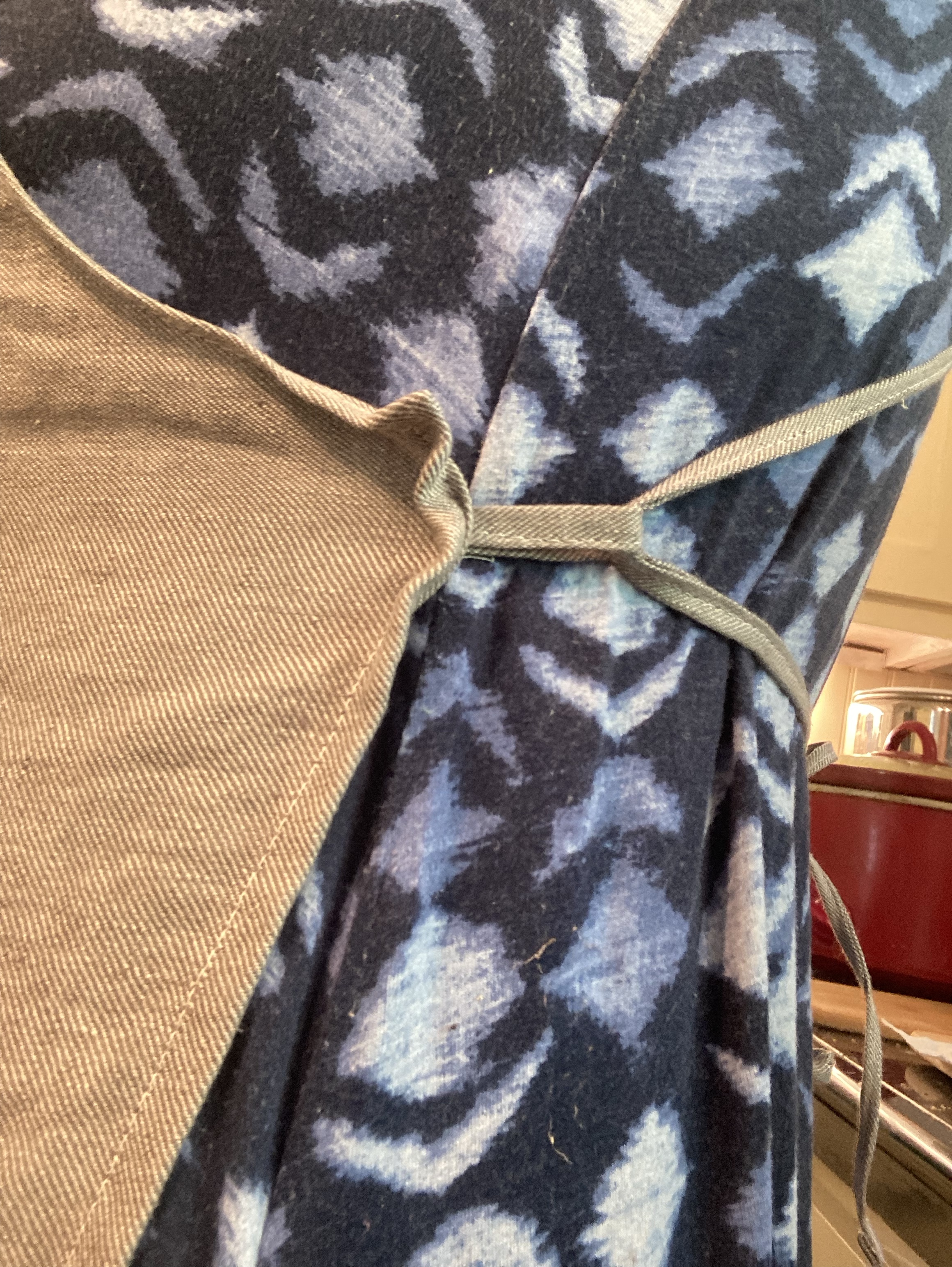
This is a super comfortable apron. I love that it doesn’t have a halter tie behind my neck. Those always pull on my neck and make my neck and shoulders hurt by the end of the day. This may be the most comfortable apron that I’ve ever worn. I’m going to be reaching for it a lot.
Linen Half Apron:

I had just enough to make a half apron of the same linen as the bib apron that I show above. I added a nice, big pocket and may use this one for gardening.
Vintage Floral Rose Apron:
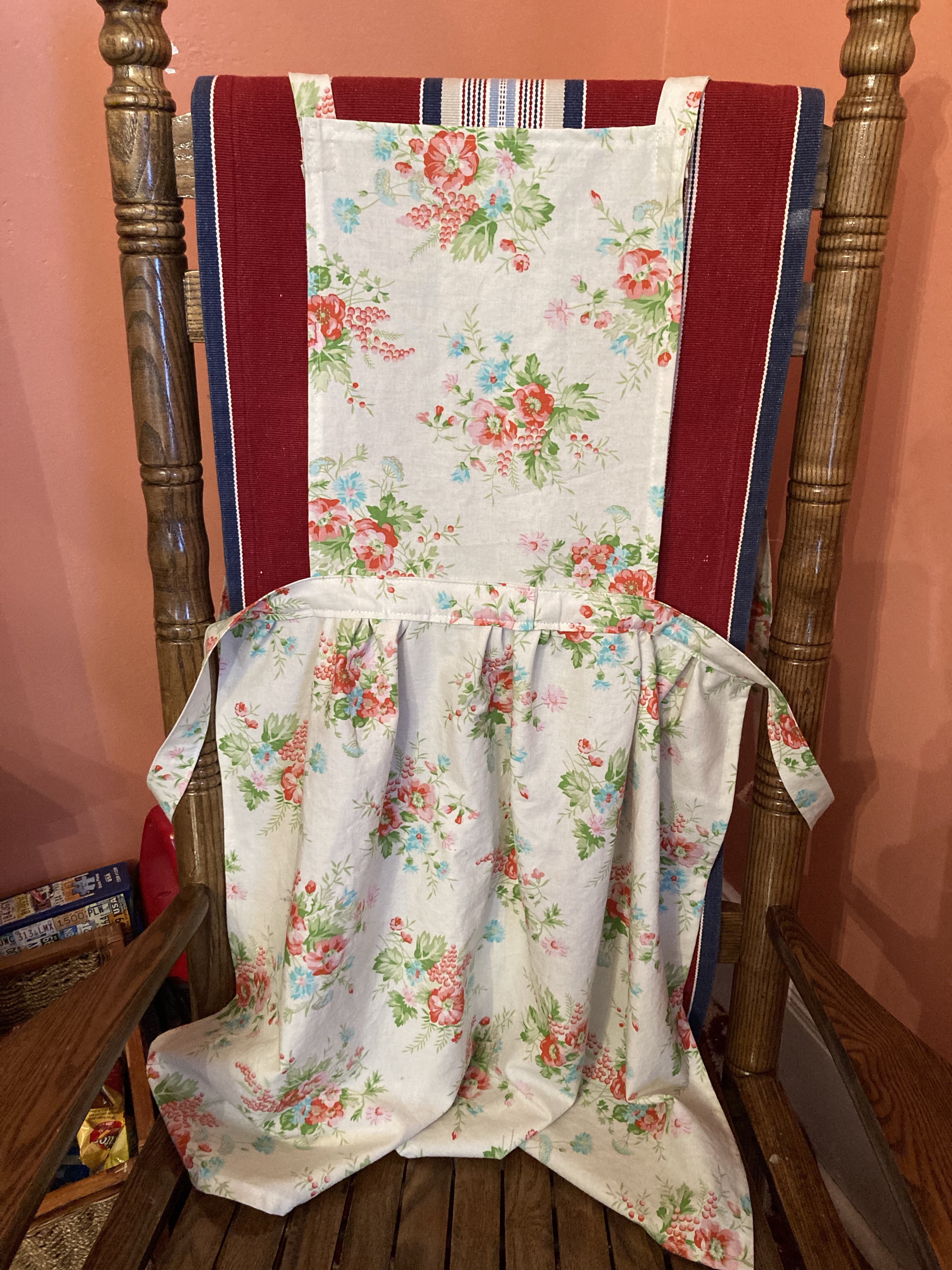
I love, love, love, this fabric don’t you? It’s so pretty. It’s a vintage cotton that I got as a scrap on eBay. This one took some thinking as it was not cut symmetrically so I had to plan carefully to get all the pieces I needed but I did it, and I used every bit of fabric with none left over. Not even scraps or edge trimmings. I think it turned out beautifully and I’m going to really enjoy wearing it.

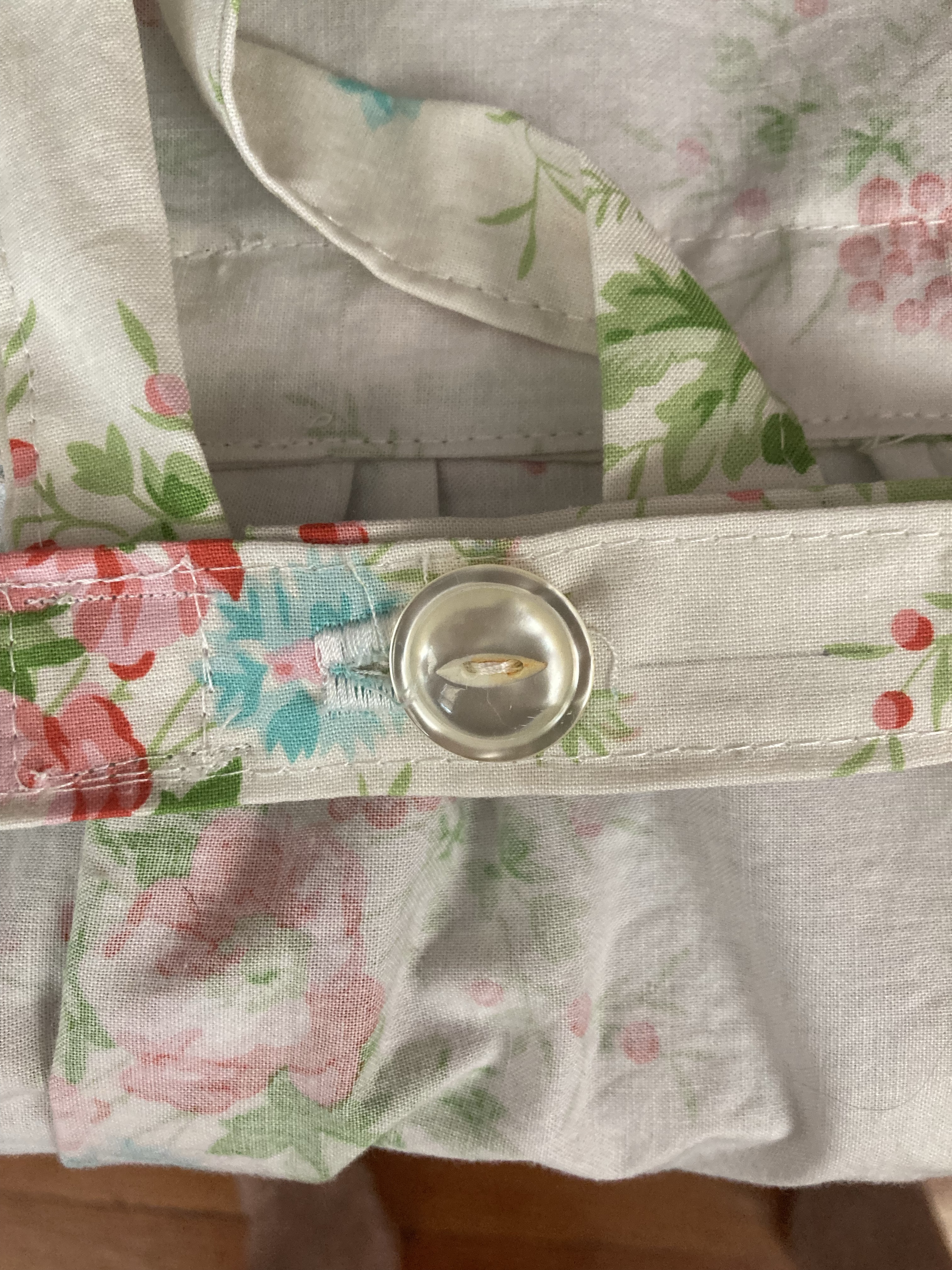
I didn’t have enough fabric to make apron ties so I added a button closure to the end of the waist band. I think I’m going to like it better than tying apron strings.
Repairing Quality Clothes – September 2023:
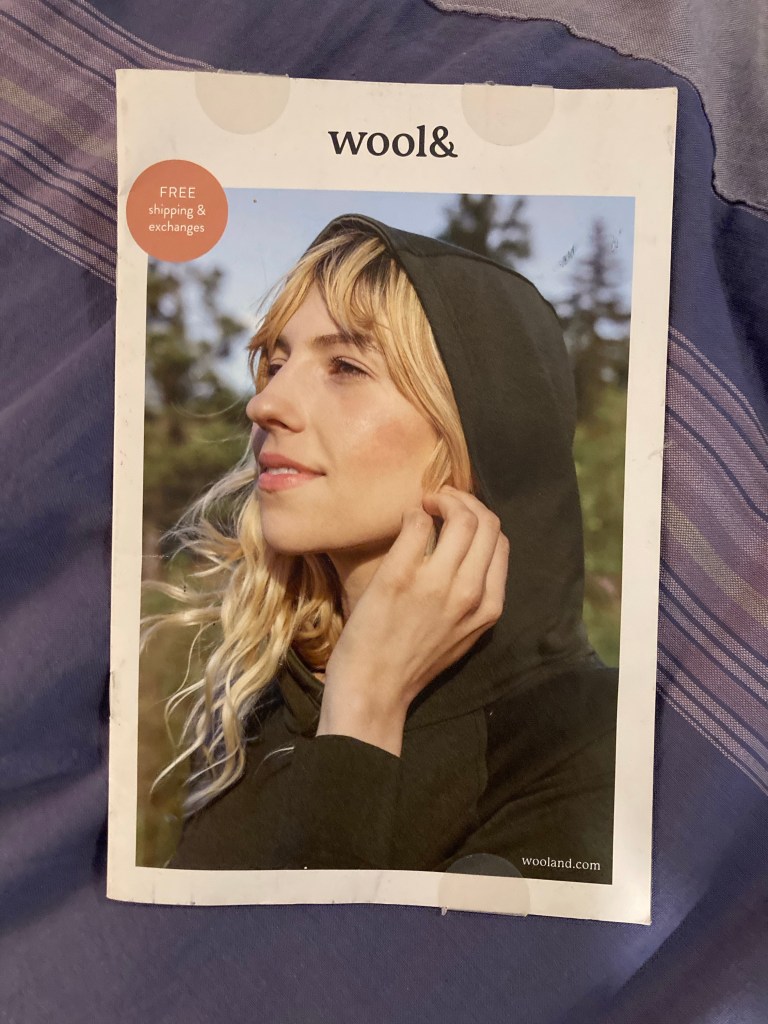
In September 2022 I got this flyer in the mail. Wool& is a company that focuses on producing high quality, comfortable merino clothing for men and women. It is merino, so by most people’s standards, it is pricey. More money than I would ever pay for a dress. But, as I flipped through the flyer, I saw a note about their 100-Day Challenge. I read on. If you purchase a dress from them for full-price, and wear it for 100 consecutive days, you get $100 gift card at the end of it.
The challenge peaked my interest. Not necessarily for the gift card, but for the challenge of it. But, I set it aside. I’d never spent that much money on a piece of clothing before. I didn’t even pay that much for my thrifted wedding dress. But, I kept thinking about it and coming back to it in my mind. So, I decided to try it. I ordered a Garnet Summer Midi dress. I chose it for the versatility and cut. It is reversible, can be layered or worn as a tank style when worn alone if the weather is warm, and it is midi length which was important to me. I don’t wear short dresses, but didn’t want something so long that I couldn’t also wear it in summer. I wore for 100-days and I had such a good time! Below are a photos of some of my favorite outfits.

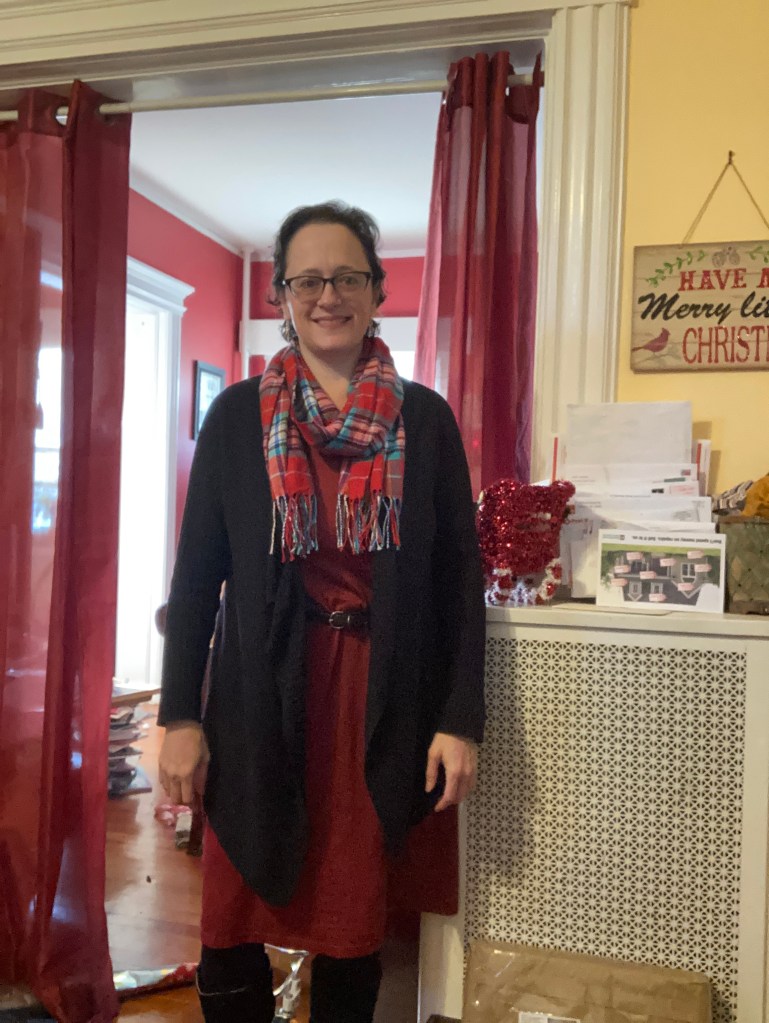
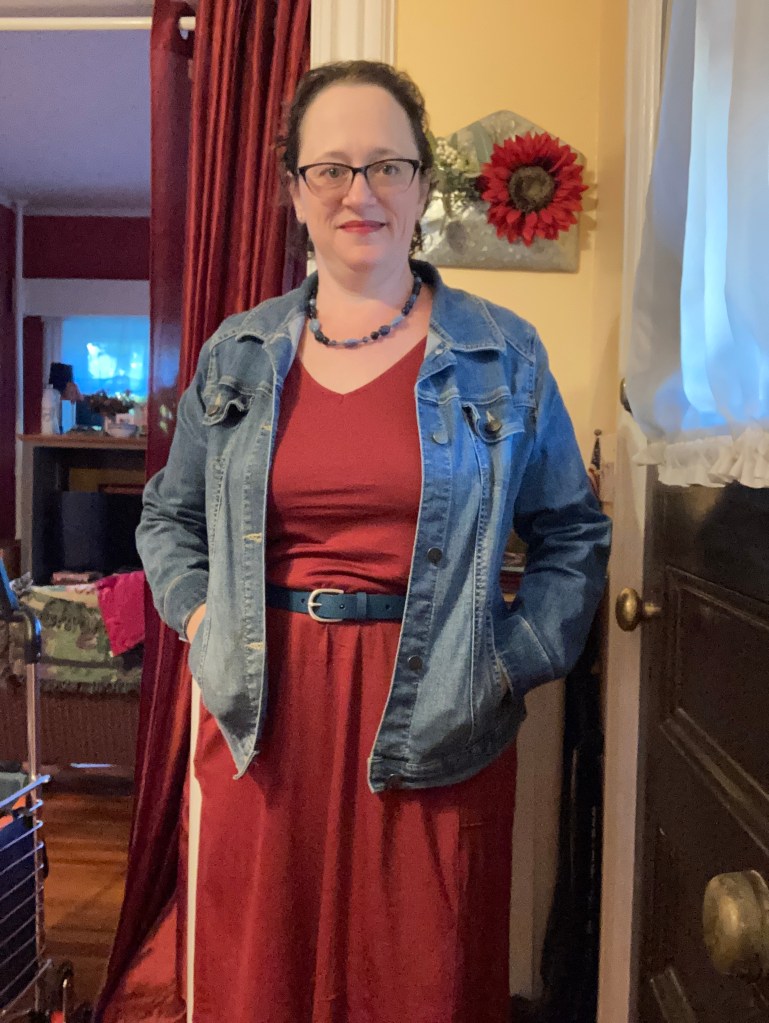
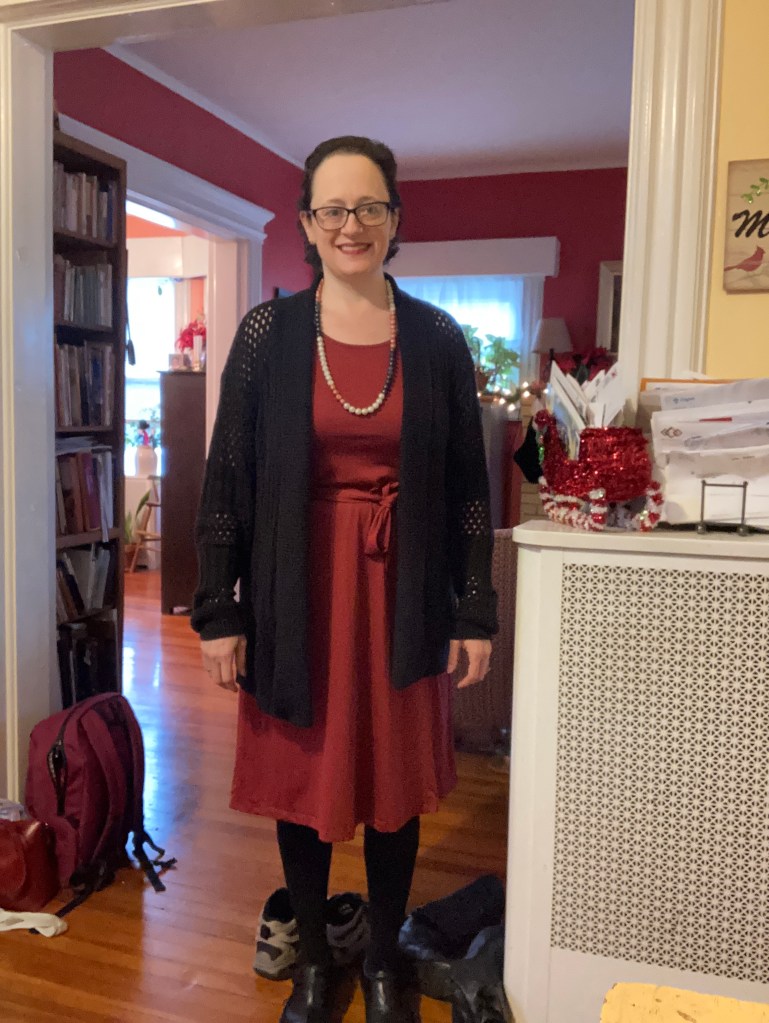

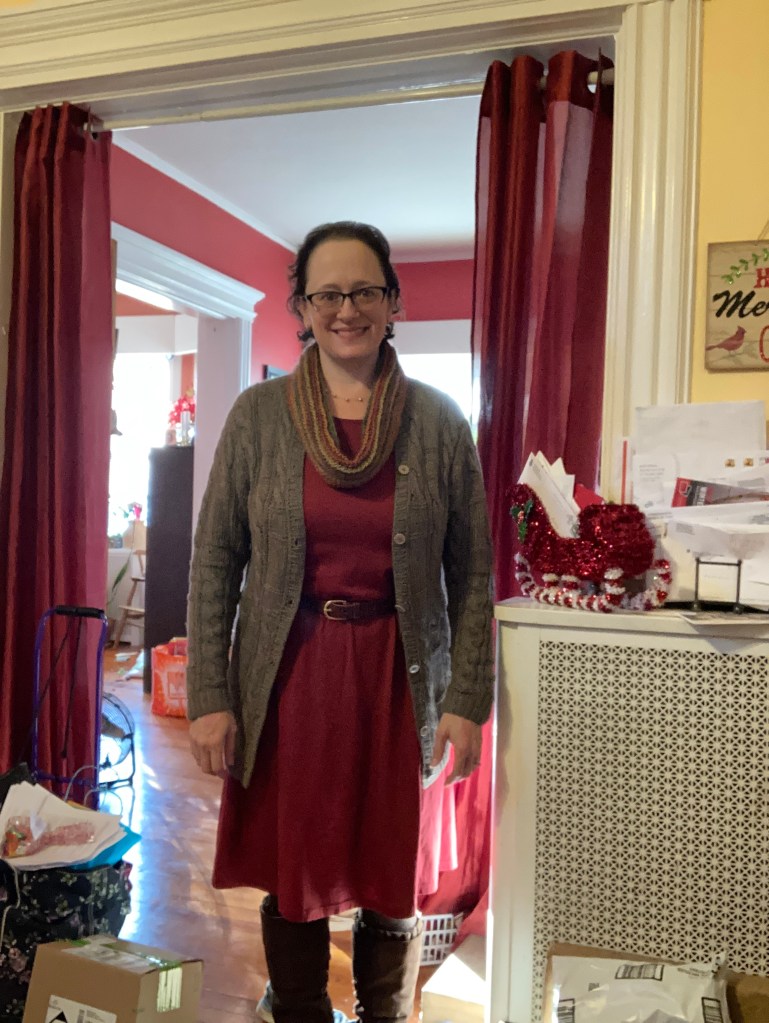

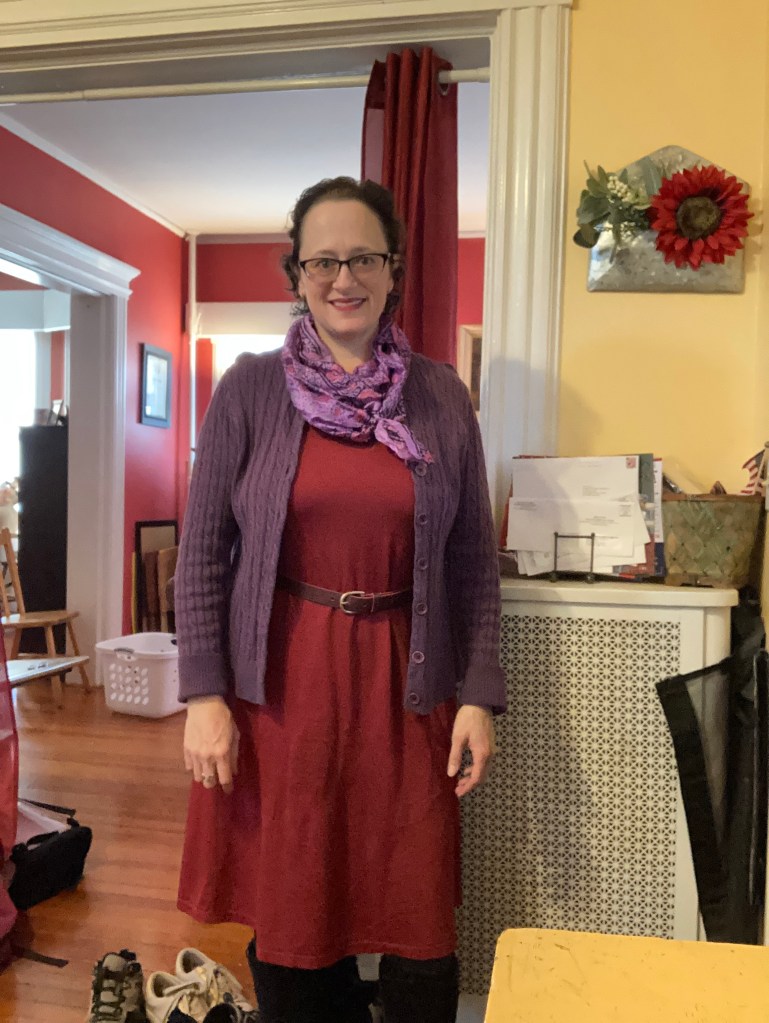
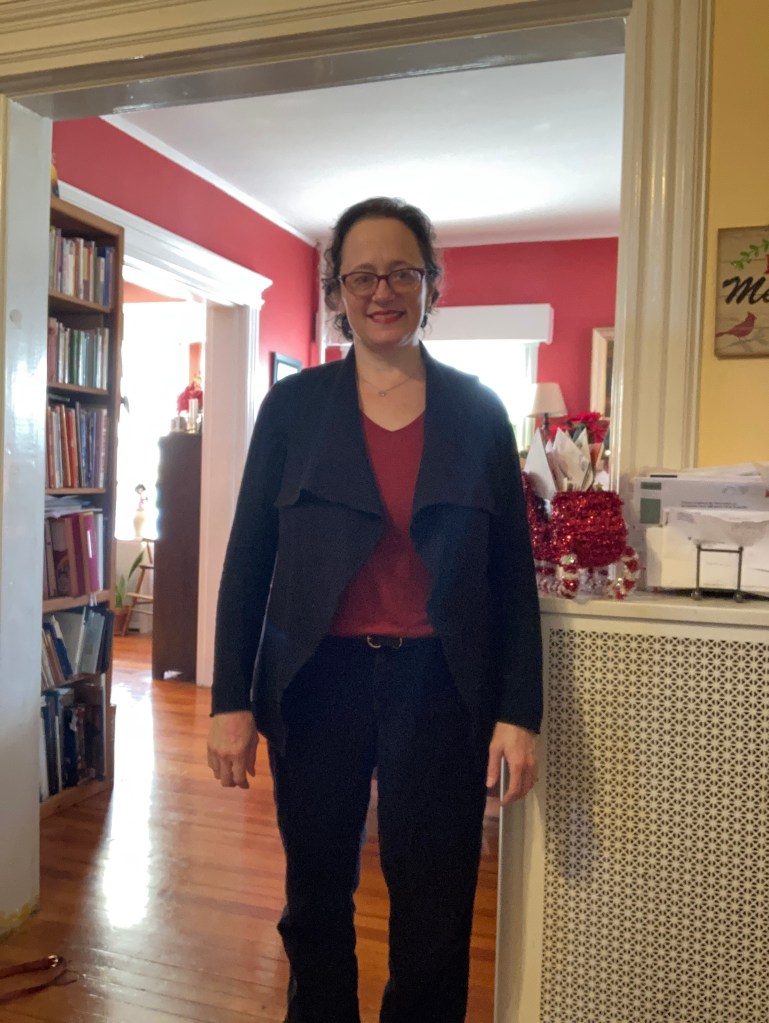

I learned that I can create a myriad of outfits with what I already have in my closet. I so enjoyed being forced to be creative and put new I’m outfits together. I took it as a personal challenge and actually never repeated an exact outfit for the whole 100-days. And my laundry dwindled to practically nothing. Wool is naturally antibacterial (see above with my wool soaker diaper covers) and so rarely needs to be washed just from regular wear. I spot cleaned it with dish soap for food spills or small soiled areas but in general, I probably only washed the dress ever 2-3 weeks. Granted I did my challenge in the fall/winter so I’m sure I would have washed it a little more frequently had I done a challenge in the summer, but the only laundry I did the entire challenge period was basically socks and underwear. The fact that it needs to be washed so infrequently means that it was great for traveling. I wore it to my in-laws for Thanksgiving which means I had a light suitcase for our holiday travels. I was able to mix up my outfits enough with just a few other pieces of clothing that my very observant mother-in-law never noticed that I was wearing the same dress over our visits at Thanksgiving or Christmas.
If you are intrigued, check out the Wool& Challenge Facebook group to lurk and find out more about capsule wardrobes, the advantages of traveling with wool, and styling options. I love my Wool& dress and even kept wearing it even after my 100 days were complete. Having some base wardrobe pieces makes getting dressed in the morning that much easier, and having a quality piece of clothing makes me feel beautiful and put together each day. My biggest surprise over the course of the challenge was learning that I really like the crew neck side of the reversible dress. I expected to almost exclusively wear the v-neck side of the dress when I bought it, but have actually found the exact opposite to be the case. I almost always wear low scoop necks or v-neck tops. This is a leftover from my nursing days and needed easy access while babywearing, so I guess I just got used to v-necklines, but I actually find that low crew necklines are very flattering on me and almost always wear that side of the dress.
If you’ve read this far and you are nervous to try a wool dress, don’t be. I actually have fiber allergies to silk, polyester, and some other synthetics. So, don’t be scared to try wool. This merino is not scratchy at all. It is soft and silky. I’m not sure I’ve ever had a piece of clothing that I truly love, but putting on my wool dress feels like a cozy hug to me.
Wool Repair – September 2023

It’s been a year since I did my 100-day Challenge and I’ve acquired a few other Wool& pieces in that time. I got a Marionberry (I love purple) Summer Midi for my birthday and decided to complete at 30-Day Challenge. About six days in I looked down and saw a hole in the middle of my dress. *Enter sad emoji here.* I should have been more careful about wearing one of my apron. We moved this year and I think either carrying a heavy box or 50# bag of wheat snagged my dress.

I made it 100 days with absolutely no damage to my other dress so this is in no way representative of the quality of the piece. What to do? Well, thankfully I have some sewing skills and I have experience repairing woven fabrics when some of my woven wrap baby carriers have occasionally have had a snag, so all was not lost. I didn’t have an exact match on the thread, but I repaired it by reinforcing the edges with a straight stitch around the hole so that the damaged area didn’t spread. Then I grabbed the open loops and connected them creating my own warp and weave. I’m happy with the result and the repair is hardly noticeable.
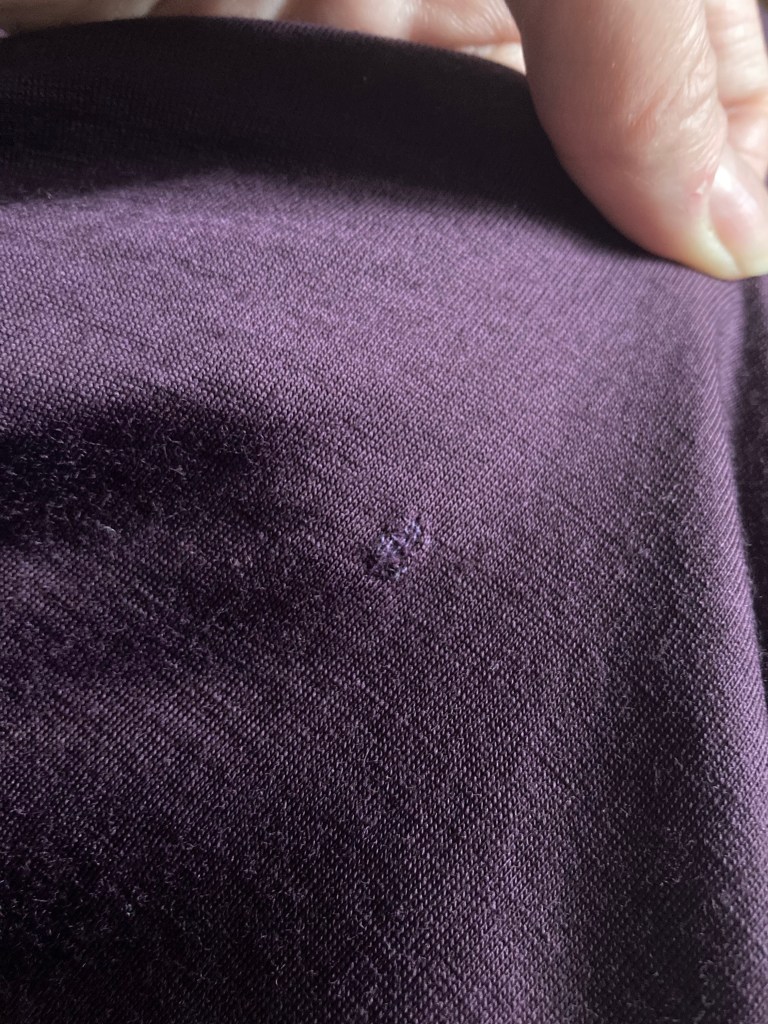
I imagine it will last for years to come. Proof that repairing a quality piece of clothing is worth the time and effort to preserve something that you love.
Here are my favorite book recommendations for visible mending and clothing repair:
Joyful Mending by Noriko Misumi
A good basic book that teaches skills from several different areas – darning, embroidery, crochet, and rug hooking to teach you how to make “Statement” mends. She also discusses invisible mending as well. This book offers good, broad instruction from across many needlework techniques.
Make, Sew, Mend by Bernadette Banner
Good basic instructions on stitches needed for clothing repair and hand sewing. This author delves more into different fabric types and how the type of fabric determines the type of mending technique needed.
Mending Matters by Katrina Rodabaugh
I like this one as it adopts a non-consumer philosophy encouraging people to buy thrifted and repair what they already have. It offers a good philosophy to help readers develop a producer rather than a consumer mindset when it comes to their wardrobes.
Mend and Patch by Kerstin Neumuller
This one is probably lowest on my list, but I include it because it specifically addresses knits and machine mending.
Note: This page contains affiliate links.
 Remembering Maggie Lane
Pingback: Two New Sewing Projects « Maggie Lane
Pingback: Recent Posts « Maggie Lane
That is cool housing cloth diapers for the pad is there a free pattern for a overnight pad
If I remember correctly, there is a free pattern for a small and large pad. I think you had to pay for the patterns for the postpartum pads.
I love this there’s something so comforting about giving fabric a second life, whether through visible mending or turning scraps into little handmade treasures. It’s not just about waste reduction, but also about creativity, tradition, and the stories those pieces carry forward.
That’s true. Especially if it was a special piece with memories tied to it.