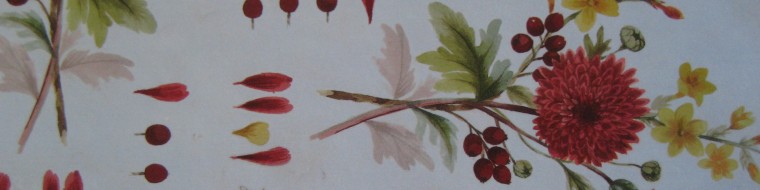

Summer has or is coming to a close in most parts of the country. As the flowers fade and die they make something wonderful! Seeds!
Seeds are amazing! Even though many flowers have run their course by this time of year, fall is my favorite time to teach my homeschool Botany class. One of the first things I teach them is that Dead Flowers = SEEDS!
There is a certain wonder about picking an apparently dead flower head, crushing it open with your fingers and watching all the seeds fall out. Imagine the amount of life contained in that little handful of seeds.
Have you ever thought about that? Imagine if you were given one cherry tomato seed. You plant it, it germinates, grows, thrives, and produces fruit. How many tomatoes would that one plant make in a growing season? Let’s say it makes 100 cherry tomatoes. How many seeds are in each of those tomatoes? Even if it is only ten, that is 1,000 seeds from that one little seed that we started with. Imagine the number of seeds that could be produced if all those seeds were planted, and compound that over the seasons and years and the yield is incalculable.
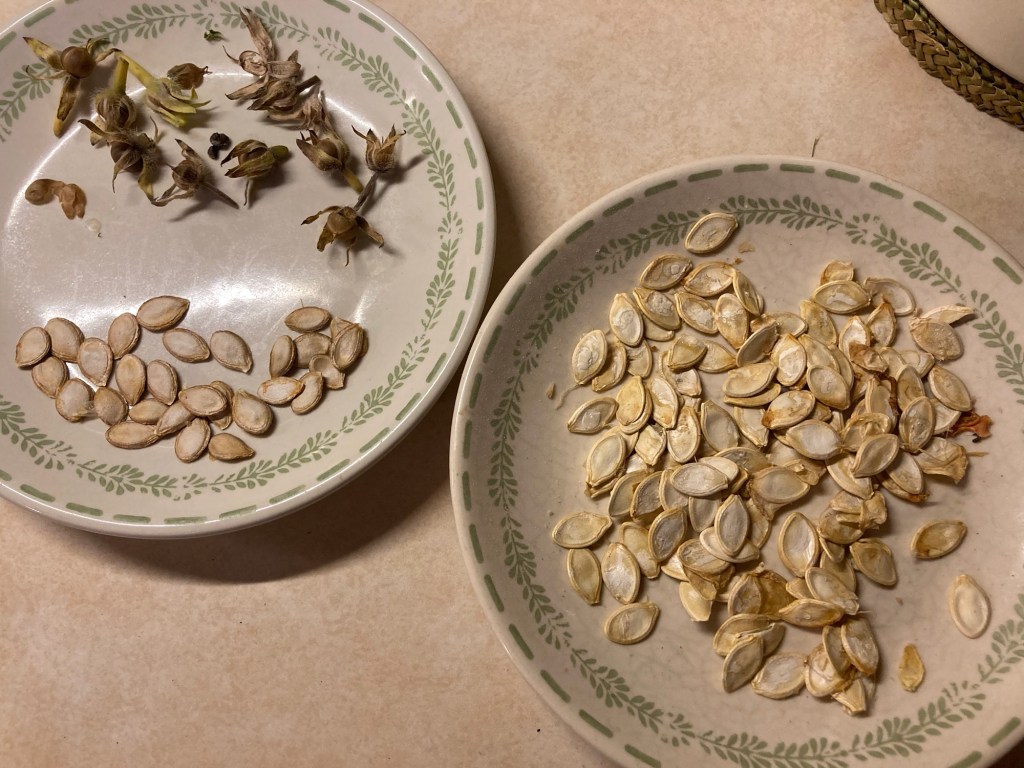
I really enjoy saving seeds. I saved the seeds from a HUGE zucchini that we grew this year (plate on the left, bottom). The plate on the right has the seeds of an organic butternut squash that we bought from Misfits Market. And the brown seeds at the top of the plate on the left are some morning glory seed pods that I snipped off of my morning glory plant this evening on a whim. I’ll let them dry out and then scatter them in a new spot where I have some trellises set up.
There is an art and a science to seed saving. Plants will make seeds whether you do anything or not. The only question is whether you want to control where and when they germinate.
If you have several varieties of the same plant, the seed saving can also be an experiment as often you can end up with seeds that are not true to type, meaning that they may look different from the parent plant. There is nothing wrong with this. It happens in nature. Personally, I quite enjoy what surprises come from cross pollination, but if you have multiple varieties of the same species in your garden, and you want you keep your seeds true to the parent plant, you should either buy your seeds fresh every year from a reputable supplier, or take steps to prevent the cross pollination.
If you want to learn more about the world of seed saving, I recommend Seed to Seed. It’s a great book and will tell you more than you probably ever wanted to know about the ins and outs of seed saving. But, this book isn’t really necessary. Remember all you really need to know is what I teach my elementary Botany class. Dead Flowers = SEEDS! Start exploring the dead flowers that you find in your garden. It’s a fascinating adventure.
If you do decide to save some seeds, be sure to keep them cool and dry, and label the package with the seed and the collection date. Trust me you won’t remember what they are in the spring when you go to plant them. I like to use these little paper seed packs. They are inexpensive and are a great way to organize your seeds, and if you have an abundance, these little seed packs make a great gift that you can share with friends.

Note: This post contains affiliate links.
 Remembering Maggie Lane